

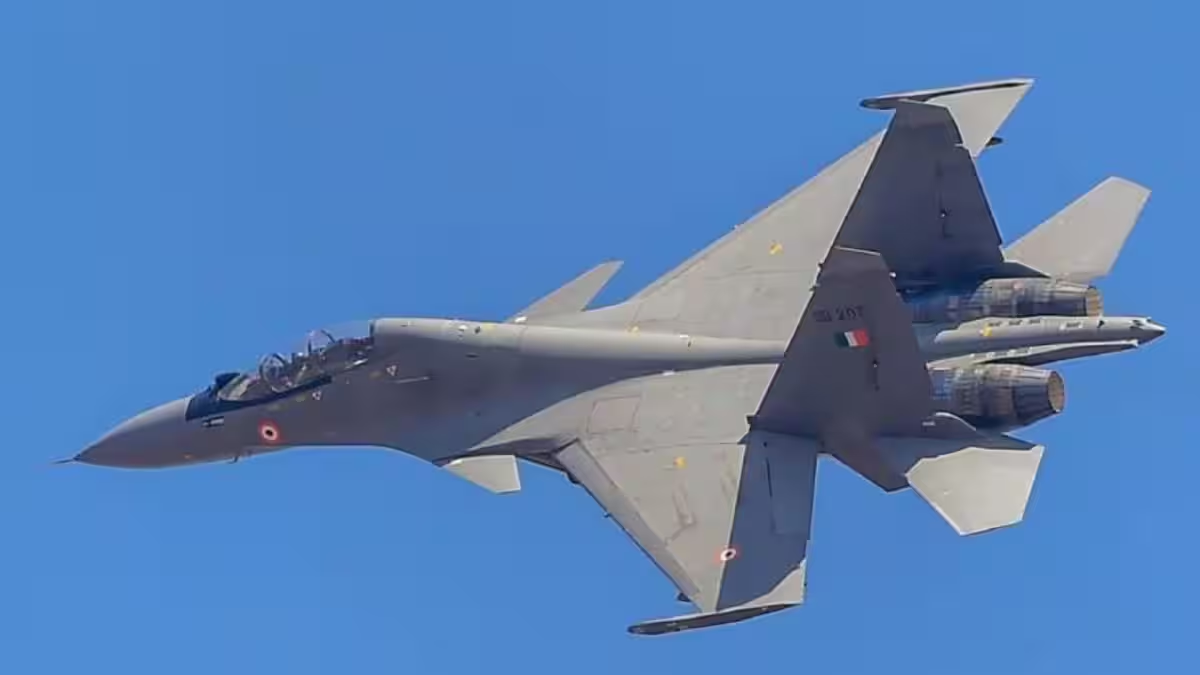
An Indian Air Force Sukhoi-30 fighter aircraft crashed near Jorhat in Assam, triggering an immediate search and rescue response. Authorities confirmed the incident during a routine mission, and investigations are underway to determine the exact cause of the crash.
The Assam Sukhoi-30 crash near Jorhat has drawn national attention as rescue teams and defence officials work to gather details about the incident. The aircraft belonged to the Indian Air Force and went down during an operational sortie in the northeastern state. While officials are still confirming the exact sequence of events, early reports indicate that emergency protocols were activated immediately after the crash.
Sukhoi-30 Fighter Jet Crashes During Routine Mission
The Indian Air Force confirmed that the Sukhoi-30 aircraft was on a routine mission when the incident occurred near Jorhat in Assam. Jorhat is strategically important because it hosts the Jorhat Air Force Station, a key base supporting air operations in India’s northeastern region.
According to initial reports from defence sources and local authorities, the aircraft crashed in an area not far from the airbase. Local police, Air Force personnel and emergency teams quickly reached the crash site to secure the area and assist in rescue operations.
Eyewitness accounts from nearby villages suggested that a loud explosion-like sound was heard moments before debris was spotted in the crash zone. Such incidents are treated with high urgency because fighter aircraft carry sensitive equipment and fuel that can pose risks if not handled carefully.
Authorities have not yet confirmed the full extent of damage or whether the pilots managed to eject safely. Fighter aircraft such as the Sukhoi-30 are equipped with ejection systems designed to protect pilots in emergency situations.
Importance of the Sukhoi-30 Fleet for the Indian Air Force
The Sukhoi-30 MKI fighter jet forms a crucial part of India’s combat air fleet. Developed jointly by Russia’s Sukhoi design bureau and India’s defence sector, the aircraft is one of the most advanced multirole fighters operated by the Indian Air Force.
These aircraft are capable of performing air superiority missions, ground attack operations and long-range strategic patrols. The jets are known for their high manoeuvrability, twin-engine reliability and ability to carry a wide range of weapons.
Air Force bases in northeastern India, including Jorhat, play a significant role in maintaining aerial security across the region. The presence of Sukhoi-30 squadrons in the northeast helps strengthen India’s defensive readiness near sensitive borders.
Because of this strategic importance, any incident involving such aircraft is thoroughly investigated to determine whether the cause was mechanical, operational or environmental.
Search and Rescue Operations After the Crash
Following the Jorhat fighter jet incident, rescue teams from the Indian Air Force and local administration launched immediate operations. Security personnel cordoned off the crash site to prevent civilians from entering the area and to allow investigators to examine the debris.
Fire services and emergency response teams were also deployed because fighter jets typically carry large quantities of aviation fuel. Ensuring that there are no secondary explosions or environmental hazards is a key priority after such accidents.
Officials stated that specialized teams are collecting parts of the aircraft for examination. These fragments often help investigators reconstruct the sequence of events that led to the crash.
The Indian Air Force follows a standard investigation procedure for aviation accidents. A Court of Inquiry is usually constituted to examine flight data, pilot communication records and technical maintenance logs.
Possible Causes Being Examined
While the exact reason behind the Assam Sukhoi-30 crash remains unknown, aviation experts say several possibilities are usually considered in such cases.
Mechanical malfunction is one potential factor, especially in high-performance aircraft that undergo intense operational stress. Weather conditions and bird strikes are also known to affect fighter aircraft during takeoff or low altitude flight.
Human factors are examined as well, though investigators avoid drawing conclusions until flight data and cockpit records are carefully analysed.
Defence analysts note that modern military aircraft are built with multiple safety redundancies. However, complex machines operating in demanding environments can still face unexpected technical failures.
The investigation process can take weeks or months depending on the complexity of the incident.
Why Incidents Like This Matter
Military aviation accidents attract significant attention because they involve high-value assets and trained personnel. Each fighter jet represents years of training, technological investment and strategic capability.
Beyond the loss of equipment, such incidents provide crucial lessons for improving safety protocols, maintenance procedures and pilot training.
India’s Air Force regularly conducts safety audits and upgrades systems to reduce risks during operations. Investigations into aircraft incidents are also used to strengthen future operational readiness.
For residents around Jorhat and nearby areas, the incident also highlighted the rapid response capabilities of defence and emergency teams.
Takeaways
• A Sukhoi-30 fighter jet of the Indian Air Force crashed near Jorhat in Assam during a routine mission.
• Rescue teams and Air Force personnel immediately secured the crash site and began investigation procedures.
• The Sukhoi-30 MKI is a key part of India’s frontline combat fleet, making such incidents strategically significant.
• A formal Court of Inquiry will determine the exact cause of the crash after examining flight and technical data.
FAQs
What is the Sukhoi-30 aircraft used by India?
The Sukhoi-30 MKI is a multirole fighter jet used by the Indian Air Force for air combat, ground attacks and long-range patrol missions.
Where did the Assam Sukhoi-30 crash occur?
The fighter aircraft crashed near Jorhat in Assam, close to an important Indian Air Force base in the northeastern region.
How are fighter jet crashes investigated in India?
The Indian Air Force typically orders a Court of Inquiry that analyses flight data, maintenance logs and technical evidence from the crash site.
Why is Jorhat strategically important for the Air Force?
Jorhat hosts an important air base that supports operations in India’s northeastern region and helps maintain aerial readiness near sensitive border areas.











Leave a comment