

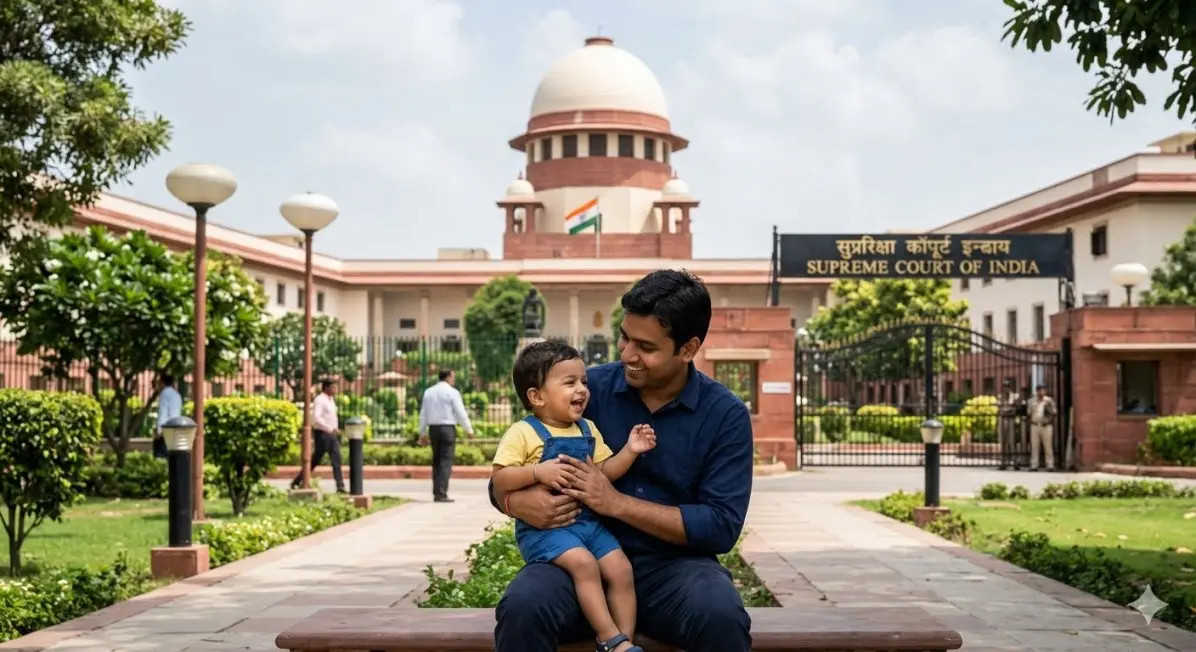
Short Summary: The Supreme Court’s recent observations on paternity leave have reignited discussions on work life balance, gender equality, and family rights in India. The debate could shape future labour policies, especially for working families in both urban and smaller city contexts.
India’s paternity leave policy has entered the national spotlight after the Supreme Court recently emphasized the need to consider structured provisions for fathers. The discussion around paternity leave law is not entirely new, but the court’s remarks have renewed urgency in policymaking circles. For millions of working families in India, this development could influence workplace norms, gender roles, and childcare responsibilities.
Why the Supreme Court Observations Matter for Labour Policy
The Supreme Court’s stance has highlighted gaps in India’s existing labour framework. Currently, there is no universal statutory mandate for paternity leave in the private sector, while central government employees are entitled to limited leave benefits. The court’s push signals a broader recognition that parenting responsibilities should not be viewed as solely maternal.
Labour law experts believe this conversation could lead to a more inclusive family welfare approach. Countries with structured paternity leave frameworks have seen improved workforce participation among women. India’s workforce participation rate for women remains comparatively low, making policy intervention increasingly relevant.
Gender Equality and Shared Parenting Responsibilities
The debate around paternity leave is closely linked to gender equality at home and at work. Traditional social norms in India have historically assigned childcare duties to mothers. However, urbanisation and changing family structures are gradually altering these expectations.
In cities beyond major metros, dual income households are becoming more common. Shared parenting can ease the pressure on working mothers while fostering stronger early child bonding. The Supreme Court’s observations may encourage policymakers to rethink outdated assumptions about caregiving roles.
Impact on Corporate Work Culture and Employee Retention
Introducing formal paternity leave provisions could reshape corporate work culture across industries. Organisations that prioritise family friendly policies often report higher employee satisfaction and retention. For startups and SMEs in Tier 2 and Tier 3 cities, such policies could become a differentiating factor in talent acquisition.
Human resource professionals note that younger employees increasingly value work life balance over traditional compensation incentives. If paternity leave becomes a statutory requirement, companies may need to redesign leave policies, workflow planning, and employee support systems.
Economic Considerations and Employer Concerns
While social benefits of paternity leave are widely discussed, employers often raise concerns about operational disruptions and financial costs. Small businesses may find it challenging to manage workforce absences without structured government support.
Policy experts suggest phased implementation or incentive based frameworks to balance economic realities with social welfare goals. Countries that successfully introduced paternity leave often adopted gradual models to ensure smooth adaptation for businesses.
Potential Legal Pathways and Policy Framework
The Supreme Court’s observations do not automatically translate into immediate legislation. However, they can influence future legal interpretations and parliamentary debates. Lawmakers may consider integrating paternity leave into existing labour codes or introducing a standalone policy.
Public consultations, corporate feedback, and social research are likely to shape the eventual policy direction. The broader aim would be to create a balanced system that supports families without imposing disproportionate burdens on employers.
Changing Social Narratives Around Fatherhood
Beyond legal and economic implications, the discussion reflects evolving social narratives about fatherhood in India. Younger generations are redefining parenting roles, emphasising emotional involvement and shared responsibilities.
Media representation, workplace awareness programs, and policy changes together can contribute to normalising active fatherhood. This cultural shift could have long term effects on child development outcomes and family well being.
Takeaways
• Supreme Court observations have revived national debate on formal paternity leave policy
• Shared parenting frameworks can support gender equality and workforce participation
• Employers may need to adapt HR policies if legislation progresses
• Social attitudes toward fatherhood and caregiving are gradually evolving
FAQ
What is the current status of paternity leave in India
Central government employees receive limited paternity leave benefits, but there is no universal law mandating it for all private sector workers.
Can Supreme Court observations directly create a new law
No, the court’s observations can influence policy discussions and legal interpretation, but legislation must be passed by Parliament.
How could paternity leave affect working mothers
Shared parental leave can reduce career interruptions for women and support better work life balance.
Will small businesses be affected by such policies
Yes, implementation could create operational challenges for smaller firms, which may require phased or incentive based policy approaches.












Leave a comment