

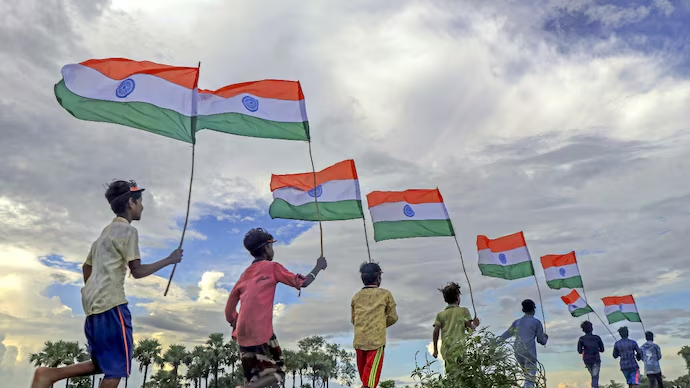
Short Summary: Pre election security drills and flag marches are increasingly visible in India’s smaller cities as authorities prepare for upcoming polls. The trend reflects heightened focus on law and order, voter confidence, and preventive policing during politically sensitive periods.
Pre election security drills have become a familiar sight in many Tier two cities as election cycles intensify across India. Flag marches conducted by police and paramilitary forces are aimed at ensuring peaceful polling, preventing unrest, and reassuring voters about safety. These measures are part of a broader strategy to maintain law and order during the high stakes democratic process.
Why Flag Marches Are Increasing Before Elections
Security flag marches are a preventive policing tool used to signal preparedness and deter potential disruptions. Election authorities and local administrations coordinate with police units to conduct visible patrols in sensitive areas. In Tier two cities where rapid urban growth has altered social dynamics, these marches are seen as a way to build public confidence.
Authorities identify locations based on past incidents, demographic diversity, and political sensitivity. Visible security presence can discourage misinformation driven tensions and reduce the likelihood of clashes. The increasing frequency of these drills also reflects the Election Commission’s emphasis on proactive security planning.
Role of Election Commission and Law Enforcement Agencies
The Election Commission of India plays a central role in planning election security frameworks. State police forces, central armed police units, and district administrations work in coordination to execute these plans. Flag marches typically take place in markets, residential clusters, and high footfall areas.
These drills are conducted to test response readiness and improve coordination among agencies. Officials often review crowd control mechanisms, communication systems, and emergency protocols during such exercises. In smaller cities, where resources may be limited compared to metros, structured rehearsals are crucial for effective election management.
Impact on Voter Confidence and Public Perception
Security visibility has a direct psychological impact on voter confidence. Residents in Tier two cities often rely on visible policing to assess the safety of participating in elections. Flag marches can reassure first time voters and women voters about the stability of the electoral environment.
However, some observers argue that excessive security presence might create an atmosphere of tension. Balancing preparedness with community engagement remains a key challenge for authorities. Public awareness campaigns and transparent communication help mitigate concerns while reinforcing the importance of peaceful voting.
Challenges Unique to Tier Two and Tier Three Cities
Smaller urban centres face distinct challenges during elections. Rapid population growth, migration patterns, and infrastructure limitations can complicate security planning. Law enforcement agencies must adapt strategies to local realities, including narrower streets, mixed residential commercial zones, and limited surveillance networks.
Digital misinformation is another emerging concern. Social media driven rumours can escalate quickly in tightly knit communities. Flag marches, combined with cyber monitoring initiatives, form part of a comprehensive approach to maintaining electoral stability.
Political Sensitivity and Preventive Security Strategy
Election periods often see heightened political activity, rallies, and campaign events. Preventive security strategies like flag marches are designed to minimise the risk of clashes between rival groups. Authorities also use these drills to familiarise forces with ground conditions and logistical requirements.
In recent years, the increasing competitiveness of elections has expanded the scope of security planning beyond traditional hotspots. Tier two cities are now recognised as politically significant due to growing voter populations and shifting electoral patterns.
Long Term Implications for Urban Policing
The normalisation of pre election flag marches may influence long term policing models in smaller cities. Lessons learned during election security exercises often inform broader law enforcement practices. Improved coordination, better resource allocation, and community engagement strategies can strengthen everyday policing outcomes.
Urban governance experts note that such drills highlight the need for sustained investment in police infrastructure. As smaller cities continue to expand economically and demographically, maintaining public order will require evolving security frameworks.
Takeaways
• Flag marches are a preventive security measure to ensure peaceful elections
• Election Commission coordination drives structured security planning
• Visible policing can strengthen voter confidence in smaller cities
• Urban growth and digital misinformation add new security challenges
FAQ
What is the purpose of flag marches before elections
They are conducted to deter potential disturbances, test preparedness, and reassure the public about safety during polling.
Who organises pre election security drills
The Election Commission coordinates with state police, paramilitary forces, and local administrations to conduct these drills.
Are flag marches mandatory in all cities
No, they are conducted based on risk assessment and local security requirements.
Do such drills affect voter turnout
Visible security presence can increase voter confidence, though perceptions may vary across communities.








Leave a comment