

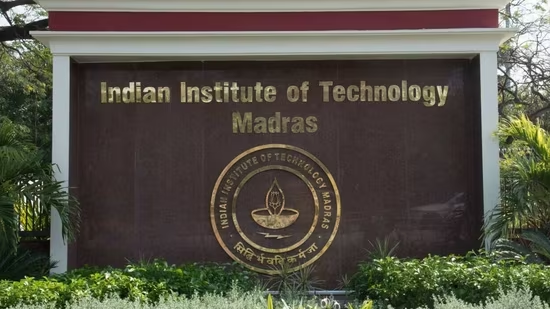
The IIT Madras entrepreneurship programme deadline today has triggered a surge in applications, especially from Tier-2 and Tier-3 cities. The trend reflects rising startup awareness, digital access, and a shift in career ambitions among students beyond metro hubs.
The IIT Madras entrepreneurship programme deadline today has brought attention to a noticeable trend. A growing number of applicants are coming from Tier-2 and Tier-3 cities, indicating a shift in how students across India are approaching careers, innovation, and startup opportunities.
Rising Interest in Entrepreneurship Among Tier-2 Students
The increase in applications from smaller cities is not incidental. Over the past few years, entrepreneurship has become a mainstream career choice rather than a niche path. Students from cities like Nagpur, Indore, Coimbatore, and Jaipur are actively exploring startup opportunities alongside traditional career options.
Access to digital platforms, online courses, and startup content has reduced the information gap between metro and non-metro students. Today, a student in a Tier-2 city can learn about funding, product development, and scaling strategies as easily as someone in Bengaluru or Mumbai.
The IIT Madras programme is particularly attractive because it combines academic credibility with practical exposure, making it a strong entry point for first-time founders.
Why IIT Madras Entrepreneurship Programme Stands Out
IIT Madras has built a reputation for supporting innovation through structured programmes and incubation support. Its entrepreneurship programme focuses on real-world problem solving, mentorship, and building scalable business models.
Unlike generic management courses, this programme is designed for individuals who want to launch or grow ventures. It often includes access to industry experts, startup ecosystems, and networking opportunities that are critical in the early stages of building a company.
For Tier-2 students, this becomes even more valuable. It offers them exposure that may not be readily available in their local environment, effectively bridging the ecosystem gap.
Role of Digital Access and Startup Awareness
One of the biggest enablers behind this trend is increased internet penetration. Affordable data and smartphone usage have allowed students in smaller cities to stay updated with startup trends, funding news, and entrepreneurial success stories.
Platforms like LinkedIn, YouTube, and startup-focused communities have normalized entrepreneurship as a viable career path. Stories of founders from non-metro backgrounds have also played a role in inspiring students.
This awareness is translating into action. Instead of limiting themselves to engineering or government job preparation, students are exploring programmes that align with innovation and business creation.
Shift in Career Mindset Beyond Traditional Paths
Traditionally, students in Tier-2 cities have leaned towards stable career options such as government jobs, engineering roles, or corporate employment. However, this mindset is evolving.
The new generation is more open to calculated risks. They are willing to experiment with startup ideas, freelancing, and digital businesses. Programmes like the one offered by IIT Madras provide a structured environment where these risks can be managed and guided.
Parents are also becoming more supportive as awareness around startup success stories increases. This cultural shift is a key factor behind the growing number of applications.
Competitive Advantage for Tier-2 Applicants
Interestingly, Tier-2 students often bring unique advantages to entrepreneurship. They have firsthand understanding of local problems, underserved markets, and cost-sensitive consumers.
This perspective allows them to build solutions that are practical and scalable in the Indian context. Many successful startups in India have emerged from solving problems rooted in smaller cities rather than metros.
By enrolling in programmes like IIT Madras entrepreneurship courses, these students can refine their ideas, gain mentorship, and improve their chances of success.
What This Trend Means for India’s Startup Ecosystem
The surge in applications from Tier-2 cities signals a broader shift in India’s startup ecosystem. Innovation is no longer concentrated in a few metro hubs. It is becoming more distributed, inclusive, and diverse.
Educational institutions like IIT Madras are playing a critical role in enabling this transition. By opening doors to students from different regions, they are helping build a more balanced and representative startup ecosystem.
In the long term, this could lead to the emergence of new startup clusters in smaller cities, reducing dependency on traditional tech hubs.
Takeaways
- IIT Madras entrepreneurship programme is seeing strong interest from Tier-2 students
- Digital access and startup awareness are driving applications from smaller cities
- Students are shifting from traditional careers to entrepreneurship-focused paths
- Tier-2 founders bring unique insights into underserved markets
FAQs
Why are more Tier-2 students applying for entrepreneurship programmes?
Increased internet access, exposure to startup success stories, and changing career preferences are encouraging more students to explore entrepreneurship.
What makes the IIT Madras entrepreneurship programme attractive?
It offers mentorship, industry exposure, and practical training for building startups, making it suitable for aspiring founders.
Do Tier-2 students have an advantage in startups?
Yes, they often understand local market problems better, which helps in building relevant and scalable solutions.
Is entrepreneurship becoming a mainstream career option in India?
Yes, especially among younger generations who are more open to innovation and non-traditional career paths.









Leave a comment