

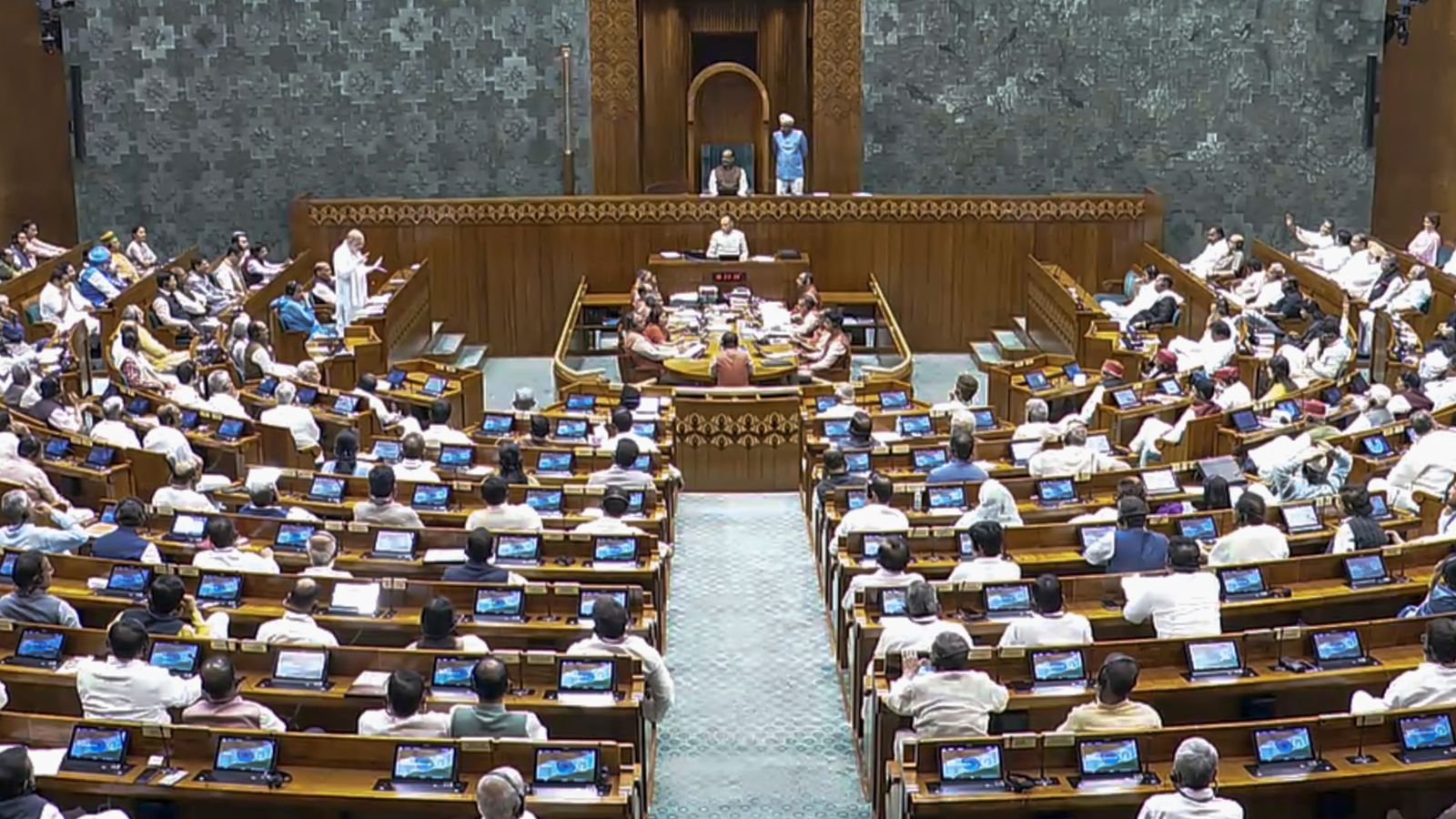
The Women’s Reservation Bill failing in the Lok Sabha has triggered a fresh political debate across India. The development raises critical questions about representation, electoral strategy, and how state politics may shift ahead of upcoming elections.
The failure of the Women’s Reservation Bill in the Lok Sabha marks a significant moment in India’s legislative and political landscape. The bill, which aimed to reserve 33 percent of seats for women in the Lok Sabha and state legislative assemblies, could not secure the required two-thirds majority. This outcome has immediate and long-term implications for political parties, voter sentiment, and future electoral strategies, especially in states where gender representation remains low.
Why the Women’s Reservation Bill Failed
The Women’s Reservation Bill required broad political consensus because it involved a constitutional amendment. While several parties expressed support in principle, differences emerged over implementation. Key sticking points included demands for sub-quotas for OBC women and concerns about seat rotation affecting sitting MPs.
The lack of unified backing across parties ultimately led to insufficient votes. Some regional parties also viewed the bill through the lens of state-level caste dynamics, which influenced their stance in Parliament. This highlights a recurring pattern where national reforms often collide with regional political priorities.
Impact on State Politics and Regional Power Dynamics
The bill’s failure is likely to reshape state-level political narratives. In states like Uttar Pradesh, Bihar, and Maharashtra, where caste equations play a dominant role, the debate around women’s representation is expected to merge with existing social justice discussions.
Regional parties may use this development to strengthen their positioning. For example, parties advocating for OBC representation could frame the bill’s failure as a missed opportunity for inclusive reform. This could influence candidate selection strategies in upcoming state elections, with more emphasis on women candidates from specific communities.
At the same time, states with relatively higher female political participation, such as West Bengal and Tamil Nadu, may continue to push for internal party-level reforms rather than waiting for central legislation.
Electoral Strategy Ahead of Upcoming Elections
The failure of the bill is not just a legislative event; it is an electoral signal. Political parties are likely to recalibrate their strategies ahead of 2026 and 2027 elections. Expect more voluntary commitments to field women candidates, even without a legal mandate.
National parties may attempt to position themselves as pro-women by increasing ticket distribution to female candidates. This approach has already shown results in local body elections where women voters have emerged as a decisive bloc.
For Tier-2 and Tier-3 constituencies, where grassroots mobilization plays a key role, women candidates could become central to outreach strategies. Self-help groups, local networks, and welfare schemes targeting women may gain more political importance.
Representation Gap and Ground Reality
Despite decades of debate, women’s representation in Indian legislatures remains limited. In the current Lok Sabha, women account for roughly 15 percent of members. At the state level, the numbers are often lower.
The failure of the bill means structural change is delayed once again. Without mandated quotas, progress will depend on party willingness rather than legal obligation. This raises concerns about whether incremental change can match the pace required to achieve meaningful gender parity.
At the grassroots level, however, reservation in Panchayati Raj institutions has already demonstrated that quotas can significantly improve participation. The contrast between local and national representation continues to be a key talking point in policy discussions.
What Happens Next
The bill’s failure does not necessarily end the conversation. It is likely to return in future sessions, possibly with modifications addressing concerns raised by various parties.
Political consensus remains the biggest hurdle. Any future attempt will need to balance gender representation with caste-based demands and regional sensitivities. Until then, the focus may shift to internal party reforms and state-level initiatives.
For voters, especially women in non-metro regions, this issue could become a factor in evaluating political promises. The gap between rhetoric and action is now more visible, which may influence voting behavior in upcoming elections.
Takeaways
- The Women’s Reservation Bill failed due to lack of consensus and required majority
- State politics will see renewed focus on caste and gender representation debates
- Political parties may increase women candidates voluntarily ahead of elections
- Structural gender parity in legislatures remains delayed without legal mandate
FAQs
Why did the Women’s Reservation Bill fail in Lok Sabha?
It failed because it did not secure the required two-thirds majority, largely due to disagreements over implementation and sub-quotas.
What was the main objective of the bill?
The bill aimed to reserve 33 percent of seats in the Lok Sabha and state assemblies for women.
How will this impact upcoming elections?
Parties may adjust strategies by fielding more women candidates voluntarily to appeal to voters.
Will the bill be reintroduced in the future?
Yes, it is likely to return with modifications, but passing it will depend on achieving broader political consensus.









Leave a comment