

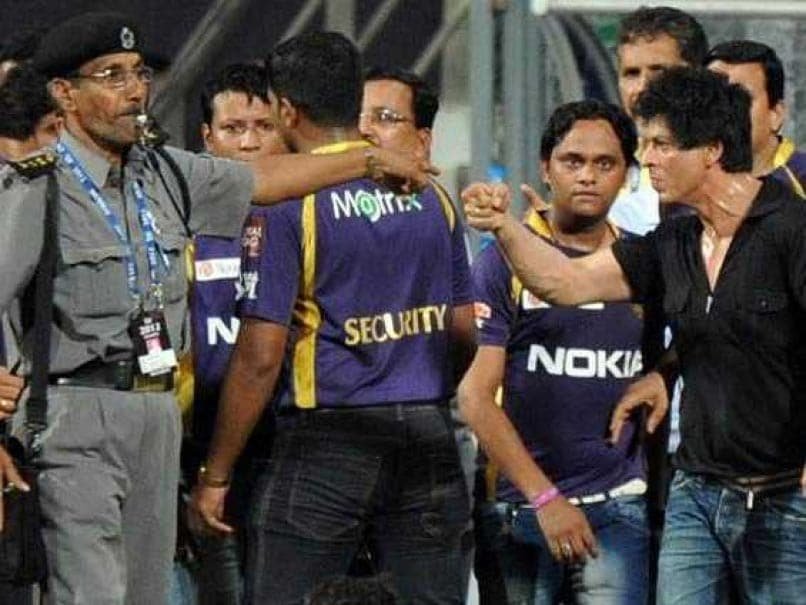
In a recent interview that has taken social media by storm, former ACP Iqbal Shaikh, who was the divisional officer in charge of the Wankhede area in 2012, revisited the specific chain of events. According to Shaikh, the match between Kolkata Knight Riders and Mumbai Indians had already concluded, and the stadium lights were being dimmed when the tension peaked. Shah Rukh Khan was on the field playing with his children and their friends. The flashpoint occurred when a security guard blew a whistle to clear the ground, a move that the actor perceived as aggressive toward the children. Shaikh clarified that what the Mumbai Cricket Association (MCA) officials initially termed a “raada” (scene) was essentially a protective father reacting to perceived manhandling.
Why the Internet is Re-Evaluating the Incident in 2026
The reason this decade-old controversy has returned to the digital forefront is the timing of Iqbal Shaikh’s detailed account. In the era of instant social media trials, the 2012 incident was largely documented through shaky footage and one-sided official statements from the MCA. However, Shaikh’s perspective provides a neutral law enforcement lens that was missing from the public discourse. He noted that he had to personally intervene and escort the actor out of the stadium to prevent the situation from escalating into a physical fight. This narrative shift has prompted a wave of millennial and Gen Z fans to reconsider the “arrogant star” label previously attached to Khan, focusing instead on the context of parental instinct and security overreach.
The Legal Fallout and the Path to Grace
Following the 2012 spat, the MCA imposed a strict five year ban on Shah Rukh Khan, prohibiting him from entering any of their premises. While the police later gave the actor a clean chit in 2016, stating that no cognizable offense was committed, the professional fallout remained a significant chapter in IPL history. Khan himself eventually addressed the matter, admitting he lost his temper after a guard used a word he found offensive and “religious” in nature. By 2015, the ban was lifted early, and Khan famously noted that “grace matters more than who was right or wrong.” The current discussion reflects a broader cultural shift in India where celebrity conduct is being analyzed with more nuance regarding personal boundaries.
Security Protocols and the Lessons for Modern Stadiums
The 2012 incident served as a wake-up call for the Board of Control for Cricket in India (BCCI) and various stadium authorities across the country. It highlighted the need for specialized “celebrity management” and clearer post-match field access protocols. Today, Indian stadiums employ much more sophisticated crowd control measures that distinguish between unauthorized entry and legitimate team owner presence. The revisiting of this story in 2026 serves as a reminder of how much stadium security culture has matured. Former ACP Shaikh’s clarification emphasizes that better communication between private security and high-profile individuals could have easily prevented the years of legal and public relations battles that followed.
The Lasting Legacy of the Wankhede Incident
Even 14 years later, the Wankhede spat is cited as the primary reason why Shah Rukh Khan maintained a distant relationship with the Mumbai stadium for years. The internet’s fascination with this “cold war” persists because it involves two of India’s biggest passions: Bollywood and Cricket. As fans dissect the former ACP’s statements, the consensus is shifting toward a realization that the incident was a byproduct of high-stress environments and poor conflict resolution. While the ban is long gone, the memory of that night remains a case study in how mismanaged interactions can become permanent stains on a public figure’s legacy, only to be cleaned up years later by the truth of a firsthand witness.
Takeaways for News Readers
- Former ACP Iqbal Shaikh confirms the 2012 incident was primarily a result of miscommunication over ground access for children.
- The actor’s reaction was triggered by a security guard’s whistle and perceived manhandling of his daughter and her friends.
- Mumbai Police officially cleared Shah Rukh Khan of any criminal charges in 2016, citing no evidence of a cognizable offense.
- The resurgence of the story in 2026 is driven by a neutral police account that contradicts the original 2012 “celebrity brawl” narrative.
Frequently Asked Questions
Why was Shah Rukh Khan banned from Wankhede Stadium?
He was banned following an altercation with security staff and MCA officials after an IPL match in 2012. The officials accused him of misbehavior and entering the field without permission, while the actor claimed he was defending children from being mistreated.
How long did the Wankhede ban actually last?
The original ban was set for five years, from 2012 to 2017. However, the Mumbai Cricket Association decided to lift the ban early in 2015, allowing the actor to return after three years.
What did the former ACP clarify in his recent 2026 interview?
Iqbal Shaikh clarified that the situation was largely a “miscommunication.” He explained that the actor was playing with children in a corner of the stadium and the confrontation began when security guards attempted to remove them using aggressive methods.
Did Shah Rukh Khan apologize for the Wankhede incident?
The actor did not apologize for the specific act of defending his children but expressed regret for losing his temper. He later thanked the MCA for their “graciousness” when the ban was lifted, emphasizing a move toward reconciliation.








Leave a comment