

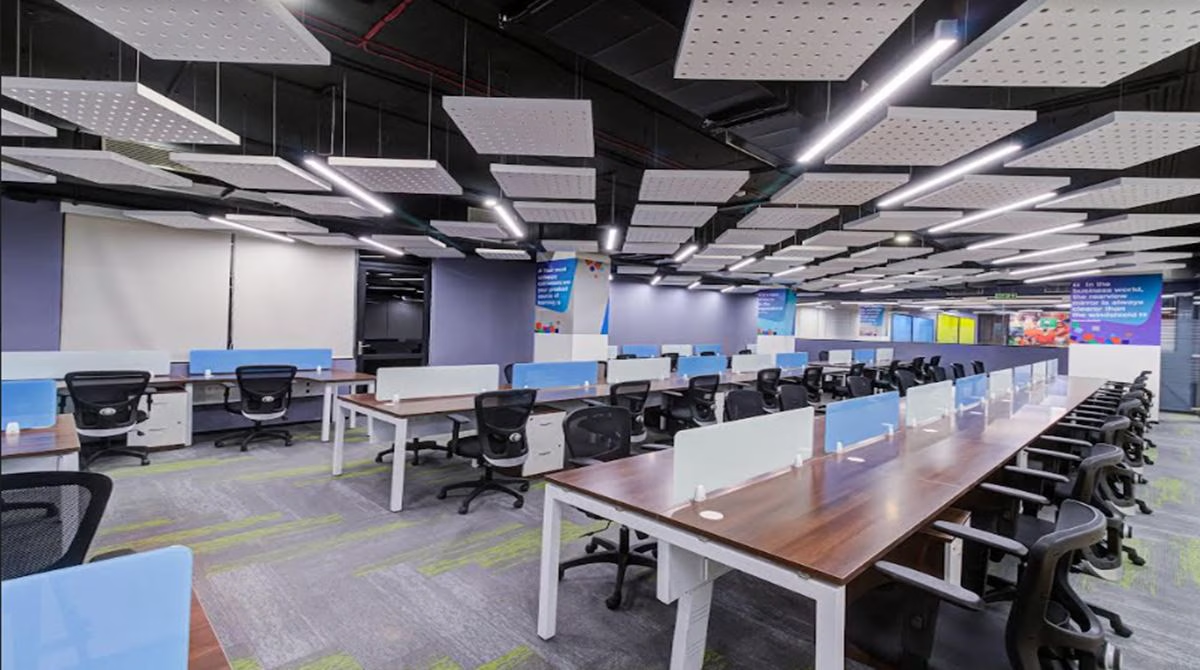
The demand for co-working spaces in cities such as Nagpur, Indore, Surat, Jaipur, and Coimbatore is growing steadily. Driven by remote work, startup activity, and changing workplace preferences, emerging cities are becoming important destinations for flexible office spaces across India.
Why Co-Working Spaces Are Expanding Beyond Metro Cities
The rise of co-working spaces in Tier-2 cities marks an important shift in India’s commercial real estate landscape. For years, flexible workspaces were largely concentrated in major metropolitan areas such as Bengaluru, Mumbai, Delhi, Hyderabad, and Pune. However, growing business activity in smaller cities is creating new opportunities for workspace providers.
Companies, freelancers, startups, and remote workers are increasingly seeking flexible office solutions outside traditional business hubs. Cities like Nagpur, Indore, Surat, Lucknow, and Bhubaneswar are witnessing increased demand for modern workspaces that offer professional infrastructure without the long-term commitments associated with conventional office leases.
This trend reflects broader economic and workplace changes taking place across India, where business growth is becoming more geographically distributed.
Remote Work and Hybrid Models Drive Flexible Office Demand
One of the biggest factors behind the growth of co-working spaces is the widespread adoption of remote and hybrid work models. Many organizations now allow employees to work from locations outside their headquarters while maintaining productivity through digital collaboration tools.
While working from home remains common, many professionals seek dedicated work environments that offer reliable internet, meeting rooms, and fewer distractions. Co-working spaces provide a practical solution by combining flexibility with professional amenities.
In cities such as Nagpur and Indore, professionals employed by companies based in Bengaluru, Mumbai, or Delhi can work closer to home without sacrificing workplace quality. This arrangement benefits both employees and employers by reducing costs while maintaining operational efficiency.
The increasing acceptance of flexible work has significantly expanded the customer base for co-working operators across emerging markets.
Startups and Small Businesses Are Fueling Growth
The growth of startup ecosystems in Tier-2 cities is another major contributor to rising demand. Entrepreneurs and small businesses often prefer co-working spaces because they offer affordable access to office infrastructure, networking opportunities, and business support services.
Unlike traditional office setups, co-working facilities require lower upfront investment. Startups can scale their workspace requirements as they grow without being locked into long-term contracts.
Cities such as Indore and Surat have developed vibrant business communities supported by educational institutions, skilled talent pools, and improving digital infrastructure. These factors encourage new business formation and increase demand for flexible work environments.
For many early-stage companies, co-working spaces serve as launchpads that provide both operational convenience and professional credibility.
Emerging Cities Offer Cost Advantages
Affordability remains one of the strongest advantages of Tier-2 cities. Commercial real estate costs in emerging cities are generally lower than those in major metropolitan areas, making it easier for workspace operators to expand and offer competitive pricing.
Businesses also benefit from reduced operating expenses. Renting a desk or office in Nagpur or Surat is often significantly less expensive than securing similar space in Mumbai or Bengaluru.
This cost advantage is particularly attractive to startups, consultants, freelancers, and remote teams seeking professional work environments without high overhead costs. Lower costs allow businesses to allocate more resources toward hiring, technology, and expansion rather than office rentals.
As a result, co-working spaces are becoming an essential part of the business ecosystem in smaller cities.
Infrastructure Development Is Supporting Expansion
Infrastructure improvements are making Tier-2 cities increasingly attractive for businesses and professionals. Better roads, airports, public transport systems, internet connectivity, and commercial developments are supporting economic growth across these regions.
Many emerging cities now offer modern business districts, IT parks, educational institutions, and residential communities that create a favorable environment for knowledge-based industries.
Nagpur’s strategic location and logistics infrastructure, Indore’s reputation as a growing business and educational hub, and Surat’s expanding commercial ecosystem have all contributed to increased demand for flexible workspaces.
As infrastructure continues to improve, more companies are likely to establish regional operations in these cities, further boosting the need for co-working facilities.
The Future of Flexible Workspaces in Tier-2 India
Industry trends suggest that demand for co-working spaces in emerging cities is likely to remain strong in the coming years. Flexible work models are becoming a permanent feature of many organizations, while entrepreneurship continues to grow beyond traditional metro centers.
Workspace providers are also adapting their offerings to local needs by introducing private cabins, enterprise solutions, training facilities, event spaces, and community-focused programs.
Rather than serving only freelancers and startups, modern co-working spaces are increasingly attracting corporate teams, consultants, digital creators, and regional offices of larger organizations.
As India’s economic growth expands beyond major metros, co-working spaces are expected to play a vital role in supporting business activity and professional mobility across Tier-2 and Tier-3 cities.
Takeaways
• Co-working spaces are growing rapidly in cities such as Nagpur, Indore, Surat, and Jaipur.
• Remote and hybrid work models are increasing demand for flexible office solutions.
• Startups and small businesses are driving occupancy in emerging city workspaces.
• Lower costs and improving infrastructure make Tier-2 cities attractive business destinations.
FAQ
Q1. Why are co-working spaces becoming popular in Tier-2 cities?
They offer affordable, flexible office solutions for startups, freelancers, remote workers, and businesses looking to reduce operational costs.
Q2. Which Indian cities are witnessing strong co-working growth?
Cities such as Nagpur, Indore, Surat, Jaipur, Coimbatore, Lucknow, and Bhubaneswar are seeing increasing demand for flexible workspaces.
Q3. How does remote work affect co-working demand?
Remote and hybrid work models encourage professionals to seek professional work environments closer to home, increasing demand for co-working facilities.
Q4. Are co-working spaces only used by startups?
No. Many corporate teams, consultants, freelancers, digital creators, and regional offices also use co-working spaces due to their flexibility and convenience.
(co-working spaces in India, flexible office spaces, Nagpur co-working trend, Indore startup ecosystem, Surat business growth, Tier-2 city development, remote work India, hybrid workplace trends, startup office solutions, commercial real estate India)











Leave a comment