

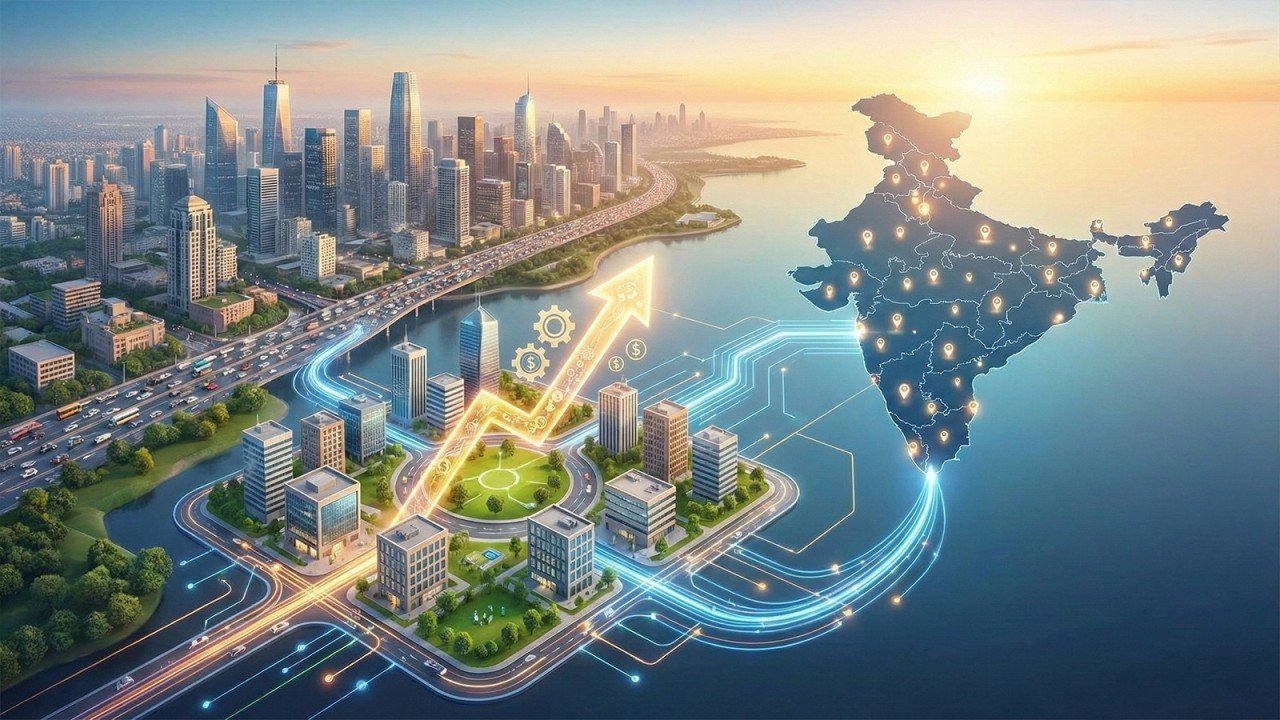
India’s Tier-2 cities are undergoing a major transformation as infrastructure development moves beyond traditional metropolitan centers. Improved roads, airports, public transport systems, industrial corridors, and digital connectivity are reshaping cities such as Nagpur, Indore, Surat, Coimbatore, Bhubaneswar, Lucknow, and Visakhapatnam. This shift is creating new economic opportunities while changing how millions of Indians live, work, and travel.
Why Tier-2 Cities Are Becoming Infrastructure Hubs
For decades, India’s urban growth was concentrated in major metros like Delhi, Mumbai, Bengaluru, Chennai, and Kolkata. However, rising population pressure, increasing real estate costs, and traffic congestion have encouraged both governments and businesses to focus on smaller urban centers.
Infrastructure expansion in Tier-2 cities has emerged as a key strategy for balanced regional development. Large-scale investments through programs such as Smart Cities Mission, PM Gati Shakti, Bharatmala, Sagarmala, and industrial corridor projects have accelerated development across several states.
Cities like Nagpur, Indore, Surat, and Lucknow are increasingly being viewed as future growth engines due to their strategic location, lower operating costs, and improving urban infrastructure.
Roads, Highways and Transport Networks Drive Growth
One of the most visible signs of infrastructure expansion is the rapid improvement in transportation networks. New expressways, ring roads, flyovers, and highway connectivity projects are reducing travel times and improving access to business districts.
The Delhi-Mumbai Expressway, Purvanchal Expressway, Samruddhi Mahamarg in Maharashtra, and various state highway upgrades are strengthening connections between major cities and emerging urban centers.
Improved connectivity has encouraged logistics companies, manufacturers, and service providers to establish operations in Tier-2 cities. Better transportation networks also support tourism, trade, and local entrepreneurship by making markets more accessible.
Public transportation systems are also receiving attention. Cities such as Nagpur and Lucknow have expanded metro services, while many others are investing in modern bus systems and integrated urban mobility solutions.
Airport Expansion Brings New Opportunities
Airport development has become another important driver of growth. Several Tier-2 cities now have upgraded airports capable of handling increased passenger traffic and cargo operations.
Cities such as Indore, Bhubaneswar, Coimbatore, Ranchi, and Surat have witnessed improvements in aviation infrastructure. Enhanced air connectivity helps attract investment, supports tourism, and enables faster business travel.
Regional connectivity initiatives have also made air travel more accessible to residents of smaller cities. As connectivity improves, businesses can operate more efficiently while maintaining closer links with national and international markets.
The growth of cargo facilities and logistics hubs near airports is creating additional employment opportunities and strengthening regional economies.
Digital Infrastructure and Smart City Development
Modern infrastructure is no longer limited to physical assets. Digital infrastructure has become equally important in determining a city’s competitiveness.
High-speed internet networks, public Wi-Fi zones, smart traffic management systems, digital governance platforms, and surveillance systems are being introduced across many Tier-2 cities.
Smart City projects have focused on improving service delivery, traffic management, waste collection, water supply monitoring, and public safety. These initiatives aim to make urban administration more efficient while enhancing residents’ quality of life.
Digital connectivity has also supported the rise of remote work, online education, e-commerce, and digital entrepreneurship. As a result, many professionals no longer feel compelled to relocate to major metropolitan areas.
Industrial Corridors and Economic Expansion
Infrastructure development is closely linked with economic growth. Industrial corridors, manufacturing zones, and logistics parks are attracting businesses to emerging cities.
Tier-2 cities often offer lower land costs, reduced operational expenses, and a growing skilled workforce. This combination makes them attractive destinations for industries ranging from manufacturing and logistics to information technology and services.
Several cities are witnessing increased investment in warehousing, data centers, industrial parks, and commercial real estate. This growth creates jobs while stimulating demand for housing, retail, healthcare, and education services.
The result is a more diversified economic landscape that reduces excessive dependence on a handful of metropolitan regions.
Challenges That Still Need Attention
Despite impressive progress, significant challenges remain. Rapid urbanization can place pressure on water resources, waste management systems, affordable housing, and environmental sustainability.
Urban planners must ensure that infrastructure development remains inclusive and environmentally responsible. Effective governance, long-term planning, and maintenance of public assets will be essential for sustaining growth.
Cities must also focus on improving healthcare, education, public transport integration, and climate resilience to meet future demands.
The Future of Urban India
The rise of Tier-2 cities represents one of the most important shifts in India’s urban development story. Infrastructure expansion is creating new centers of economic activity while improving living standards for millions of residents.
As connectivity, digital infrastructure, and industrial investment continue to grow, Tier-2 cities are likely to play a central role in India’s economic future. Rather than serving as alternatives to metropolitan areas, these cities are increasingly becoming powerful urban destinations in their own right.
Key Takeaways
• Infrastructure investment is transforming Tier-2 cities into major economic hubs.
• Improved roads, airports, and public transport are boosting connectivity and business activity.
• Digital infrastructure and Smart City initiatives are improving urban services and quality of life.
• Sustainable planning remains essential to manage future urban growth effectively.
FAQ
Q1. What are Tier-2 cities in India?
Tier-2 cities are medium-sized urban centers that are smaller than major metropolitan cities but have significant economic and population growth potential.
Q2. Why is infrastructure development important for Tier-2 cities?
Infrastructure improves connectivity, attracts investment, creates jobs, and enhances the overall quality of life for residents.
Q3. Which Tier-2 cities are seeing major infrastructure growth?
Cities such as Nagpur, Indore, Surat, Lucknow, Bhubaneswar, Coimbatore, Visakhapatnam, and Ranchi are experiencing significant development.
Q4. How does infrastructure growth impact local economies?
Better infrastructure supports industries, tourism, logistics, real estate, and entrepreneurship, leading to broader economic expansion.
(urban infrastructure in India, Tier-2 cities growth, Smart Cities Mission, infrastructure development, Indian urbanization, regional economic growth, airport expansion India, city connectivity projects)










Leave a comment