

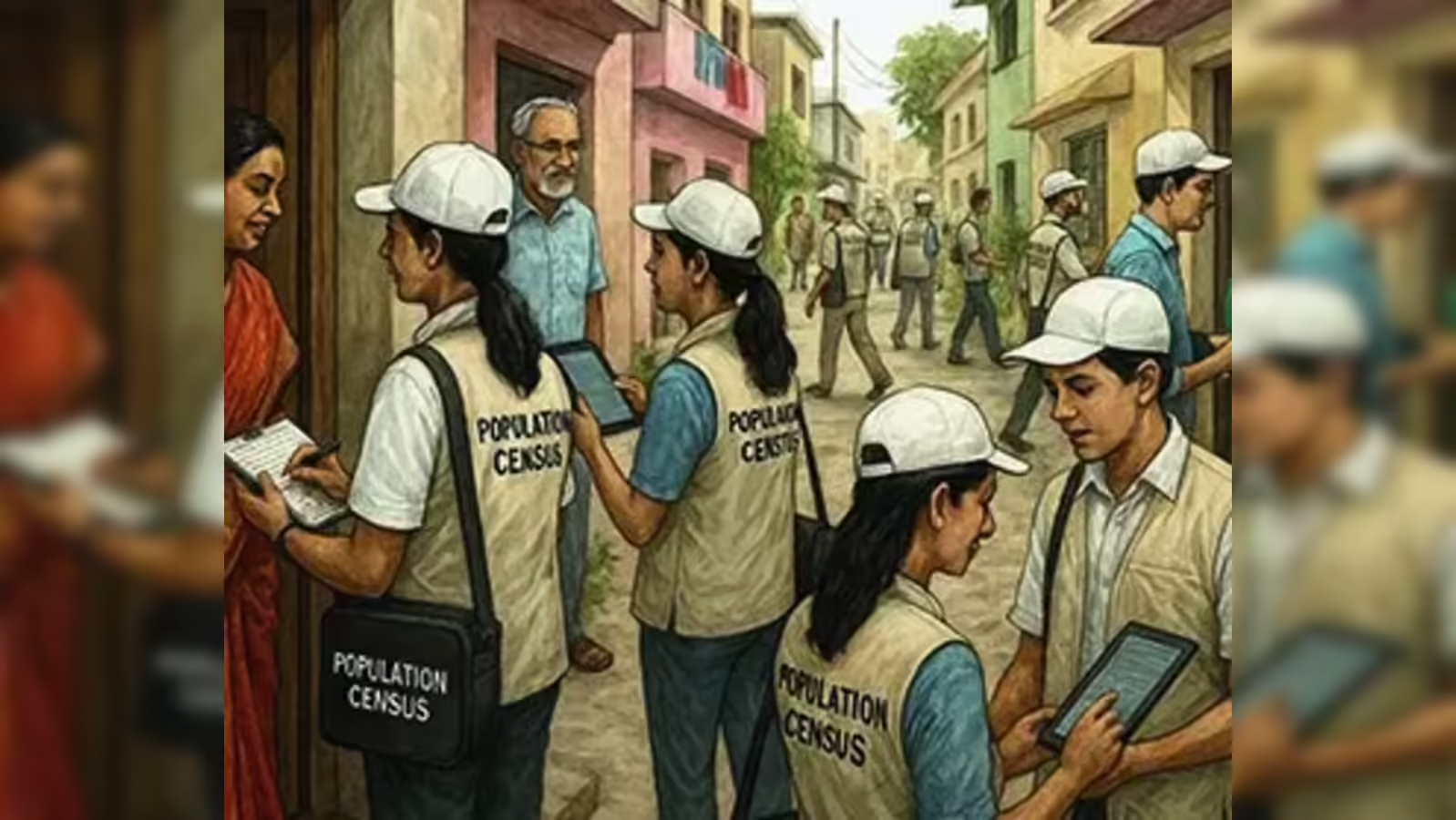
India’s preparations for Census 2027 are gathering momentum, marking the country’s first population count in more than a decade. Beyond population figures, the exercise is expected to influence urban planning, infrastructure development, welfare schemes, and political representation, especially for small cities and emerging towns across the country.
The Census 2027 process is becoming an important topic for policymakers, local administrations, and residents of smaller urban centers. As government agencies begin groundwork for the nationwide exercise, many experts believe the census could significantly shape the future development of India’s Tier-2 and Tier-3 cities.
Why Census 2027 Matters
The census is India’s largest data collection exercise. It provides detailed information about population size, age groups, literacy, housing, migration, employment patterns, and access to basic services.
The upcoming Census 2027 is particularly significant because the previous census was conducted in 2011. Since then, India has experienced major demographic, economic, and urban changes. Millions of people have migrated from villages to towns, new industrial hubs have emerged, and many smaller cities have expanded rapidly.
Accurate population data helps governments make informed decisions about resource allocation and future planning. Without updated figures, many welfare programs and development projects risk being based on outdated information.
Impact on Small Cities and Growing Towns
One of the biggest outcomes of Census 2027 could be a clearer picture of urban growth outside major metropolitan areas.
Cities such as Nagpur, Indore, Surat, Coimbatore, Ranchi, and several district headquarters have witnessed significant population growth over the last decade. Many smaller towns have evolved into economic centers due to manufacturing, logistics, education, healthcare, and digital services.
The census will help authorities understand where population pressure is increasing. This information can influence decisions related to roads, public transport, water supply, sewage systems, schools, hospitals, and housing projects.
For rapidly growing towns, updated data may strengthen demands for additional government funding and infrastructure support.
Better Planning for Public Services
A key benefit of Census 2027 is improved planning for essential public services.
Population estimates affect how governments distribute resources. If a town’s actual population has grown significantly since 2011, existing schools, healthcare facilities, and public infrastructure may no longer meet local needs.
Updated census data can help identify areas where public services are under strain. Local governments may use these insights to plan new educational institutions, healthcare centers, public transportation routes, and utility networks.
For residents, this could eventually translate into better access to services and improved quality of life.
Migration Trends and Urban Development
Migration is expected to be one of the most closely watched aspects of Census 2027.
Over the past decade, many people have moved from rural areas to smaller cities in search of jobs, education, and better living standards. At the same time, rising costs in major metropolitan regions have encouraged some businesses and workers to relocate to Tier-2 and Tier-3 cities.
The census will provide valuable insights into these migration patterns. Policymakers can use this information to anticipate future urban growth and address challenges such as housing shortages, traffic congestion, and employment needs.
Understanding migration trends is also important for designing skill development programs and workforce planning initiatives.
Digital Census and Improved Data Collection
Another major development is the increasing use of technology in census operations.
Authorities have indicated that digital tools will play a larger role in data collection compared to previous exercises. Digital enumeration can improve accuracy, reduce processing time, and help generate faster insights for policymakers.
Technology-driven data collection may also make it easier to identify population changes at a local level. This can benefit smaller towns that often receive less attention than major metropolitan regions.
More reliable data can support evidence-based policymaking and ensure development plans reflect current realities rather than outdated estimates.
Political and Administrative Significance
Beyond development planning, Census 2027 may also have broader administrative implications.
Population data influences the distribution of government resources and serves as an important reference for various policy decisions. Accurate demographic information helps governments assess regional needs and prioritize investments.
For local administrations, updated census figures can strengthen planning frameworks and support long-term development strategies. Smaller cities that demonstrate significant growth may gain greater visibility in state and national planning discussions.
As India continues its urban transformation, reliable population data will become increasingly important for effective governance.
The Road Ahead
Census 2027 is more than a statistical exercise. It represents an opportunity to capture how India has changed over the past decade and where future growth is likely to occur.
For small cities and towns, the census could become a crucial tool for securing infrastructure investments, improving public services, and strengthening development planning. As urbanization continues to spread beyond major metros, the data collected during Census 2027 may help shape the next phase of India’s economic and social development.
Key Takeaways
- Census 2027 will provide India’s first comprehensive population update since 2011.
- Small cities and towns are expected to gain greater visibility in development planning.
- Updated data can improve infrastructure, healthcare, education, and public service delivery.
- Migration and urban growth trends will be critical areas of focus.
FAQs
Q1. Why is Census 2027 important for small cities?
It will provide updated population and demographic data that can influence infrastructure funding, public services, and urban planning.
Q2. How often is the Indian census conducted?
India traditionally conducts a population census every ten years.
Q3. What information does the census collect?
The census gathers data on population, housing, literacy, employment, migration, and various social and economic indicators.
Q4. How can Census 2027 affect local development projects?
Updated population figures can help governments allocate resources more accurately and plan projects based on current needs.
(Keywords: Census 2027, India Census, Tier-2 Cities India, Small Town Development, Urban Growth India, Population Census 2027, Infrastructure Planning, Migration Trends India, Smart Cities Development, Local Governance India)









Leave a comment