

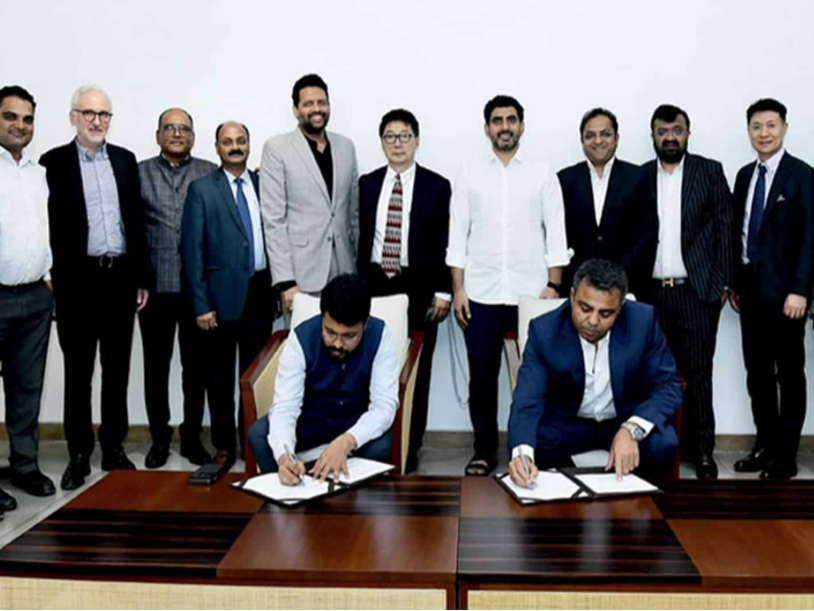
The India-Japan Annual Summit has placed semiconductors and critical minerals at the centre of bilateral cooperation. If translated into investments and industrial projects, the partnership could strengthen India’s manufacturing ecosystem, improve supply chain resilience, and create new employment opportunities across several states.
The Japan-India semiconductor partnership has emerged as one of the biggest talking points during the 16th India-Japan Annual Summit. Leaders from both countries are discussing stronger cooperation in semiconductors, critical minerals, artificial intelligence, clean energy and supply chain resilience, reflecting a shared effort to reduce dependence on concentrated global supply chains.
While the discussions have strategic implications for both nations, they also carry significant economic potential for India’s manufacturing sector. If agreements announced during the summit lead to investments and technology partnerships, they could generate thousands of direct and indirect jobs in electronics manufacturing, chip packaging, mineral processing and industrial infrastructure.
Why Semiconductors and Critical Minerals Matter
Semiconductors power nearly every modern electronic device, from smartphones and laptops to electric vehicles, medical equipment and industrial automation systems. Meanwhile, critical minerals such as lithium, cobalt, graphite and rare earth elements are essential for manufacturing batteries, electronic components and advanced technologies.
The global semiconductor industry experienced severe supply chain disruptions over the past few years, encouraging countries to diversify production and reduce dependence on a limited number of suppliers. India and Japan are now seeking to strengthen cooperation in these strategic sectors through investment, technology sharing and industrial partnerships. The summit agenda specifically highlights semiconductors, critical minerals and economic security as priority areas.
For India, building domestic capability in these sectors aligns with long-term industrial policies focused on electronics manufacturing and supply chain resilience.
Manufacturing Jobs Could Expand Beyond Metro Cities
One of the biggest opportunities lies in employment generation.
Semiconductor manufacturing requires a large ecosystem that extends far beyond fabrication plants. Chip packaging, testing facilities, logistics, industrial construction, equipment maintenance and component manufacturing all create employment opportunities.
Many of these industries can be established outside major metropolitan regions where industrial land is more readily available. Tier 2 cities such as Mysuru, Nagpur, Coimbatore, Vadodara, Indore and Bhubaneswar already possess engineering talent, industrial infrastructure and educational institutions capable of supporting advanced manufacturing.
As semiconductor ecosystems expand, local businesses supplying machinery, packaging materials, chemicals, transport and engineering services could also benefit.
Critical Minerals Can Strengthen India’s Industrial Supply Chain
Secondary keyword: Critical minerals partnership
Critical minerals have become strategically important because they form the foundation of batteries, renewable energy technologies and electronics manufacturing.
India currently imports many of these materials or depends on international supply chains for processing. Japan has decades of expertise in advanced material processing, recycling technologies and industrial manufacturing.
Greater collaboration may help India improve mineral processing capabilities, encourage recycling of electronic waste and develop stronger domestic supply chains. Discussions between the two countries are expected to include cooperation on energy resilience, mineral security and technology partnerships.
A stronger supply chain would reduce production risks for manufacturers while supporting India’s ambition to become a global electronics manufacturing hub.
Opportunities for MSMEs and Indian Startups
Large semiconductor projects rarely benefit only multinational corporations.
Thousands of micro, small and medium enterprises often become suppliers for industrial equipment, clean room infrastructure, specialised chemicals, precision engineering, logistics and industrial services.
Indian startups working in semiconductor design, industrial automation, artificial intelligence and advanced manufacturing software could also find opportunities through collaboration with Japanese companies.
Educational institutions may benefit as demand rises for specialised training in electronics engineering, semiconductor design, material sciences and manufacturing technologies.
This could encourage universities and skill development centres to introduce new industry-focused programmes aligned with emerging workforce requirements.
Challenges Still Need to Be Addressed
Although the partnership presents promising opportunities, several challenges remain.
Semiconductor manufacturing requires substantial investment, reliable electricity, high-quality water supply, advanced infrastructure and highly skilled workers. Building complete semiconductor ecosystems takes several years rather than months.
India will also need continued policy support, faster project approvals, workforce training and stable industrial regulations to attract long-term investments.
Similarly, developing domestic capabilities in critical minerals involves exploration, processing technologies, environmental safeguards and international cooperation.
The success of the partnership will therefore depend not only on summit announcements but also on sustained implementation by governments and private industry.
What the India-Japan Talks Signal
The discussions at the India-Japan Annual Summit indicate that both countries are looking beyond traditional trade relationships toward deeper industrial cooperation.
Rather than focusing solely on imports and exports, the emphasis is shifting toward trusted supply chains, advanced manufacturing, economic security and technology partnerships. Reports indicate the summit includes multiple government agreements alongside numerous private sector memorandums aimed at expanding collaboration across strategic industries.
If these initiatives progress successfully, India could strengthen its position in global electronics manufacturing while creating skilled employment opportunities across both established industrial centres and emerging Tier 2 cities.
Key Takeaways
- India and Japan are strengthening cooperation in semiconductors and critical minerals through the 2026 Annual Summit.
- Advanced manufacturing investments could generate jobs across chip manufacturing, packaging, logistics and engineering services.
- Tier 2 cities may benefit as new industrial ecosystems expand beyond major metropolitan regions.
- Long-term success will depend on sustained investment, skilled workforce development and effective policy implementation.
Frequently Asked Questions
Q1. Why are semiconductors important for India?
Semiconductors are essential components used in smartphones, computers, vehicles, medical devices and industrial equipment. Domestic manufacturing improves supply chain security and supports economic growth.
Q2. What are critical minerals?
Critical minerals include lithium, cobalt, graphite and rare earth elements used in batteries, electronics, renewable energy systems and advanced manufacturing.
Q3. How could this partnership create jobs?
New semiconductor and mineral processing projects require engineers, technicians, factory workers, logistics providers, construction firms and numerous supplier businesses, creating both direct and indirect employment.
Q4. Why is Japan an important partner for India?
Japan has extensive expertise in semiconductor technology, advanced manufacturing and material processing, making it a valuable partner for strengthening India’s industrial capabilities and supply chain resilience.











Leave a comment