

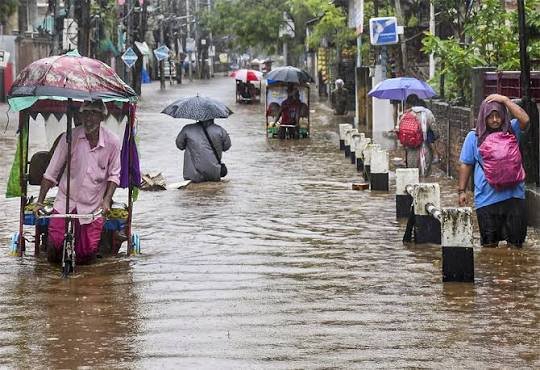
Urban flooding is no longer limited to India’s metro cities. From Nagpur and Nashik to Hubballi, Ujjain and Siliguri, many Tier-2 and Tier-3 cities are witnessing severe waterlogging during heavy rains. Better urban flood management has become essential to protect lives, infrastructure and local economies before the next monsoon arrives.
The topic is evergreen with current relevance. While recent monsoon events highlight the urgency, the article focuses on long-term urban planning, infrastructure, and disaster preparedness rather than reporting on a specific breaking news event.
India’s urban flood management needs urgent attention beyond the country’s largest metropolitan areas. Every monsoon, several smaller cities experience flooded roads, overflowing drains, disrupted transport and damaged homes. Rapid urban expansion, inadequate drainage systems and changing rainfall patterns have made seasonal flooding a recurring challenge. As Tier-2 and Tier-3 cities continue to grow, strengthening flood management has become a critical part of sustainable urban development rather than just an emergency response.
Urban Growth Is Outpacing Drainage Infrastructure
Many smaller Indian cities were originally designed for much lower populations. Over the past decade, expanding residential colonies, commercial hubs and industrial areas have increased pressure on civic infrastructure without corresponding upgrades to drainage systems.
Concrete roads, paved parking areas and large construction projects reduce the amount of land available for rainwater absorption. As a result, even moderate rainfall can lead to water accumulation in low-lying neighborhoods.
Cities such as Nagpur, Indore, Nashik, Ranchi, Jabalpur and Mysuru have expanded significantly, but stormwater drainage networks have often struggled to keep pace. In many cases, drainage channels built decades ago are now inadequate for today’s urban landscape.
Climate Change Is Making Rainfall More Unpredictable
One of the biggest challenges facing urban planners is the increasing unpredictability of rainfall. Instead of steady rain spread across several days, many regions now experience short periods of extremely intense rainfall.
This places enormous pressure on drainage systems that were designed using older rainfall patterns. Even if the total seasonal rainfall remains close to average, heavy downpours within a few hours can overwhelm drains and flood streets.
Climate experts have consistently observed an increase in extreme rainfall events across several parts of India. Smaller cities, which often have fewer financial and technical resources than major metros, are particularly vulnerable to these sudden weather events.
Encroachment and Poor Maintenance Increase Flood Risk
Flooding is not caused by rainfall alone. Human activities also contribute significantly to the problem.
Natural streams, lakes and drainage channels are frequently encroached upon by construction or blocked by illegal dumping. Plastic waste, construction debris and silt reduce the carrying capacity of drains, causing water to back up during heavy rain.
Routine maintenance before the monsoon season is often delayed or incomplete due to administrative challenges, funding constraints or manpower shortages. As a result, blocked drains remain unnoticed until flooding begins.
Regular desilting, waste management and protection of natural water bodies can substantially reduce flood risks without requiring massive infrastructure investments.
Better Urban Planning Can Reduce Future Damage
Modern urban planning places strong emphasis on flood resilience rather than simply reacting to disasters after they occur.
Cities can adopt several proven measures, including larger stormwater drains, underground water storage systems, rainwater harvesting structures, permeable pavements and preservation of wetlands. These solutions allow rainwater to be absorbed, stored or safely diverted instead of accumulating on roads.
Flood mapping is another important tool. By identifying areas that repeatedly experience waterlogging, local governments can prioritize infrastructure upgrades and regulate future construction more effectively.
Many cities are also beginning to integrate Geographic Information Systems (GIS), satellite mapping and digital monitoring to improve flood forecasting and emergency response.
Community Participation Is Equally Important
Urban flood management cannot rely solely on government agencies. Residents, housing societies, businesses and educational institutions all have an important role to play.
Simple actions such as preventing waste from entering drains, maintaining rainwater harvesting systems and reporting blocked drainage points can help reduce local flooding.
Schools and community organizations can also conduct awareness campaigns before every monsoon to educate citizens about emergency preparedness, evacuation routes and safe practices during floods.
When local communities actively participate alongside municipal authorities, flood management becomes more effective and sustainable.
Investment Today Can Prevent Larger Losses Tomorrow
Flooding affects much more than roads and traffic. It disrupts schools, hospitals, public transport, businesses and daily livelihoods. Small traders, street vendors and local industries often suffer financial losses when markets remain inaccessible due to waterlogging.
Repeated flooding also accelerates road damage, weakens buildings and increases public health risks by contaminating water sources and creating breeding grounds for mosquitoes.
Investing in better drainage infrastructure, smart urban planning and preventive maintenance may appear expensive initially, but it is often far more cost-effective than repeatedly repairing flood damage after every monsoon.
As India’s smaller cities continue to develop, resilient infrastructure will be essential for ensuring long-term economic growth, public safety and environmental sustainability.
Key Takeaways
- Smaller Indian cities are increasingly vulnerable to urban flooding due to rapid urbanisation and ageing drainage infrastructure.
- Extreme rainfall events linked to changing climate patterns are placing greater pressure on existing civic systems.
- Regular drain maintenance, protection of natural water bodies and improved waste management can significantly reduce flood risks.
- Long-term investments in resilient infrastructure and better urban planning are essential before future monsoon seasons.
Frequently Asked Questions
Q1. Why are smaller Indian cities experiencing more urban flooding?
Rapid urban growth, inadequate drainage infrastructure, loss of natural water bodies and more intense rainfall events have increased flood risks in many Tier-2 and Tier-3 cities.
Q2. How does climate change affect urban flooding?
Climate change contributes to more frequent extreme rainfall events, causing large amounts of rain to fall within short periods, which can overwhelm drainage systems.
Q3. What are some effective urban flood management solutions?
Improved stormwater drainage, rainwater harvesting, permeable pavements, wetland conservation, flood mapping and regular drain maintenance are among the most effective measures.
Q4. How can citizens contribute to flood prevention?
Residents can avoid dumping waste into drains, support rainwater harvesting, report blocked drainage systems and participate in community awareness initiatives before the monsoon.









Leave a comment