

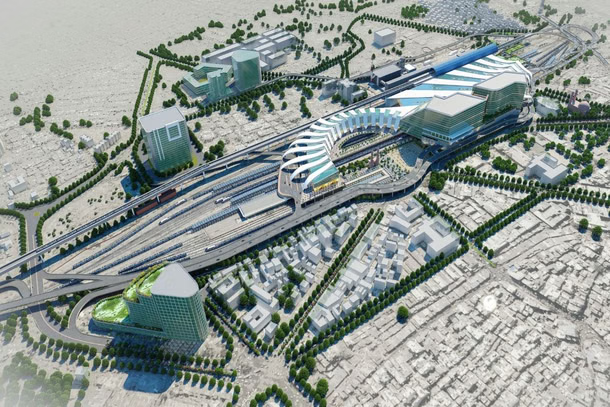
Railway station redevelopment has emerged as one of India’s most significant infrastructure initiatives, bringing modern facilities, improved connectivity, and fresh economic opportunities to Tier 2 and Tier 3 cities. As hundreds of stations undergo modernization under various government programmes, smaller cities are witnessing changes that extend well beyond railway travel.
The topic is evergreen with ongoing policy relevance. Railway station redevelopment is part of a long-term national infrastructure programme, with projects continuing across multiple states. The article follows an explanatory style while reflecting the latest direction of India’s railway modernization efforts.
Indian Railways is one of the world’s largest railway networks, carrying millions of passengers every day. For decades, many railway stations in smaller cities struggled with overcrowding, aging infrastructure, limited passenger amenities, and poor accessibility. Today, redevelopment projects are gradually changing that experience by creating modern transport hubs that also support local business growth and urban development.
Amrit Bharat Station Scheme Is Accelerating Modernisation
One of the biggest drivers behind railway station redevelopment is the Amrit Bharat Station Scheme, launched to modernize more than a thousand railway stations across the country through phased development.
The scheme focuses on improving passenger facilities while preserving the local identity of each city. Redeveloped stations feature upgraded waiting halls, better lighting, digital information displays, improved sanitation, wider platforms, lifts, escalators, enhanced accessibility for persons with disabilities, landscaped surroundings, and integrated transport facilities.
Unlike earlier renovation projects that focused mainly on repairs, the current approach aims to redesign stations as modern public spaces capable of handling future passenger demand.
Several stations in cities such as Nagpur, Jabalpur, Udaipur, Madurai, Hubballi, Gwalior, Ajmer, Gorakhpur, Salem, and many district headquarters are either undergoing redevelopment or have already completed major upgrades.
Improved Passenger Experience Supports Regional Mobility
Modern railway stations are making travel more convenient for millions of passengers living outside metropolitan regions.
Improved cleanliness, digital ticketing support, better seating arrangements, upgraded food courts, enhanced security through CCTV surveillance, and organized entry and exit systems have significantly improved the travel experience.
Accessibility has also received greater attention. New lifts, ramps, tactile pathways, and escalators make stations more user-friendly for senior citizens, differently abled passengers, and families travelling with children.
These improvements are particularly valuable because railways remain the primary mode of long-distance travel for many residents of Tier 2 and Tier 3 cities.
As passenger satisfaction improves, railway stations are increasingly becoming welcoming public spaces rather than simply transit points.
Local Businesses and Employment Receive a Major Boost
Railway station redevelopment creates benefits that extend beyond transportation.
Construction activities generate employment opportunities for engineers, contractors, technicians, construction workers, architects, and local suppliers. Once redevelopment is completed, stations often attract new retail outlets, restaurants, kiosks, hotels, taxi operators, and tourism-related businesses.
Improved railway infrastructure also encourages commercial development around station areas. Better roads, parking facilities, bus connectivity, and organized public spaces make surrounding neighbourhoods more attractive for investment.
Cities with upgraded railway stations frequently experience increased commercial activity as improved accessibility encourages business travel, tourism, and regional trade.
For many small businesses located near stations, higher passenger footfall translates directly into increased sales and new customer opportunities.
Better Connectivity Strengthens Tourism and Regional Development
Modern railway stations are becoming important gateways for tourism.
Cities known for religious, cultural, historical, or natural attractions benefit when visitors receive a positive first impression upon arrival. Improved signage, tourist information centres, clean public facilities, and better last-mile connectivity encourage travellers to explore local destinations.
Heritage-inspired station architecture is another important aspect of redevelopment. Many projects incorporate local art, traditional designs, regional history, and cultural themes, helping showcase each city’s unique identity.
Better railway infrastructure also supports regional economic integration by making travel easier for students, professionals, entrepreneurs, and tourists.
As India’s domestic tourism continues to grow, upgraded railway stations are expected to play an increasingly important role in supporting local economies.
Technology Is Making Railway Stations Smarter
Technology has become a central feature of modern railway station redevelopment.
Many upgraded stations now include digital passenger information systems, Wi-Fi connectivity, automated announcements, surveillance systems, energy-efficient lighting, and integrated security infrastructure.
Some stations are introducing green building practices through solar power generation, rainwater harvesting, waste management systems, and environmentally sustainable construction methods.
Digital innovations also improve operational efficiency by reducing congestion, enhancing passenger communication, and streamlining station management.
As Indian Railways continues investing in smart infrastructure, technology will play an increasingly important role in improving both passenger convenience and operational performance.
Challenges Remain Despite Rapid Progress
While redevelopment has delivered visible improvements, several challenges remain.
Large infrastructure projects often require careful coordination between multiple agencies, leading to occasional construction delays. Maintaining uninterrupted train operations while redevelopment work continues can also be complex.
Land acquisition issues, funding requirements, heritage conservation concerns, and long-term maintenance will continue to influence project timelines.
In addition, urban planning around railway stations must keep pace with increasing passenger volumes. Better traffic management, public transport integration, pedestrian pathways, and parking infrastructure remain important priorities for many cities.
Addressing these challenges will ensure that redevelopment projects deliver long-term value for passengers and local communities.
Railway Stations Are Becoming Growth Centres for Smaller Cities
Railway station redevelopment is no longer limited to improving transportation infrastructure. It has become an important component of urban transformation across India.
Modern stations encourage tourism, improve mobility, create employment, support local businesses, and enhance the overall image of smaller cities. They also contribute to broader economic development by attracting investment and strengthening regional connectivity.
As redevelopment projects continue under national infrastructure programmes, Tier 2 and Tier 3 cities are likely to experience even greater benefits in the coming years. Well-designed railway stations are becoming symbols of India’s evolving infrastructure and its commitment to balanced regional development.
Key Takeaways
- Railway station redevelopment is improving infrastructure across Tier 2 and Tier 3 cities.
- The Amrit Bharat Station Scheme focuses on modern facilities, accessibility, and regional identity.
- Upgraded stations are creating employment, supporting tourism, and boosting local businesses.
- Smart technology and sustainable infrastructure are shaping the future of Indian railway stations.
Frequently Asked Questions
Q1. What is the Amrit Bharat Station Scheme?
It is a Government of India initiative to modernize railway stations across the country by improving passenger facilities, accessibility, infrastructure, and overall station design.
Q2. How does railway station redevelopment benefit smaller cities?
Redeveloped stations improve connectivity, attract tourists, generate employment, support local businesses, and encourage commercial development around station areas.
Q3. Are only metro city stations being redeveloped?
No. A large number of redevelopment projects are taking place in Tier 2 cities, Tier 3 cities, district headquarters, and important regional railway stations across India.
Q4. What new facilities are being added to redeveloped railway stations?
Common upgrades include lifts, escalators, digital information displays, better waiting areas, improved sanitation, CCTV surveillance, Wi-Fi, food courts, enhanced accessibility, and sustainable infrastructure.
(Internal Keywords: railway station redevelopment India, Amrit Bharat Station Scheme, Indian Railways modernization, Tier 2 city infrastructure, railway station upgrades, smart railway stations India, regional connectivity, railway redevelopment benefits, Indian transport infrastructure, smaller city development)









Leave a comment