

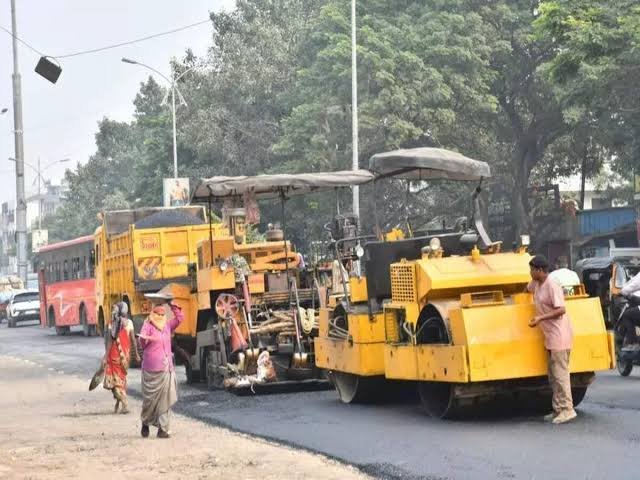
Nagpur civic works worth around ₹200 crore are facing delays after files for projects approved under the Nagpur Municipal Corporation’s zonal budget remained pending for administrative clearances. With only four months left in the financial year, officials face a shrinking window to execute the works.
Nagpur civic works worth ₹200 crore face administrative delays
The issue concerns development works proposed across Nagpur’s 38 prabhags under the Nagpur Municipal Corporation’s zonal budget. According to a Times of India report published on September 7, projects worth around ₹200 crore have received approval at the zonal level but are yet to move through all the required administrative stages.
The NMC standing committee had earmarked ₹20 crore for each of the corporation’s 10 zones. Following the allocation, zone sabhapatis held meetings and approved works proposed by corporators for their respective areas.
However, approval at the zonal level is not the final step before civic works can be executed. The files still have to move through the administrative machinery, including officials responsible for scrutiny and technical clearances.
The reported delay has therefore created a gap between projects being approved in principle and the actual commencement or completion of work on the ground.
Why the approved NMC projects are still pending
The main issue is the movement of files through the civic administration. According to the report, 10 assistant commissioners, 10 executive engineers and deputy engineers across the zones are yet to complete the necessary approvals and move the proposals forward.
This distinction is important for understanding the situation. The ₹200 crore allocation does not mean that the entire amount has already been spent or that all projects are currently under construction. Rather, the money was earmarked for development works, while several project files remain pending at different administrative levels.
The delay has raised concerns because civic projects need time for technical scrutiny, administrative sanctions, tendering or quotations where applicable, contractor mobilisation and execution.
If these steps are compressed into the final months of the financial year, the NMC could face difficulties completing all the approved works within the available period.
The situation also highlights how a budgetary allocation can remain largely ineffective for residents if administrative and implementation processes do not move at the same pace.
Only four months remain in the financial year
The timing of the delay is particularly significant. Eight months of the current financial year have already passed, leaving approximately four months for the NMC to complete the pending development works.
That limited window becomes more important when the entire project cycle is considered. Approval alone does not put a road, drainage line, footpath, civic facility or other infrastructure project on the ground. Depending on the nature and value of the work, several procedural stages can still remain.
The NMC is also expected to present its revised budget in December. Any changes in the availability or allocation of funds at that stage could affect projects that have not progressed sufficiently by then.
For residents waiting for local infrastructure improvements, the practical question is therefore not simply how much money has been allocated, but how quickly the approved projects can move from files to actual work.
Election code could further reduce the working window
Another factor could make the timeline even tighter. According to the report, a teachers’ constituency election is expected to trigger a model code of conduct for around 45 days from November.
Once an election code is in force, the sanctioning and execution of certain new development works can be affected by restrictions applicable during the election period.
This could leave the civic administration with an even smaller window to process and execute projects that have not moved ahead by then.
The concern is not that every ongoing civic project would automatically stop during an election period. The effect depends on the nature and status of individual works and the applicable election rules. But the expected code adds another time constraint to an already delayed process.
With the revised budget also expected in December, the next few months could therefore be crucial for the NMC’s pending zonal development proposals.
Corporators face questions over works started without formal clearance
The delay has also raised questions about how some civic works have already been initiated.
According to sources cited by Times of India, a majority of corporators have started works in their respective prabhags even though the files had not received formal administrative approvals. The report also states that some works were reportedly completed without following the mandatory tender or quotation process.
These allegations are significant because administrative approval and procurement procedures are designed to establish financial and procedural accountability before public money is spent.
It is important, however, to distinguish between reported irregularities and established violations. The current report describes the issue based on sources and does not establish that every work initiated by corporators was procedurally improper.
The NMC administration now faces the task of clearing pending proposals while also ensuring that civic works comply with the required approval and procurement processes.
Narendra Borkar asks officials to speed up approvals
The delay has already prompted intervention from the civic and political leadership.
Ruling party leader and senior BJP corporator Narendra Borkar reportedly convened a meeting with senior civic officials and instructed them to clear the pending proposals at the earliest.
The intervention reflects the political pressure surrounding local development works. Zonal budgets are intended to address infrastructure requirements within specific areas, making delays particularly visible to residents and elected representatives.
For corporators, the ability to deliver local works is closely connected to public expectations. For the administration, however, projects have to pass through technical, financial and procedural requirements before execution.
The challenge for the NMC is therefore to accelerate the process without weakening those safeguards.
What the delay could mean for Nagpur residents
For residents, the immediate impact depends on which projects are included in the pending proposals. The ₹200 crore figure covers development works spread across the city’s 38 prabhags rather than a single large infrastructure project.
This means the consequences are likely to vary from neighbourhood to neighbourhood.
A delayed local road project, drainage improvement, footpath work or other civic facility can affect everyday mobility and public convenience. But the broader issue is also about whether allocated public funds are converted into completed infrastructure within the financial year.
Nagpur has been undergoing extensive infrastructure development, and the efficiency of smaller local works matters alongside major projects. Large roads, bridges and transport projects often attract attention, but neighbourhood-level improvements can have a more direct impact on daily life.
The current dispute therefore goes beyond the ₹200 crore figure. It raises a basic governance question: how quickly can approved civic spending be converted into usable public infrastructure?
Why administrative approvals matter before civic work begins
Administrative clearance can appear like a bureaucratic formality to residents waiting for a project to begin, but it serves several purposes.
Civic authorities need to establish whether a proposed work is technically feasible, whether funds are available, whether the estimated cost is appropriate and which procurement process should be followed.
The process also creates a record of responsibility. When public funds are spent, there needs to be documentation showing who approved the work, what the estimated cost is, how a contractor was selected and whether the work meets the required specifications.
Speed is important, particularly when the financial year is approaching its final months. But speeding up files cannot come at the cost of basic financial and procurement controls.
The present situation shows the tension between these two requirements: residents and elected representatives want projects completed quickly, while the civic administration must ensure that the process remains compliant.
Nagpur civic projects now face a race against time
The NMC now has a relatively short period to move the pending proposals through the remaining stages and begin or complete eligible works.
The immediate priority is clearing files that have already been approved at the zonal level, followed by completing the technical and administrative processes required for execution. At the same time, the corporation will have to account for the revised budget process and the possible election code period.
The ₹200 crore allocation has created expectations across Nagpur’s 38 prabhags. Whether those expectations translate into completed projects will depend less on the announcement of funds and more on how efficiently the remaining administrative process works.
For residents, the most meaningful measure will ultimately be visible work on the ground rather than the amount recorded in the civic budget.
Key Takeaways
- Nagpur civic works worth around ₹200 crore across 38 prabhags are facing delays because approved project files remain pending at different administrative levels.
- The NMC standing committee had earmarked ₹20 crore for each of its 10 zones for local civic infrastructure and development works.
- With eight months of the financial year already over, only about four months remain, while a possible 45-day election code period could further restrict the available working window.
- The administration has been asked to speed up clearances while ensuring that development works follow the required approval and procurement procedures.
FAQs
Why are Nagpur’s ₹200 crore civic works delayed?
The projects were approved under the NMC’s zonal budget, but their files are still pending at different administrative levels. Assistant commissioners, executive engineers and other officials are required to complete the necessary approvals before the works can move ahead.
How much money was allocated for the Nagpur zonal civic works?
The NMC standing committee earmarked ₹20 crore for each of the corporation’s 10 zones, resulting in a total allocation of around ₹200 crore for the zonal development works.
Why is the timing important?
Eight months of the financial year have already passed, leaving approximately four months for execution. The expected revised budget in December and a possible 45-day election code from November could further reduce the time available for certain works.
Have some works already started without formal approval?
According to sources cited in the Times of India report, several corporators have already initiated works despite files not receiving formal administrative approvals, and some works were reportedly completed without the mandatory tender or quotation process. These are reported claims and should not be treated as established violations without official findings.
(Nagpur civic works, Nagpur NMC news, Nagpur development projects, ₹200 crore Nagpur civic works, NMC zonal budget, Nagpur infrastructure news, Nagpur civic projects, Nagpur local news, Nagpur Municipal Corporation, Maharashtra civic news)









Leave a comment