

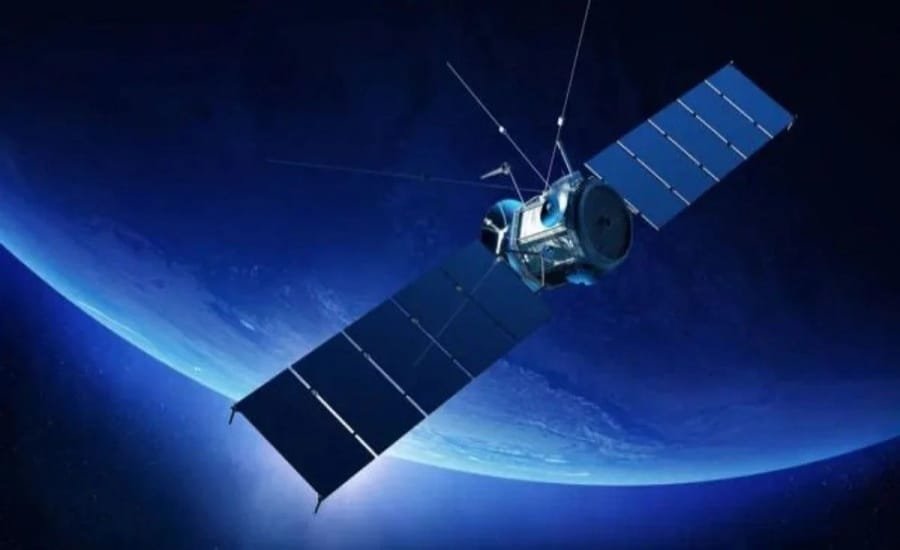
Jharkhand’s BharatNet expansion has moved forward with a new agreement covering 4,395 Gram Panchayats and 26,777 non-GP villages. The ₹1,684 crore project aims to strengthen rural broadband, improve digital services and expand opportunities in education, healthcare and business.
Jharkhand BharatNet project gets major push
The Jharkhand BharatNet project has entered a significant new phase after the Digital Bharat Nidhi under the Department of Telecommunications signed an agreement with the Jharkhand government and state-level implementing agencies on September 10, 2026. The agreement is for implementing the Amended BharatNet Programme in the state.
The project will cover 4,395 Gram Panchayats and provide connectivity to 26,777 villages beyond Gram Panchayats on a demand basis. The Centre has approved financial support of ₹1,684 crore for the rollout.
The programme is designed to strengthen the rural broadband network rather than simply extend internet cables to more locations. Under the plan, 4,387 existing Gram Panchayats will be upgraded from linear network architecture to ring topology, while eight newly created Gram Panchayats will also be included.
For Jharkhand, where many communities remain separated from major urban centres by difficult terrain and limited infrastructure, reliable broadband could have consequences far beyond faster browsing.
What BharatNet Phase III means for villages
BharatNet is a government programme designed to provide high-speed broadband connectivity to Gram Panchayats and villages on demand. The Amended BharatNet Programme, approved by the Union Cabinet in August 2023, focuses on upgrading the existing network and improving its reliability and last-mile reach.
The Jharkhand project follows the state-led model. A new special purpose vehicle, Jharkhand Digital Infrastructure Corporation Limited, will be involved in implementation, along with BSNL and Jharkhand Communication Network Limited.
The distinction between a connected Gram Panchayat and a connected household is important. Fibre reaching a local government office does not automatically mean every family nearby has a broadband connection.
That is why the new programme’s focus on non-GP villages and rural home fibre connections matters. The Centre expects the initiative to facilitate more than four lakh rural home fibre connections with subsidy support.
Better internet could change rural education
One of the most immediate effects of reliable broadband could be in education.
Students in villages increasingly depend on digital resources for competitive examinations, online classes, educational videos, application forms and learning platforms. Poor connectivity can make even free online resources difficult to use consistently.
A stronger fibre network could allow students to access online learning without depending entirely on mobile data or travelling to a nearby town for reliable internet.
This could be particularly useful for students preparing for government recruitment examinations and entrance tests, where access to digital study material has become an important part of preparation.
Schools and educational institutions could also make greater use of online training, digital content and government education platforms.
However, connectivity alone will not solve the rural education gap. Electricity supply, devices, digital literacy and the quality of online content will also determine whether students actually benefit.
Telemedicine could become more practical in remote areas
Healthcare is another area where improved rural broadband could make a measurable difference.
The government says the Jharkhand BharatNet rollout is expected to support digital services including telemedicine.
For a resident in a remote village, an online consultation can reduce the need for an initial trip to a district headquarters or larger town. Doctors and healthcare workers can also use digital platforms to share reports, communicate with specialists and access information.
This is particularly relevant in a state where geographical distance can make access to specialist healthcare difficult for rural communities.
Still, broadband cannot replace physical medical infrastructure. Serious cases will continue to require hospitals, doctors, diagnostic facilities and emergency transport.
What reliable connectivity can provide is another layer of access, especially for consultations, health information and coordination between rural facilities and larger medical centres.
Digital payments and government services may expand
The impact of rural broadband will also be felt in everyday transactions.
Digital payments, online banking and government services increasingly require dependable internet connectivity. A stronger broadband network can make it easier for rural residents, local businesses and government offices to use these services.
The government specifically identifies e-Governance and digital payments among the services expected to benefit from the Jharkhand programme.
This could reduce the need for residents to travel to district or block headquarters for tasks that can be completed online.
For example, people may be able to access government portals, submit applications, download documents or track services from closer to home.
Local businesses can also benefit from digital payment systems and online banking. For small shops and service providers, reliable connectivity can become part of basic business infrastructure rather than an optional convenience.
Rural entrepreneurs could get a larger digital market
Perhaps the longer-term opportunity lies in rural entrepreneurship.
A reliable internet connection allows a small business to communicate with customers, suppliers and financial institutions beyond its immediate locality. It can also make online marketplaces, digital marketing and remote work more accessible.
A craftsperson, food producer or small manufacturer in a village does not necessarily have to depend entirely on customers who live nearby if digital connectivity allows them to discover wider markets.
Young people could also use broadband for freelancing, online skills training and remote employment opportunities.
BharatNet’s own stated objectives include supporting e-commerce, entrepreneurship, online skilling and digital banking in rural India.
The key challenge will be turning infrastructure into actual economic activity. Training, affordable devices, digital literacy and access to markets will determine how much value rural communities can extract from the new network.
Why ring topology matters for network reliability
One technical change in the Jharkhand project could have a direct effect on users: the upgrade of existing Gram Panchayat networks to ring topology.
In a linear network, a break at a critical point can disrupt connectivity beyond that point. A ring network provides an alternative path for data, making the system more resilient when a section of fibre fails.
The Amended BharatNet Programme is designed around optical fibre connectivity in ring topology, along with other network upgrades, operation and maintenance provisions and remote fibre monitoring.
For rural users, the technical terminology matters because reliability is just as important as availability.
An internet connection that exists on paper but frequently fails because of fibre cuts, equipment problems or inadequate maintenance does little to close the digital divide.
The new programme therefore attempts to address both network expansion and infrastructure resilience.
Four lakh rural homes could gain fibre connections
The scale of the home-connectivity component is significant. The government expects the Jharkhand programme to facilitate more than four lakh rural home fibre connections through subsidy support.
This could gradually change how households use the internet.
BharatNet’s official service platform says rural households, government institutions, schools, hospitals, Panchayat offices and private enterprises located in eligible areas can apply for high-speed broadband services. It also states that installation charges are not required for new BharatNet FTTH connections under the Digital Bharat Nidhi-funded programme, while users pay the applicable monthly subscription charges.
The official BharatNet platform currently describes FTTH services as offering speeds of at least 25 Mbps, depending on the selected plan and service conditions.
Actual availability and installation timelines, however, will depend on the village, network readiness, demand and service-provider arrangements.
Connectivity alone will not close Jharkhand’s digital divide
The new project is a major infrastructure step, but its success will ultimately depend on what happens after the fibre is laid.
Villages need dependable electricity, affordable devices and people who know how to use online services safely. Schools need computers and trained teachers. Healthcare centres need equipment and staff. Businesses need digital skills and access to customers.
There is also a difference between having an internet connection and having meaningful connectivity. If a household cannot afford a device or monthly plan, fibre infrastructure by itself will not create digital inclusion.
Maintenance will be equally important. The Amended BharatNet framework includes long-term operation and maintenance provisions, while BSNL has been assigned a role in network operations and maintenance under the programme.
For Jharkhand, therefore, the next stage will be about converting physical connectivity into regular use.
What the BharatNet expansion could mean for Jharkhand
The September 10 agreement gives Jharkhand a defined framework for expanding rural broadband across thousands of villages.
The 26,777 non-GP villages included on a demand basis are particularly important because the digital divide does not stop at Gram Panchayat boundaries. Bringing fibre closer to households, schools, healthcare centres and businesses can create opportunities that were previously limited by geography.
The project’s ₹1,684 crore financial support also signals the scale of public investment being directed towards rural digital infrastructure in the state.
For residents, the real test will not be the number of kilometres of fibre installed or villages listed in project documents. It will be whether a student can attend an online class, whether a patient can access a telemedicine consultation, whether a small business can receive digital payments and whether a young person can find work or training online without leaving the village.
That is where the Jharkhand BharatNet push could have its most lasting impact.
Key Takeaways
- The Amended BharatNet Programme in Jharkhand will cover 4,395 Gram Panchayats and 26,777 non-GP villages on a demand basis.
- The Centre has approved ₹1,684 crore in financial support for the state-level rollout.
- More than four lakh rural home fibre connections are expected to receive subsidy support under the programme.
- The expansion could improve access to e-Governance, education, telemedicine, digital payments, online skilling and rural entrepreneurship, but electricity, devices, affordability and digital literacy will remain important factors.
FAQ
What is BharatNet?
BharatNet is a Government of India programme aimed at providing high-speed broadband connectivity to Gram Panchayats and villages on demand. Its infrastructure is intended to support households, government institutions and businesses in rural areas.
How many Jharkhand villages are covered under the new BharatNet plan?
The Amended BharatNet Programme in Jharkhand provides for connectivity to 26,777 villages beyond Gram Panchayats on a demand basis. It also covers 4,395 Gram Panchayats.
How much money has been approved for Jharkhand BharatNet?
The Government of India has provisioned ₹1,684 crore in financial support for implementation of the Amended BharatNet Programme in Jharkhand.
Will rural households get BharatNet internet connections?
Eligible rural households can apply for BharatNet FTTH services where the network is available. The official BharatNet platform says new FTTH connections under the Digital Bharat Nidhi-funded programme do not require installation charges, although customers pay monthly subscription charges.










Leave a comment