

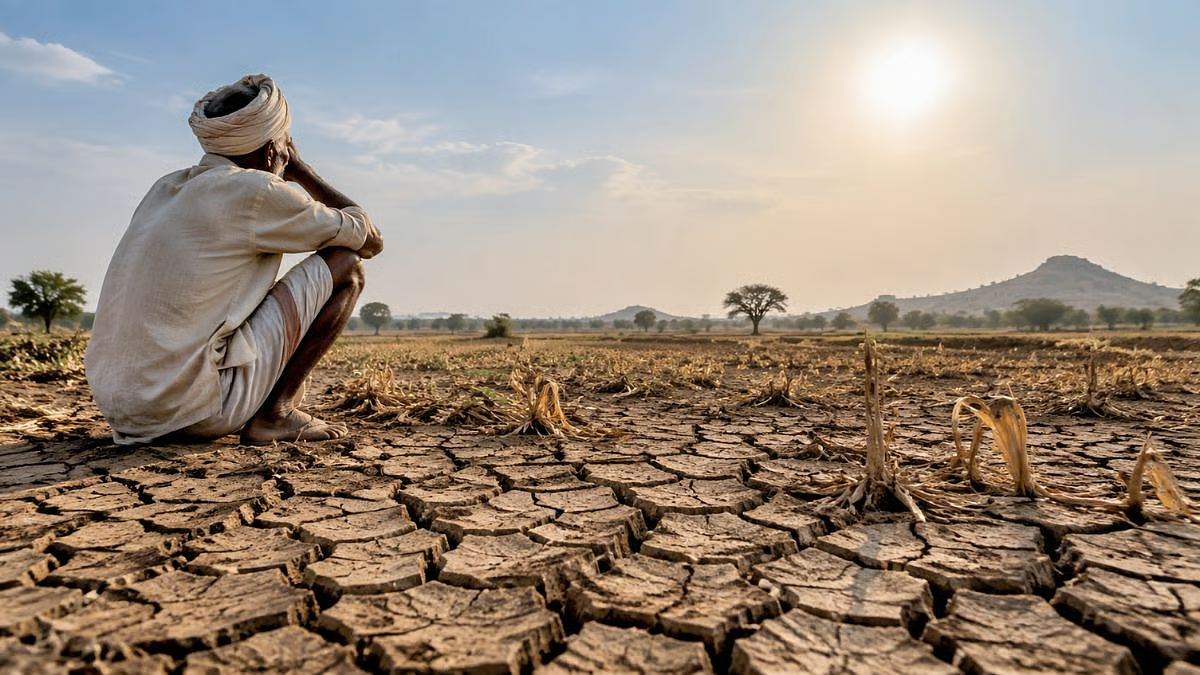
Karnataka has declared 23 more taluks drought-affected, taking the total to 124 for the 2026 Kharif season. The latest assessment highlights continuing rainfall shortages, crop stress and growing concerns over water, fodder and relief for affected farming communities.
Karnataka drought situation expands across 124 taluks
The Karnataka drought situation has widened after the state government declared 23 additional taluks drought-affected on September 17. This follows the first phase of the assessment, when 101 taluks were declared drought-hit on August 27.
The latest declaration was based on ground verification and a comprehensive assessment by the Karnataka State Natural Disaster Monitoring Centre, or KSNDMC. Of the 23 newly added taluks, 21 have been classified as severely drought-affected while two fall under the moderate category. The declaration will remain in force for six months.
The development is significant for farmers because drought classification can trigger government relief and response measures. It also provides an official basis for crop-loss assessment and other assistance under disaster-response provisions.
The affected areas are spread across several districts, including Tumakuru, Koppal, Raichur, Kalaburagi, Bidar, Vijayapura, Haveri, Dharwad, Chikkamagaluru and Kodagu.
Which Karnataka taluks have been newly declared drought-hit?
The 21 taluks placed in the severe drought category include Tiptur in Tumakuru, Karatagi in Koppal, Manvi, Sindhanur and Sirwar in Raichur, and Afzalpur, Aland, Chittapur, Kalaburagi, Yadrami and Shahabad in Kalaburagi.
Bhalki in Bidar, Basavana Bagewadi, Babaleshwar and Tikota in Vijayapura, Rattihalli in Haveri, and Hubballi, Navalgund, Hubballi City and Annigeri in Dharwad have also been classified as severely drought-affected.
Kadur in Chikkamagaluru is included in the severe category as well.
Ponnampet and Virajpet in Kodagu have been placed in the moderate drought category.
The geographical spread shows that the problem is not confined to one agricultural belt. Different parts of Karnataka are facing pressure from deficient rainfall, dry spells and deteriorating agricultural conditions.
What the drought means for farmers
For farmers, the immediate concern is crop survival. Rainfall during the Kharif season determines the availability of soil moisture for crops, particularly in areas that depend heavily on rain-fed agriculture.
Earlier assessments had already indicated prolonged dry spells in several taluks. In early September, the state had reported that 122 taluks facing drought-like conditions had experienced three consecutive weeks without adequate rainfall, raising concerns about crop cultivation and yields.
Crop damage can create several financial pressures at once. Farmers may lose part or all of their expected harvest while still carrying expenses for seeds, fertilisers, labour, pesticides and other inputs.
A weak Kharif harvest can also affect the next agricultural cycle because farmers may have less income available to purchase inputs or repay existing loans.
The impact does not stop with crops. Livestock owners also face challenges when grazing land dries up and fodder becomes harder to obtain.
Crop-loss surveys will determine the next steps
The Karnataka government has directed agriculture and horticulture officials, along with district administrations, to conduct crop-loss surveys in the newly declared drought-hit areas.
These surveys are important because the drought declaration itself does not automatically mean that every farmer will receive the same amount of compensation. Authorities need to assess the extent and nature of crop damage before determining relief requirements.
The government has also authorised deputy commissioners heading district disaster management authorities to undertake necessary relief and response measures under State Disaster Response Fund guidelines.
The administration has been instructed to submit crop-loss assessments as quickly as possible. For farmers, the speed and accuracy of these field assessments will therefore be closely watched.
In districts already experiencing serious crop stress, farmers have also been seeking compensation and support for irrigation, drinking water and fodder.
Water shortages could become a wider problem
The Karnataka drought is also putting pressure on groundwater, reservoirs and electricity generation.
Chief Minister D K Shivakumar recently warned that the state could face drinking-water and electricity shortages as drought conditions deepen. He said groundwater levels had fallen and crop losses were extensive. The state has also experienced high power demand, adding another layer of pressure to its resource management challenges.
The situation is particularly important for rural communities because agriculture depends on both rainfall and supplementary irrigation. When reservoirs and groundwater sources decline, farmers have fewer options to protect standing crops.
North Karnataka has also reported concerns about reservoir storage. The Navilutirth reservoir in Belagavi district, for example, remained below 60% of its capacity earlier this month, raising concerns about water availability for the upcoming Rabi season.
More Karnataka taluks could still be assessed
The drought declaration process is not necessarily finished.
On September 18, Karnataka ordered ground verification of crop damage in another 53 taluks across 17 districts. KSNDMC analysed rainfall, soil moisture and crop-related data from June 1 to September 16 before identifying the areas for the third phase of field verification.
The criteria matter here. A taluk can be considered drought-hit when crop loss reaches at least 33%, while crop loss above 50% is used for classification under the severe drought category, according to the latest assessment framework reported by The New Indian Express.
This means the number of officially drought-affected taluks could change as field-level assessments continue.
The KSNDMC is also expected to keep reviewing conditions as rainfall forecasts and agricultural indicators develop.
What farmers should watch next
For affected farmers, the next important developments will be crop-loss surveys, government relief announcements, availability of fodder and water, and the assessment of the remaining taluks.
The timing is particularly important because the Kharif season is already under stress and farmers will soon need to plan for the Rabi season. Poor reservoir storage or inadequate rainfall could affect those decisions, especially in areas dependent on irrigation.
The government will also have to balance immediate relief with longer-term water management. Drought assistance can help households deal with crop losses, but repeated rainfall shortages require broader planning around groundwater, irrigation efficiency, reservoir management and crop choices.
For rural Karnataka, the 124-taluks declaration is therefore not just a weather-related update. It is an indicator of pressure spreading across agriculture, livestock, water resources and rural incomes.
Key Takeaways
- Karnataka has declared 124 taluks drought-affected for the 2026 Kharif season after adding 23 areas in the second phase.
- Of the 23 newly declared taluks, 21 are classified as severely drought-affected and two as moderately affected.
- Crop-loss surveys are being conducted to assess the damage and determine relief requirements.
- Another 53 taluks across 17 districts are now undergoing ground verification, so the drought-hit list could expand further.
FAQs
Why has Karnataka declared 124 taluks drought-hit?
The declaration follows deficient southwest monsoon rainfall and assessments of rainfall, soil moisture and crop conditions. The latest 23 taluks were added after ground verification and a KSNDMC assessment.
How many newly added taluks are severely drought-affected?
Twenty-one of the 23 newly declared taluks have been classified as severely drought-affected. The remaining two, Ponnampet and Virajpet in Kodagu, are in the moderate category.
Will farmers automatically receive compensation?
A drought declaration enables relief and response measures, but individual assistance depends on crop-loss assessments and applicable government norms. Officials have been directed to conduct field surveys and prepare relief assessments.
Could more Karnataka taluks be declared drought-hit?
Yes. The state has ordered ground verification in another 53 taluks across 17 districts. Their eligibility will depend on field-level crop damage and other drought indicators









Leave a comment