

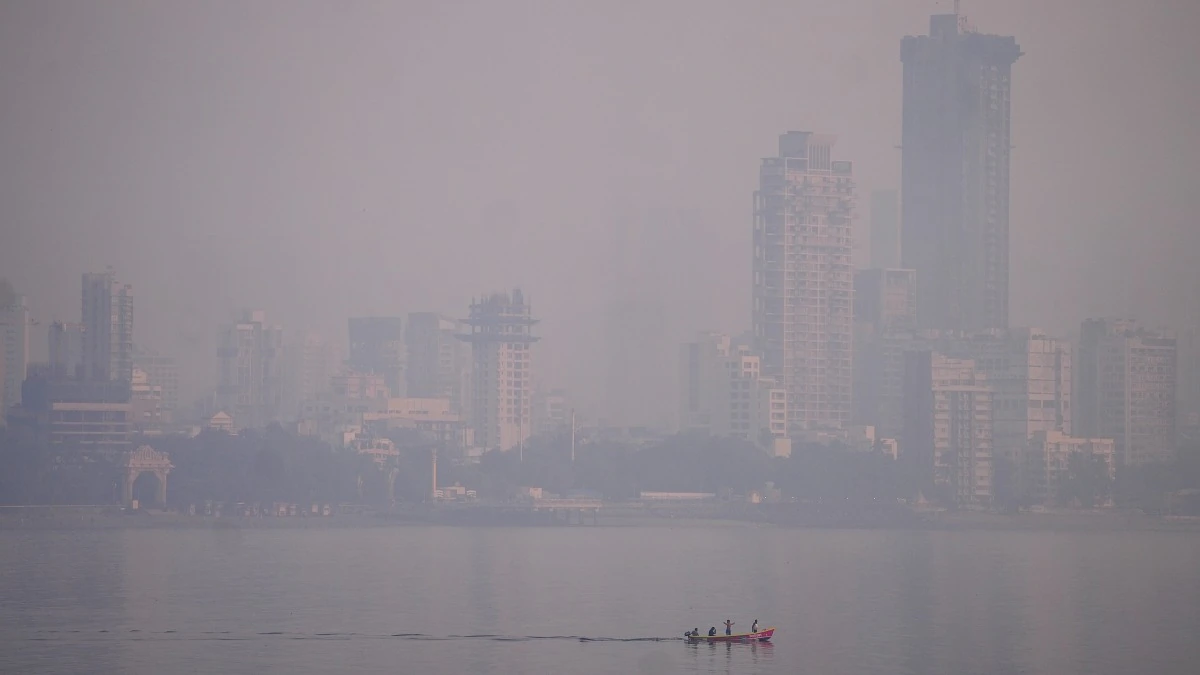
Mumbai’s air pollution debate has renewed concerns about how Indian cities measure, manage and communicate air quality. While the Brihanmumbai Municipal Corporation has reported an increase in days with good or satisfactory air quality in 2026, pollution levels can vary sharply by location and season. The issue raises an important question: are cities across India doing enough to protect residents from polluted air?
Mumbai Air Pollution Debate Puts Urban Air Quality Under Focus
Mumbai’s air quality has returned to public discussion as the city moves beyond the monsoon season, when rainfall helps remove some pollutants from the atmosphere. On October 22, 2026, the Brihanmumbai Municipal Corporation (BMC) said Mumbai had recorded 231 days with good or satisfactory Air Quality Index (AQI) levels during 2026, compared with 222 days across the whole of 2025.
The civic body’s statement presents a positive trend in the number of days meeting these categories. However, it does not mean that Mumbai’s pollution concerns have disappeared. Air quality can change considerably between neighbourhoods, monitoring stations and different times of the day.
The distinction matters because a citywide assessment may not capture the experience of residents living near busy roads, construction sites, industrial areas or other pollution sources. A larger number of relatively clean days also does not automatically establish that long-term exposure to harmful pollutants has fallen sufficiently.
Mumbai’s experience therefore raises a broader question for Indian cities: how should progress on air pollution be measured, and how can authorities ensure that improvements reach the people most exposed to poor air quality?
Why Air Quality Often Changes After the Monsoon
The monsoon plays an important role in the seasonal air quality of many Indian cities. Rainfall can wash suspended particles out of the atmosphere, while stronger winds can help disperse pollutants. When the rainy season ends, these natural cleaning effects become less frequent.
As a result, dust and emissions from vehicles, construction activity, industries and other sources may remain in the air for longer under unfavourable weather conditions. Lower wind speeds and atmospheric conditions that restrict vertical mixing can contribute to pollution accumulation.
Mumbai also faces the challenges of a large transport network, ongoing infrastructure development and dense urban activity. Construction dust, road dust and vehicle emissions require consistent management, regardless of whether the AQI is good on a particular day.
Seasonal changes do not affect every city in the same way. Northern Indian cities may face additional winter pollution episodes linked to temperature inversions, regional emissions and other seasonal factors. Cities in central, western and southern India have their own combinations of local emissions and weather conditions.
This is why pollution-control strategies must be based on local evidence rather than a single national formula.
Tier-2 Cities Also Need Attention on Air Pollution
Air pollution is often discussed through the experiences of Delhi and Mumbai, but the problem is not limited to India’s largest metropolitan areas. Smaller cities, including Nagpur, Nashik, Chandrapur, Amravati and other urban centres in Maharashtra, also need reliable air quality monitoring and effective pollution-control measures.
The sources of pollution can differ considerably. In one city, traffic congestion and road dust may be major contributors. In another, industrial activity, construction, waste burning or nearby power generation may require closer investigation.
A smaller population does not automatically guarantee cleaner air. Growing vehicle ownership, expanding residential areas, infrastructure projects and industrial development can increase emissions when urban planning and pollution controls fail to keep pace.
For residents, the concern is practical. People travel to work, children attend schools, street vendors spend long hours outdoors and construction workers often work in dusty environments. These groups may experience repeated exposure even when a city’s daily average appears less alarming than that of a major metropolitan area.
Local authorities need to identify the dominant pollution sources in their cities before deciding where to direct public spending and enforcement. Measures that work in Mumbai may not produce the same results in Nagpur or Chandrapur without adjustments for local conditions.
What the Air Quality Index Actually Tells Residents
The Air Quality Index, commonly known as AQI, converts measurements of air pollutants into a number and category that the public can understand. India’s Central Pollution Control Board uses six categories: Good, Satisfactory, Moderately Polluted, Poor, Very Poor and Severe.
The Indian AQI framework considers eight pollutants, including particulate matter PM2.5 and PM10, nitrogen dioxide, sulphur dioxide, carbon monoxide, ozone, ammonia and lead.
PM2.5 refers to fine particles small enough to penetrate deep into the lungs. PM10 includes larger inhalable particles and can reflect sources such as road dust and construction activity. Both are important when assessing urban air quality.
However, a single AQI figure has limitations. Monitoring stations measure conditions at specific locations, and readings can differ across a city. A daily value also cannot, by itself, explain a person’s cumulative exposure over several months or years.
Residents should therefore look at local monitoring data, pollutant levels and trends rather than relying only on a citywide headline figure. Authorities should also communicate station-level variations and explain whether reported improvements are short-term or sustained.
What Government Programmes Need to Deliver
India’s National Clean Air Programme (NCAP) provides a framework for reducing air pollution through city-level action plans, monitoring and measures targeting major emission sources.
According to a government update published in 2026, the national ambient air quality monitoring network had expanded to 1,646 stations across 603 cities in 28 states and seven Union Territories as of March 2026. The network includes manual monitoring stations and continuous monitoring systems.
This expansion is important because better monitoring can help authorities identify pollution hotspots and assess whether interventions are working. However, collecting data is only one part of the task.
City administrations must translate that information into action. This includes controlling construction dust, maintaining roads, preventing open waste burning, enforcing industrial emission standards and improving public transport. Where vehicles contribute significantly to pollution, reliable buses and better walking and cycling infrastructure can also help reduce dependence on private transport.
The effectiveness of these measures depends on implementation, enforcement and regular evaluation. Authorities should publish understandable progress reports, explain missed targets and identify the interventions that have delivered measurable results.
For smaller cities, adequate monitoring coverage is particularly important. Without reliable local data, pollution hotspots may remain undetected and public resources may be directed towards measures that do not address the biggest sources of emissions.
Public Health Makes Air Quality a Daily Concern
Poor air quality is not simply an environmental issue. Exposure to harmful particulate matter and other pollutants is associated with respiratory and cardiovascular problems. Children, older adults and people with existing heart or lung conditions can be particularly vulnerable.
The effects are not limited to days when the sky looks visibly hazy. Fine particles may be present even when pollution is not obvious to the naked eye.
Residents can reduce unnecessary exposure by checking local AQI readings, avoiding strenuous outdoor exercise during periods of poor air quality and following health advice appropriate to current conditions. People who experience persistent breathing difficulties or worsening symptoms should seek medical advice.
Individual precautions, however, cannot replace pollution control. Residents cannot solve industrial emissions, road dust or transport-related pollution on their own. Those responsibilities require coordinated action by municipal bodies, state pollution control boards, transport authorities, industries and citizens.
Beyond Mumbai: The Need for Measurable Progress
Mumbai’s latest pollution debate illustrates why air quality cannot be judged by a single announcement or a handful of favourable readings. The BMC’s reported increase in good and satisfactory AQI days is relevant, but sustained improvement requires examining pollutant concentrations, local variations and longer-term trends.
Other Indian cities can draw an important lesson from this discussion. Air pollution needs to be treated as a year-round urban management issue rather than a seasonal emergency that attracts attention only when conditions deteriorate.
For Tier-2 and Tier-3 cities, early intervention could help prevent growing transport networks, construction activity and industrial development from creating more difficult pollution challenges in the future.
The real measure of progress will be whether cities can reduce harmful emissions consistently, provide reliable information to residents and protect people in the neighbourhoods facing the greatest exposure. Cleaner air should not depend on where someone lives or how large their city is.
Key Takeaways
- Mumbai’s civic body reported 231 days of good or satisfactory AQI in 2026 as of October 22, but this does not mean pollution risks have disappeared.
- Tier-2 and Tier-3 cities also need reliable monitoring, local pollution assessments and stronger enforcement.
- AQI readings provide useful short-term information, but long-term pollution trends and neighbourhood-level variations matter too.
- Effective air pollution control requires sustained government action, better urban planning and public participation.
Frequently Asked Questions
1. Why is Mumbai’s air pollution back in the news?
Mumbai’s air quality has drawn attention as the city enters the post-monsoon period. On October 22, 2026, the BMC reported 231 days of good or satisfactory AQI during the year, prompting wider discussion about how air quality improvements should be assessed.
2. Is air pollution a problem only in major cities?
No. Smaller cities can also experience pollution from traffic, road dust, construction, industrial emissions and waste burning. The severity and sources vary by location, making local monitoring essential.
3. What is the difference between PM2.5 and PM10?
PM2.5 consists of fine particles with a diameter of 2.5 micrometres or less, while PM10 includes particles with a diameter of 10 micrometres or less. Both can affect respiratory health, but their sources, movement and health impacts can differ.
4. How can residents check air quality in their cities?
Residents can consult the Central Pollution Control Board’s National AQI dashboard and the SAMEER air quality information service. They should check the latest available readings for nearby monitoring stations and remember that conditions may vary across a city.







Leave a comment