

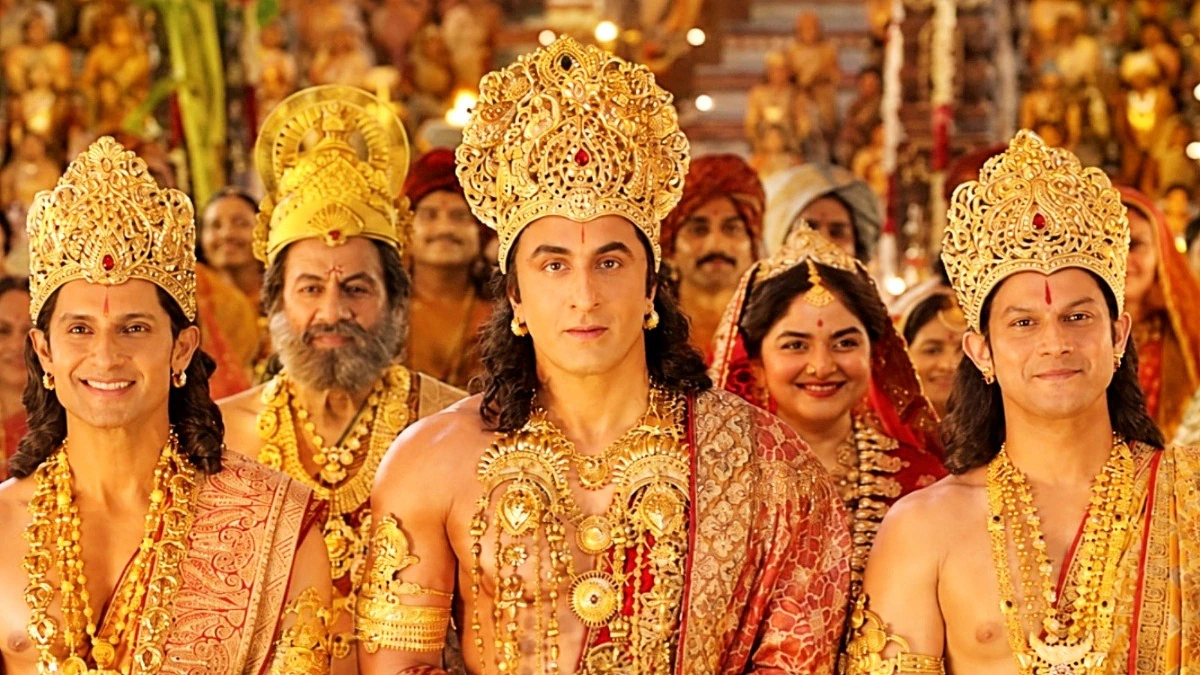
Ranbir Kapoor’s Ramayana: Part 1 is enjoying an extraordinary theatrical run, crossing ₹1,380 crore in worldwide gross collections within 11 days. Strong weekend growth, a popular cast, the appeal of Indian mythology and the extended Diwali holiday period have contributed to its impressive box-office performance.
Ramayana Box Office Collection: Film Crosses ₹1,380 Crore Worldwide
The box-office performance of Ramayana: Part 1 has become one of the biggest entertainment stories of November 2026. Directed by Nitesh Tiwari, the mythological epic has maintained strong audience interest since its theatrical release on November 5.
According to trade estimates reported on November 16, the film collected approximately ₹75 crore net in India on its 11th day, November 15. This took its total domestic net collection to ₹760.60 crore. Its India gross collection reached approximately ₹909 crore, while its worldwide gross stood at ₹1,384.50 crore.
The film’s second Sunday performance was particularly significant. Instead of witnessing a major decline after its first week, the movie recorded a substantial increase in collections compared with its first Sunday.
The figures indicate that audience interest has remained strong beyond the opening weekend. The film has also crossed the worldwide lifetime collection of several established Indian blockbusters, according to trade tracking reports.
Ranbir Kapoor as Lord Rama Becomes a Major Attraction
One of the biggest reasons behind the film’s popularity is its lead casting. Ranbir Kapoor plays Lord Rama, one of the most widely recognised figures in Indian mythology.
Portraying a character with such cultural and religious significance comes with considerable expectations. Audiences are naturally interested in seeing how a contemporary Bollywood production interprets the character’s personality, values and journey.
Ranbir Kapoor’s popularity across different age groups has also helped bring attention to the film. His previous performances in films such as Animal, Sanju and Brahmastra have established him as an actor capable of attracting audiences to large theatrical releases.
However, Ramayana presents a different challenge from his earlier projects. The role requires an approach that reflects the traditional understanding of Lord Rama while appealing to modern cinema audiences.
The casting of Sai Pallavi as Sita and Yash as Ravana has added further interest. The combination of established Hindi cinema popularity and major South Indian film stars has helped the production attract attention across different regional markets.
Yash, Sai Pallavi and the Ensemble Cast Expand Its Appeal
The film’s supporting cast is another important part of its theatrical attraction.
Sai Pallavi plays Sita, while Yash portrays Ravana. Ravie Dubey appears as Lakshmana, and Sunny Deol plays Hanuman.
The involvement of Yash is particularly significant because of his popularity following the success of the KGF franchise. His presence gives the film an additional connection with audiences in southern India.
Similarly, Sai Pallavi brings recognition among viewers familiar with her work in Telugu, Tamil and Malayalam cinema.
The film also features several established actors, including Arun Govil, Lara Dutta, Shobana, Vivek Oberoi, Anupam Kher and Kunal Kapoor.
This combination of actors from different film industries has created a wider audience base for the project. Rather than depending exclusively on Hindi-speaking viewers, the film has attracted attention through its multilingual theatrical release.
Its collections across Hindi, Telugu, Tamil, Kannada and Malayalam demonstrate the importance of regional markets in the performance of large Indian productions.
Why Indian Mythology Continues to Attract Theatre Audiences
The Ramayana is not simply another historical or fantasy story for Indian audiences. It is an epic that has influenced literature, religious traditions, performing arts, television and popular culture across generations.
Different versions of the Ramayana have been narrated through regional languages, folk traditions, stage performances and television adaptations.
This familiarity gives filmmakers an opportunity to connect with audiences across age groups. Older viewers may already understand the central characters and important events, while younger audiences may be interested in experiencing the story through contemporary filmmaking.
For many viewers, the appeal comes from revisiting a familiar narrative on a much larger cinematic scale.
At the same time, adapting a culturally significant epic requires careful storytelling. Audiences often have strong expectations about the characters, relationships and major events.
The commercial success of Ramayana suggests that large-scale Indian mythological stories continue to have considerable theatrical potential when supported by wide distribution and strong audience interest.
Visual Effects and Music Add to the Cinematic Experience
The scale of the production is another major talking point.
Ramayana has been developed as a large-scale mythological action film, with an emphasis on visual storytelling, elaborate environments and major action sequences.
Such productions depend heavily on visual effects, production design, costumes and cinematography to create a convincing world.
For a story involving kingdoms, forests, divine characters and large-scale battles, the visual presentation plays an important role in translating the narrative to the screen.
The film also brings together two internationally recognised music composers, Hans Zimmer and A.R. Rahman.
Their involvement has attracted attention because of their different musical backgrounds and experience in large cinematic productions.
The music and background score contribute to the emotional atmosphere of the story, particularly during dramatic and action-driven sequences.
For audiences who prefer watching visually ambitious films in theatres, these elements can make the big-screen experience more appealing than waiting for a later streaming release.
Extended Diwali Holidays and Strong Word of Mouth Support Collections
The timing of the theatrical release has also played an important role in the film’s commercial performance.
Ramayana arrived in cinemas on November 5, during the extended Diwali holiday period. Festival holidays generally provide opportunities for families and groups of friends to plan cinema visits.
The film benefited from this release window, particularly during its early days.
However, its performance during the second weekend is equally important. According to Sacnilk estimates, the film earned ₹56.15 crore net on its first Sunday, November 8, before collecting approximately ₹75 crore on its second Sunday, November 15.
This increase indicates that the film maintained strong demand beyond its initial holiday-driven audience.
Positive word of mouth has also been highlighted by trade reports as a factor supporting its performance.
When viewers recommend a film to friends and family, it can help sustain ticket sales even after the opening weekend. This becomes particularly important for films with a wide theatrical release and a large target audience.
The combination of festival timing, audience interest and continued weekend demand has helped Ramayana maintain its momentum.
Multilingual Release Helps Ramayana Reach a Wider Indian Audience
Another important factor is the film’s performance across regional markets.
India’s theatrical business is no longer dependent only on Hindi-speaking audiences for major national releases. Films with strong storytelling, familiar themes and recognised actors can attract viewers across multiple language markets.
Ramayana was released in Hindi, Telugu, Tamil, Kannada and Malayalam.
On November 15, the Hindi version contributed approximately ₹55 crore to the film’s ₹75 crore domestic net collection. The remaining collections came from its regional-language versions.
The multilingual strategy has allowed the film to reach audiences who may not regularly watch Hindi cinema.
It also reflects the changing nature of the Indian film industry, where large productions increasingly look beyond a single regional market to build nationwide theatrical audiences.
What Ramayana’s Box Office Success Means for Indian Cinema
The performance of Ramayana has renewed attention on the commercial possibilities of large-scale Indian mythological films.
For years, Bollywood and regional film industries have experimented with historical stories, mythology, fantasy and action-driven narratives. Some productions have achieved major commercial success, while others have struggled to meet audience expectations.
Ramayana’s current box-office performance demonstrates the commercial potential of combining a culturally familiar story with a recognised cast, large production scale and a nationwide release strategy.
It also highlights the importance of theatrical audience engagement. A strong opening can create initial visibility, but sustained collections depend on whether viewers continue purchasing tickets after the first few days.
The film’s journey is not over yet. Its final box-office position will depend on weekday collections, upcoming releases, audience feedback and its ability to maintain occupancy in the coming weeks.
The second instalment is expected to arrive during Diwali 2028, giving the makers an opportunity to continue the story on an equally ambitious scale.
For now, Ramayana: Part 1 has established itself as one of the biggest theatrical successes of 2026, with its worldwide collection approaching the ₹1,400 crore milestone.
Key Takeaways
- Ramayana: Part 1 was released in theatres on November 5, 2026, under the direction of Nitesh Tiwari.
- The film collected an estimated ₹760.60 crore net in India and ₹1,384.50 crore worldwide by Day 11.
- Ranbir Kapoor, Sai Pallavi and Yash’s casting has helped attract attention across different audience groups.
- Its extended Diwali release window, multilingual distribution and strong second-weekend performance have supported its box-office run.
Frequently Asked Questions
1. How much has Ranbir Kapoor’s Ramayana earned worldwide?
According to trade estimates reported on November 16, 2026, Ramayana: Part 1 collected approximately ₹1,384.50 crore in worldwide gross revenue within 11 days of release.
2. When was Ramayana: Part 1 released?
The film was released in Indian theatres on November 5, 2026.
3. Who plays the lead roles in Ramayana?
Ranbir Kapoor plays Lord Rama, Sai Pallavi portrays Sita, Yash plays Ravana, Ravie Dubey appears as Lakshmana and Sunny Deol plays Hanuman.
4. Who directed Ramayana: Part 1?
Nitesh Tiwari directed the film, which was produced by Namit Malhotra. The music features contributions from Hans Zimmer and A.R. Rahman.








Leave a comment