

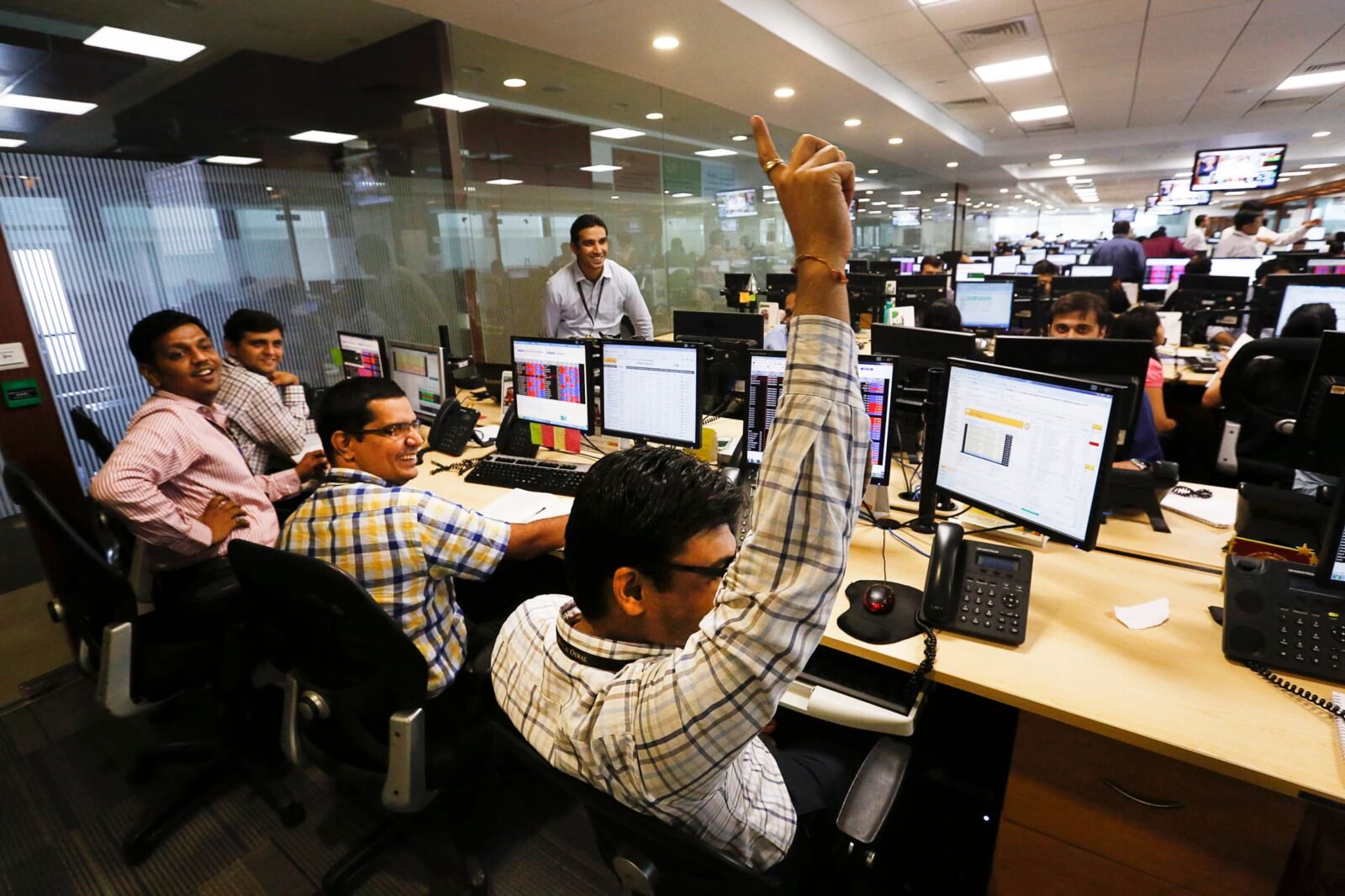
India’s IT sector has faced sharp market corrections over the last two years due to global slowdown fears, reduced client spending, and uncertainty around AI-led disruption. However, recent investor activity and improving demand signals are raising questions about whether the sector may finally be stabilizing.
Indian IT Stocks Faced Heavy Pressure Since 2024
India’s IT sector experienced one of its toughest phases in recent years after global economic uncertainty affected technology spending across major markets like the United States and Europe. Large Indian IT companies saw declining growth momentum as international clients reduced discretionary technology budgets.
The correction impacted several major firms across software services, consulting, cloud migration, and digital transformation businesses. Investors became cautious after quarterly earnings showed slower deal conversions, weaker client demand, and delayed technology spending decisions.
The situation worsened as fears around recession in Western economies affected export-driven sectors. Since India’s IT industry earns a large portion of its revenue from overseas markets, especially North America, any slowdown in global business confidence directly impacts company earnings.
Market valuations that had surged during the post-pandemic digital boom also started correcting sharply. Many IT stocks lost significant value from their previous highs as investors shifted focus toward sectors showing faster domestic growth.
AI Disruption and Hiring Slowdowns Added More Concerns
Another major factor behind the decline was the rapid rise of artificial intelligence tools and automation platforms. Investors and analysts began questioning whether traditional IT service models would remain sustainable in the long term.
Generative AI technologies created uncertainty around entry-level software jobs, outsourcing demand, and repetitive service work. Several IT firms also slowed hiring, reduced fresher intake, or delayed onboarding processes due to uncertain demand conditions.
This created anxiety among engineering graduates and working professionals who had long viewed the IT industry as one of India’s most stable career sectors.
However, industry experts argue that AI may transform the sector rather than destroy it completely. Large IT firms are now investing heavily in AI integration, cybersecurity, cloud services, and enterprise automation solutions. Instead of eliminating demand, the shift may create new technology service opportunities over time.
Companies are increasingly focusing on upskilling employees in AI-related tools, data analytics, and automation management to remain competitive in the changing technology landscape.
Recent Market Signals Suggest Possible Stabilization
Over the last few months, some market indicators have suggested that the worst phase for the IT sector may be easing gradually. Analysts have observed selective buying in large-cap IT stocks after extended corrections.
Investors appear to believe that valuations have become more reasonable compared to the excessive pricing seen during the pandemic technology rally. Some companies have also reported stronger deal pipelines in areas like cloud modernization, AI consulting, and digital infrastructure.
Global businesses are continuing to invest in technology despite cost-cutting measures because digital systems remain critical for long-term efficiency and competitiveness.
In addition, easing inflation in some international markets has improved expectations around future technology spending recovery. If Western economies avoid severe recession scenarios, Indian IT firms could benefit from renewed enterprise investments.
However, analysts remain cautious about declaring a full recovery. Demand visibility is still uneven across sectors, and client spending patterns remain conservative in several industries.
Tier-2 Cities and Smaller Tech Hubs Are Playing Bigger Roles
One notable shift within India’s IT industry is the growing importance of Tier-2 technology cities. Companies are increasingly expanding operations beyond Bengaluru, Hyderabad, Pune, and Chennai into cities like Indore, Kochi, Bhubaneswar, Nagpur, Jaipur, and Coimbatore.
This expansion is partly driven by cost optimization and the growing acceptance of hybrid work models. Smaller cities offer lower operational expenses, improving infrastructure, and access to engineering talent.
The rise of distributed work culture has also reduced dependence on traditional metro-based office systems. Many employees now prefer working closer to hometowns while remaining connected to global clients digitally.
This trend could help create a more geographically balanced technology ecosystem across India while reducing pressure on major urban centers.
Long-Term Outlook Remains Strong Despite Short-Term Volatility
Despite recent market losses, India’s IT industry still remains one of the country’s strongest export sectors. Indian firms continue to play major roles in software services, enterprise technology management, cloud migration, fintech systems, and global consulting.
The sector’s long-term outlook depends heavily on how successfully companies adapt to AI-driven transformation and evolving client expectations.
Experts believe the industry is unlikely to return immediately to the extraordinary growth levels seen during the pandemic digital boom. However, steady demand for technology modernization, cybersecurity, automation, and AI integration may support gradual recovery over the next few years.
For investors and employees alike, the current phase appears less like a collapse and more like a structural transition within the global technology economy.
Key Takeaways
- India’s IT sector faced major corrections due to global slowdown fears and weaker client spending
- AI disruption and hiring slowdowns increased uncertainty across the industry
- Recent market signals suggest selective recovery and valuation stabilization
- Tier-2 cities are becoming increasingly important for India’s future tech growth
FAQs
Why did Indian IT stocks fall sharply?
Indian IT stocks declined because of reduced global technology spending, recession fears, weaker earnings growth, and concerns around AI disruption.
Is artificial intelligence hurting India’s IT industry?
AI is creating short-term uncertainty but may also generate new opportunities in automation, cloud services, cybersecurity, and enterprise technology consulting.
Are Indian IT companies hiring again?
Hiring remains cautious in many firms, but companies are still recruiting for specialized roles related to AI, cloud computing, cybersecurity, and analytics.
Which Indian cities are emerging as new tech hubs?
Cities like Indore, Kochi, Jaipur, Nagpur, Bhubaneswar, and Coimbatore are gaining importance as alternative technology and startup centers.











Leave a comment