

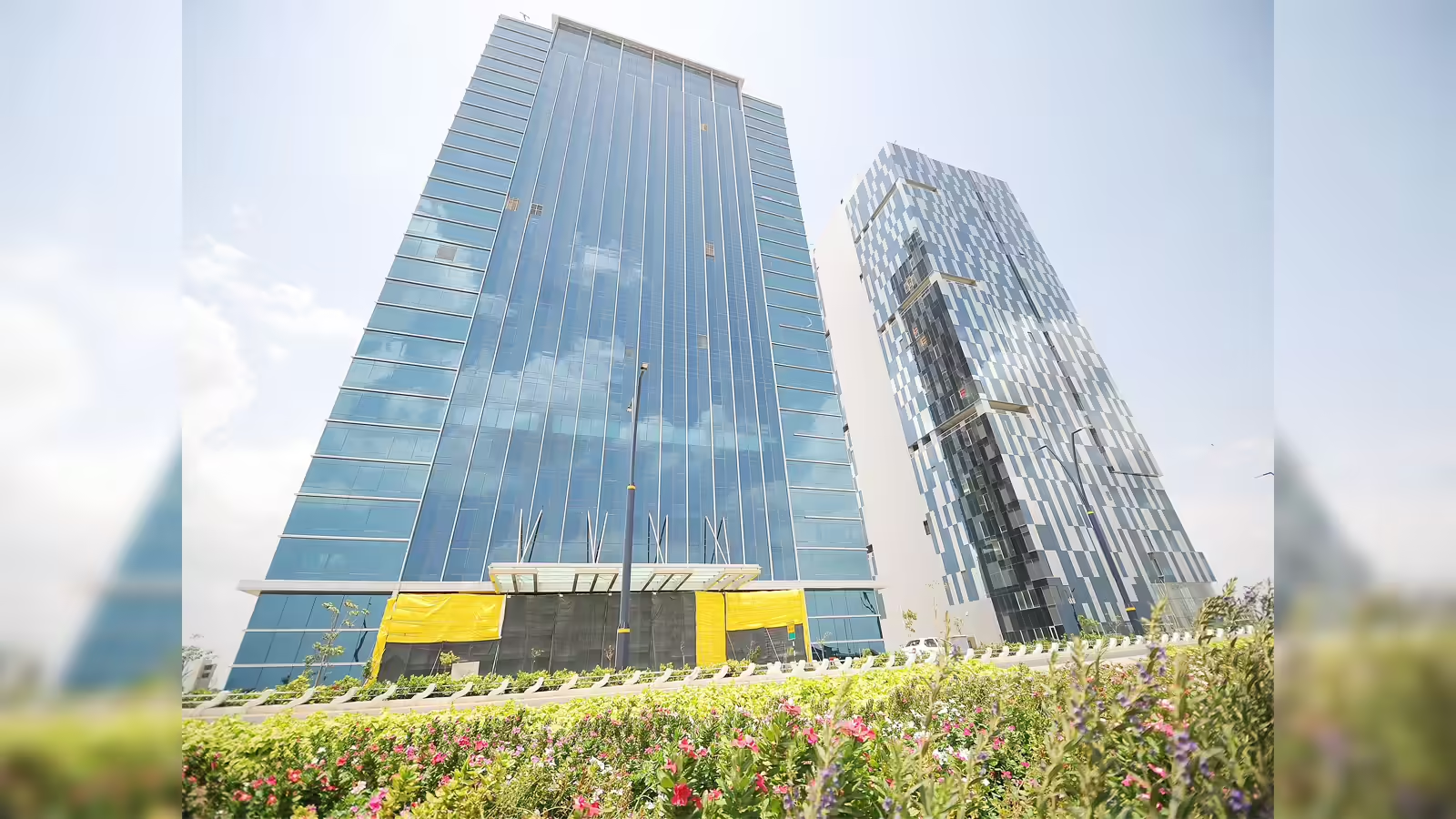
India’s startup ecosystem in 2026 is witnessing a significant geographical shift. While Bengaluru and Delhi remain major innovation centers, investors are increasingly exploring opportunities in Tier-2 and Tier-3 cities where lower costs, emerging talent, and growing digital adoption are creating attractive conditions for startup growth.
Startup Ecosystem Enters a New Phase of Growth
India’s startup ecosystem has matured considerably over the past decade. The country remains one of the world’s largest startup markets, supported by widespread internet access, digital payments, government initiatives, and a growing culture of entrepreneurship.
For many years, Bengaluru, Delhi NCR, and Mumbai dominated startup funding and innovation activity. These cities developed strong ecosystems consisting of investors, incubators, accelerators, universities, and experienced founders. However, by 2026, investors are no longer limiting their focus to traditional startup hubs.
A combination of rising operating costs, increased competition, and the emergence of successful founders from smaller cities has encouraged venture capital firms and angel investors to widen their search for promising businesses. As a result, cities such as Jaipur, Indore, Nagpur, Coimbatore, Surat, Kochi, Bhubaneswar, Chandigarh, and Lucknow are gaining visibility within India’s startup landscape.
Why Investors Are Exploring Tier-2 and Tier-3 Cities
One of the biggest reasons behind this shift is cost efficiency. Startups operating in smaller cities often face lower expenses related to office space, employee salaries, and day-to-day operations compared to companies based in Bengaluru or Delhi.
Investors increasingly view this as an advantage, especially during a period when startups are expected to demonstrate sustainable growth rather than pursue aggressive expansion at any cost.
Another important factor is access to untapped markets. Entrepreneurs in smaller cities frequently build solutions based on local challenges and consumer needs. These businesses often possess a deeper understanding of regional markets, allowing them to create products and services tailored to millions of underserved customers.
The expansion of high-speed internet, affordable smartphones, and digital payment systems has also enabled founders to launch and scale businesses without relocating to major metropolitan centers.
Rise of Regional Startup Hubs Across India
Several emerging startup hubs are attracting attention from investors and industry observers. Indore has developed a reputation for technology and software startups. Jaipur has seen growth in e-commerce, fintech, and digital services ventures. Surat is increasingly associated with manufacturing technology and business innovation.
Cities such as Kochi and Coimbatore are benefiting from strong educational institutions and a growing base of technology professionals. Lucknow and Bhubaneswar are also witnessing increased entrepreneurial activity supported by state government initiatives and startup policies.
Many state governments have introduced startup incentives, incubation centers, seed funding support, and innovation programs designed to attract entrepreneurs. These efforts are helping create local ecosystems that can support businesses from the idea stage through growth and expansion.
As these ecosystems mature, investors are finding a broader range of opportunities outside traditional startup corridors.
Sectoral Trends Driving Investment Decisions
Investor interest is also being shaped by sector-specific opportunities emerging from smaller cities. Agritech startups continue to attract attention because many founders are located close to agricultural regions and understand the challenges faced by farmers.
Health technology, education technology, logistics, climate technology, manufacturing technology, and software-as-a-service businesses are also gaining traction. Startups in these sectors are often building practical solutions for large domestic markets rather than focusing solely on urban consumers.
Artificial intelligence is another area generating interest. Founders across India are integrating AI tools into sectors such as agriculture, healthcare, customer service, and supply chain management. Investors are increasingly evaluating businesses based on their ability to solve real-world problems and generate sustainable revenue rather than relying solely on rapid user growth.
This shift reflects a broader change in investment strategy across India’s startup ecosystem.
Talent Availability Beyond Bengaluru and Delhi
The availability of skilled talent outside metropolitan cities has improved significantly. Engineering colleges, management institutions, and specialized training programs have produced a large pool of professionals across the country.
Remote work and hybrid work models have further reduced geographical barriers. Startups can now recruit employees from multiple locations without maintaining large offices in expensive urban centers.
Many professionals are also choosing to return to their hometowns while continuing to work in technology and startup sectors. This trend has helped strengthen local entrepreneurial ecosystems and create networks of experienced talent in emerging startup hubs.
For investors, access to skilled teams at relatively lower operating costs enhances the attractiveness of startups located outside traditional metropolitan regions.
What the Future Holds for India’s Startup Landscape
The shift beyond Bengaluru and Delhi does not mean these cities will lose their importance. They remain major centers for venture capital, innovation, and entrepreneurship. However, India’s startup growth story is becoming more geographically diverse.
As digital infrastructure improves and state governments continue supporting innovation, more entrepreneurs are expected to build successful companies from smaller cities. Investors are likely to continue expanding their focus to identify opportunities in regions that were previously overlooked.
This broader distribution of startup activity could strengthen India’s innovation ecosystem while contributing to job creation, regional development, and economic growth across multiple states.
Key Takeaways
• Investors are increasingly funding startups located in Tier-2 and Tier-3 cities across India.
• Lower operational costs and access to regional markets are major factors driving this trend.
• Emerging startup hubs include Jaipur, Indore, Nagpur, Surat, Kochi, Coimbatore, Lucknow, and Bhubaneswar.
• Sectors such as agritech, healthtech, AI, logistics, and SaaS are attracting significant investor interest.
FAQ
Why are investors looking beyond Bengaluru and Delhi?
Investors are seeking lower-cost opportunities, access to untapped markets, and startups building practical solutions for regional and national challenges.
Which Indian cities are emerging as startup hubs?
Cities such as Indore, Jaipur, Nagpur, Surat, Kochi, Coimbatore, Lucknow, Chandigarh, and Bhubaneswar are becoming important startup destinations.
What sectors are attracting startup investments in 2026?
Agritech, healthtech, fintech, artificial intelligence, logistics, climate technology, manufacturing technology, and SaaS remain key sectors for investment.
Are Bengaluru and Delhi losing their importance?
No. Both cities remain major startup and investment centers. However, investors are increasingly diversifying their portfolios by supporting startups in emerging cities across India.
(India Startup Ecosystem 2026, Startup Funding India, Tier-2 Startup Cities, Venture Capital India, Emerging Startup Hubs, Indian Entrepreneurship, Startup Investment Trends, Innovation Ecosystem India)











Leave a comment