

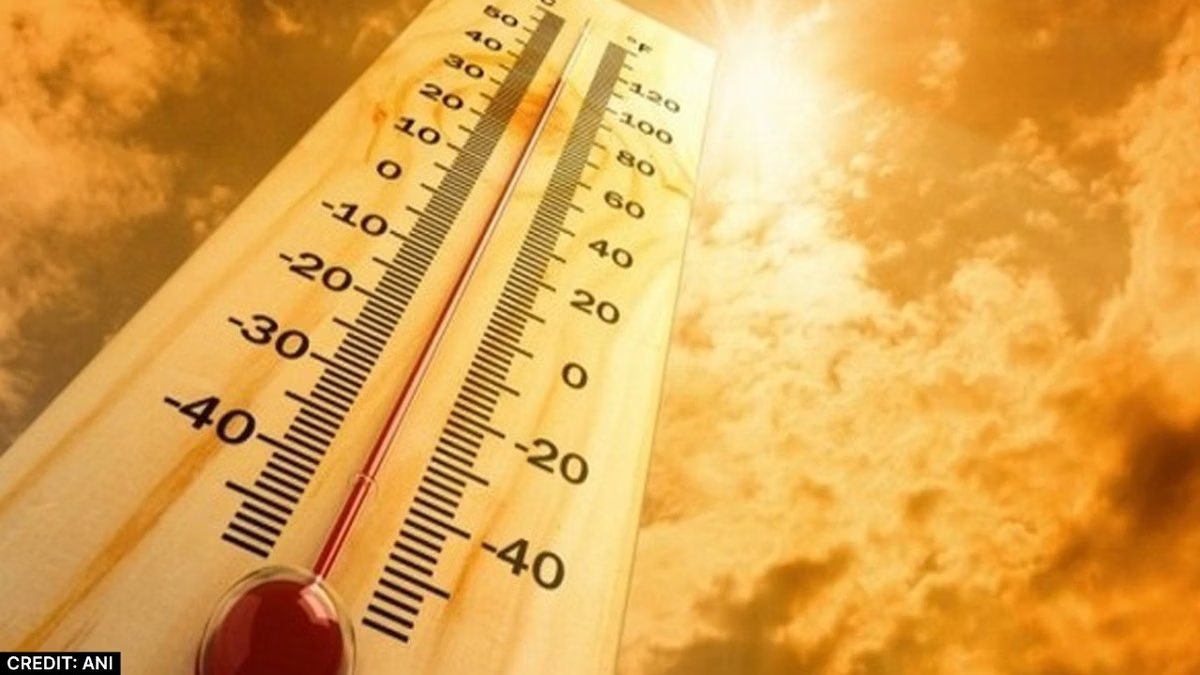
The Indore heat spike in March 2026 is drawing attention as temperatures rise earlier than usual across Central India, affecting daily life, public health, and infrastructure in cities that are not fully prepared for prolonged heat conditions.
Early Heatwave Conditions in Indore and Nearby Cities
The Indore heat spike has emerged earlier than the typical summer cycle, with temperatures crossing seasonal averages in March itself. Central India, including parts of Madhya Pradesh and Maharashtra, is witnessing clear skies and strong solar radiation, leading to a steady rise in daytime temperatures.
Weather patterns indicate that pre-monsoon heat is intensifying sooner than expected. Normally, peak summer conditions develop in April and May, but current trends show March behaving more like early summer. This shift is being observed not just in Indore but also in cities like Bhopal, Nagpur, and Raipur.
The early onset of heat is linked to dry atmospheric conditions and the absence of western disturbances, which usually bring some relief during this period. Without cloud cover or rainfall, heat accumulation becomes more intense.
Rising Temperatures in Central India Cities Affect Daily Life
The impact of rising temperatures in Central India cities is already visible in daily routines. Outdoor activities are being rescheduled to early mornings or late evenings. Schools in some areas are considering timing adjustments to protect students from peak afternoon heat.
For working professionals, especially those in non-air-conditioned environments, productivity is directly affected. Small businesses, street vendors, and construction workers are among the most exposed groups during heat spikes.
Water consumption has increased sharply, putting pressure on local supply systems. In Tier 2 cities like Indore, where infrastructure is still evolving, sudden spikes in demand can lead to localized shortages or uneven distribution.
Public transport users also face discomfort due to high temperatures, especially in buses and shared mobility systems without cooling mechanisms.
Health Risks Increase as Heatwave Patterns Intensify
One of the most critical concerns linked to the Indore heat spike is the rise in heat-related health risks. Prolonged exposure to high temperatures can lead to dehydration, heat exhaustion, and in severe cases, heatstroke.
Hospitals and clinics typically report an increase in such cases during peak summer months. However, with temperatures rising earlier, the healthcare system may face pressure sooner than expected.
Vulnerable groups include children, elderly individuals, and outdoor workers. Even healthy individuals can experience fatigue and reduced concentration due to continuous heat exposure.
Doctors often recommend increased hydration, avoiding direct sunlight during peak hours, and wearing light clothing. However, awareness and access to preventive measures remain inconsistent across smaller cities.
Infrastructure Challenges in Tier 2 Cities During Heat Spikes
The Indore heat spike also highlights infrastructure gaps in Tier 2 cities. Urban planning in many of these regions has not fully accounted for rising temperatures and climate variability.
Limited green cover, increasing concrete surfaces, and high population density contribute to the urban heat island effect, where cities become significantly warmer than surrounding rural areas.
Power demand rises sharply due to increased use of fans and air conditioning. This can strain electricity grids, leading to outages in some areas. Water supply systems also face pressure as consumption increases.
Unlike metro cities, where cooling infrastructure and emergency response systems are more developed, smaller cities often lack coordinated heat action plans. This makes them more vulnerable to sudden temperature spikes.
Climate Trends Behind Early Summer Heat in India
The broader context behind the Indore heat spike lies in changing climate patterns. India has been experiencing more frequent and intense heatwaves over the past decade.
Scientific observations suggest that rising global temperatures are contributing to earlier and longer summers. Central India, due to its geographical location, is particularly sensitive to these shifts.
Deforestation, urban expansion, and changing land use patterns also play a role in amplifying local temperatures. As natural cooling systems like vegetation decrease, heat retention increases.
These trends indicate that early heat spikes may become more common in the coming years, making it essential for cities to adapt quickly.
Takeaways
- Indore heat spike shows summer arriving earlier than usual in Central India
- Daily routines and work patterns are already being affected by rising temperatures
- Health risks such as dehydration and heatstroke are increasing sooner in the season
- Tier 2 cities face infrastructure and preparedness challenges during heatwaves
FAQs
Why is Indore experiencing a heat spike in March?
The rise in temperature is due to clear skies, dry conditions, and lack of weather disturbances that usually provide relief.
Are other cities in Central India affected as well?
Yes, cities like Bhopal, Nagpur, and Raipur are also experiencing higher than normal temperatures.
What health precautions should people take during heat spikes?
Staying hydrated, avoiding outdoor exposure during peak hours, and wearing light clothing are key preventive measures.
Is early summer heat becoming a long-term trend in India?
Yes, climate data suggests that heatwaves are starting earlier and lasting longer due to broader environmental changes.









Leave a comment