

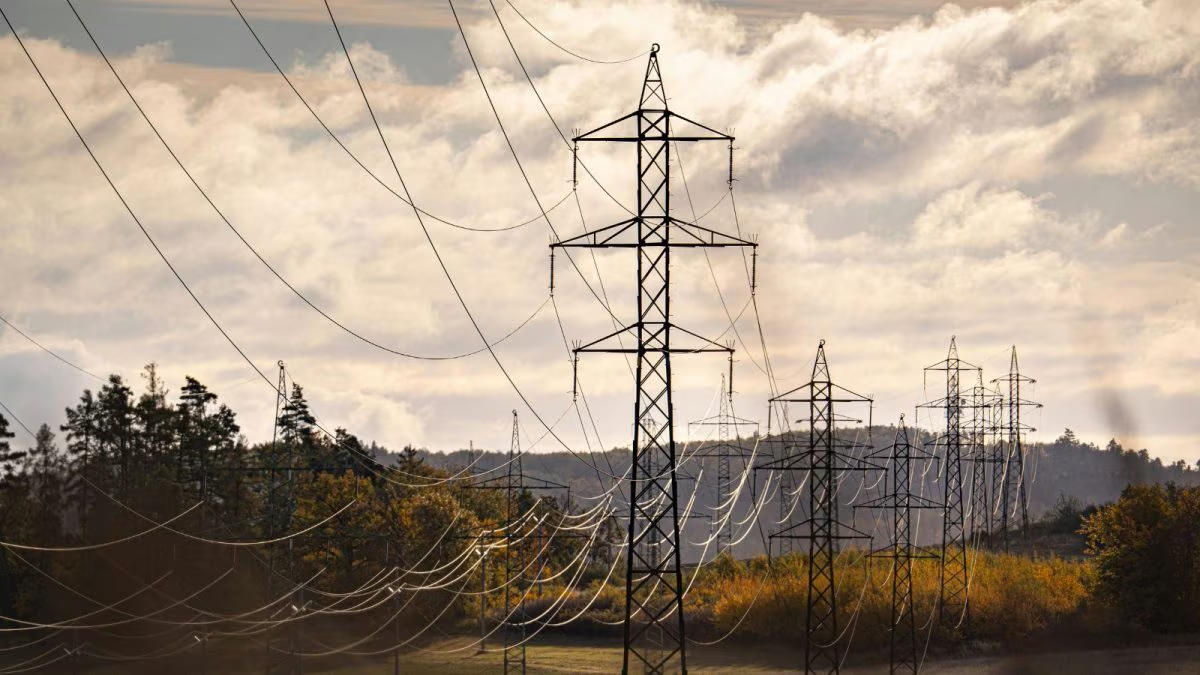
Power cuts in small cities during peak summer have become a recurring concern in 2026, especially across central and northern India. As temperatures rise sharply, electricity demand surges, exposing gaps in supply systems in cities like Nagpur and Gwalior.
Power cuts in small cities during peak summer are not just isolated disruptions but a widespread issue linked to rising demand, infrastructure stress, and supply limitations. With heatwaves intensifying, Tier-2 and Tier-3 cities are facing longer and more frequent outages.
Surge in Electricity Demand During Heatwave Months
One of the main reasons behind power cuts in Tier-2 cities is the sharp increase in electricity consumption during summer. Air conditioners, coolers, and refrigeration systems operate continuously, pushing demand to peak levels.
In cities like Nagpur and Gwalior, electricity demand during May and June often reaches record highs. State power utilities struggle to match this demand, especially during late afternoon and evening hours.
Unlike metro cities, smaller urban centers often lack robust grid infrastructure to handle sudden spikes. This imbalance between demand and supply leads to scheduled and unscheduled power cuts.
Infrastructure Limitations in Smaller Urban Areas
Electricity infrastructure in many small cities has not kept pace with growing urban populations. Distribution networks are often outdated, with transformers and local grids operating beyond capacity.
In several areas, aging cables and overloaded substations increase the risk of breakdowns. Even minor technical faults can lead to prolonged outages due to delayed repair capacity.
Rapid urban expansion has also added pressure on existing systems. New residential colonies and commercial areas are sometimes connected without adequate upgrades to the overall grid.
Load Shedding and Supply Management Practices
To manage demand, power distribution companies often implement load shedding in smaller cities. This involves planned outages in specific areas to balance overall supply.
While load shedding helps prevent total grid failure, it disrupts daily life. In some regions, residents experience power cuts for two to four hours during peak demand periods.
Unscheduled outages are also common, especially when demand exceeds projections or when technical failures occur. These cuts are harder to manage and create uncertainty for households and businesses.
Impact on Households, Businesses, and Daily Life
Frequent power cuts significantly affect quality of life during extreme heat. Households face discomfort, especially during nighttime outages when temperatures remain high.
Small businesses are also impacted. Shops, service providers, and local industries rely on continuous power for operations. Interruptions lead to productivity losses and reduced income.
Students preparing for exams and professionals working from home are particularly affected. Backup solutions such as inverters and generators are not accessible to everyone, creating unequal coping capacity.
Healthcare facilities in smaller cities also face challenges, although most critical centers have backup systems in place.
Regional Variations in Power Supply Challenges
Power cut patterns vary across states depending on generation capacity and distribution efficiency. States like Uttar Pradesh and Madhya Pradesh often report higher instances of load shedding in smaller towns compared to major cities.
In contrast, some states have improved supply reliability through better grid management and increased generation capacity. However, even in these regions, peak summer demand can still cause localized outages.
Cities like Raipur have seen improvements in recent years, but challenges remain during extreme weather conditions.
Government Measures and Long-Term Solutions
Authorities are taking steps to address power shortages through capacity expansion and infrastructure upgrades. New power plants, renewable energy projects, and grid modernization efforts are underway in several states.
Smart metering and better demand forecasting are also being introduced to improve efficiency. However, these solutions require time and investment before delivering consistent results.
Experts emphasize the need for decentralized energy solutions such as rooftop solar systems, especially in smaller cities. This can reduce dependence on centralized grids during peak demand periods.
Energy conservation awareness is another important aspect. Encouraging efficient usage can help reduce pressure on the system during critical hours.
Takeaways
- Power cuts in small cities increase sharply during peak summer months
- Rising electricity demand and infrastructure gaps are key causes
- Load shedding and outages affect households and local businesses
- Long-term solutions include grid upgrades and renewable energy adoption
FAQ
Why do small cities face more power cuts in summer?
Higher demand combined with weaker infrastructure makes it difficult to maintain consistent supply during peak months.
What is load shedding and why is it used?
Load shedding is a planned power cut used to balance electricity demand and prevent system overload.
Are power cuts improving in smaller cities?
There have been improvements in some regions, but peak summer still brings frequent outages.
What can residents do to manage power cuts?
Using energy-efficient appliances, reducing peak-hour consumption, and investing in backup solutions can help manage disruptions.









Leave a comment