

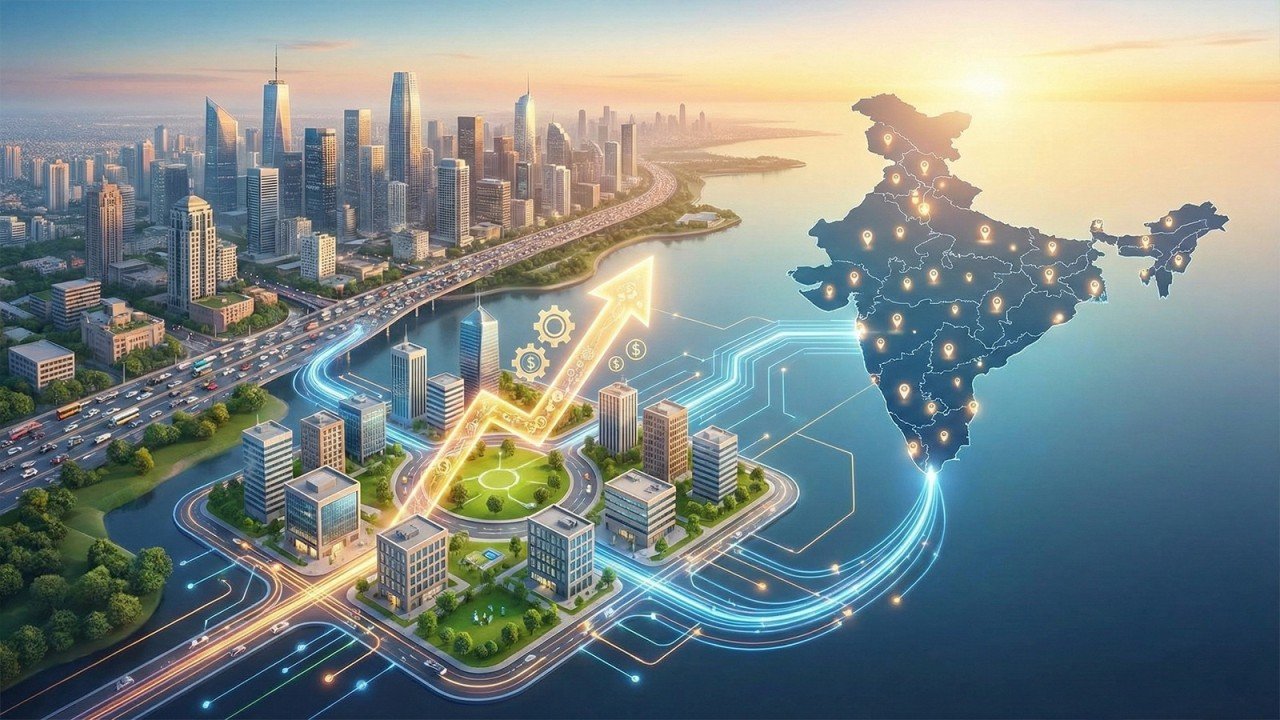
Smart bus networks are no longer limited to India’s biggest metropolitan areas. States such as Gujarat, Madhya Pradesh, Uttar Pradesh, Odisha, Maharashtra, and Chhattisgarh are expanding intelligent public transport systems to Tier-2 and Tier-3 cities, improving urban mobility, passenger safety, and digital connectivity.
The topic is evergreen with current relevance, not tied to a single breaking news event. Therefore, this article is written in an informative and explanatory style while reflecting recent developments in India’s urban transport sector.
India’s smart bus networks are steadily expanding beyond metro cities, marking a significant shift in how public transport is being planned across the country. For years, advanced bus services featuring GPS tracking, digital ticketing, CCTV surveillance, and passenger information systems were largely associated with cities such as Delhi, Bengaluru, and Ahmedabad. Today, many Tier-2 and Tier-3 cities are adopting similar technologies under central and state-led urban development initiatives. As urban populations continue to grow, states are investing in smarter, cleaner, and more efficient bus transport to reduce congestion and improve daily commuting.
Why Smart Bus Networks Matter for Smaller Cities
Urbanisation is accelerating in India’s smaller cities. As populations increase, traditional public transport systems often struggle to meet rising demand. Smart bus networks aim to solve this challenge by combining technology with better fleet management and passenger services.
Modern smart buses typically include GPS-based live tracking, automatic vehicle location systems, CCTV cameras, panic buttons, digital destination displays, electronic ticketing, and mobile applications that provide real-time arrival information. Many cities are also introducing cashless payment options through QR codes and National Common Mobility Cards.
These features improve reliability while making public transport more convenient for commuters. Local governments also benefit through better route planning, reduced operational costs, and data-driven decision-making.
Gujarat Continues to Set the Benchmark
Gujarat remains one of the pioneers in smart public transportation outside traditional metro cities.
Ahmedabad’s Bus Rapid Transit System has long been recognised for integrating dedicated bus corridors with intelligent transport systems. The state’s experience has encouraged other cities, including Surat, Rajkot, Vadodara, and Bhavnagar, to modernise their urban bus fleets with GPS tracking, digital passenger information systems, and cleaner fuel technologies.
Surat has particularly focused on integrating public transport with broader smart city infrastructure. Digital bus management, intelligent traffic systems, and integrated command centres help improve service efficiency and passenger safety. Gujarat’s model demonstrates how technology can strengthen urban mobility even in cities with populations significantly smaller than India’s largest metros.
Madhya Pradesh, Uttar Pradesh and Odisha Are Expanding Rapidly
Several states in central and northern India are investing heavily in modern public transport.
Indore and Bhopal in Madhya Pradesh have upgraded city bus operations with intelligent transport systems, mobile ticketing, and improved fleet monitoring. Indore’s broader urban management initiatives have also supported better integration between public transport and traffic management.
In Uttar Pradesh, cities such as Lucknow, Kanpur, Varanasi, Prayagraj, and Gorakhpur have expanded city bus services with GPS-enabled fleets and digital passenger information systems. The state continues to improve urban mobility through electric bus deployment and technology-enabled fleet operations.
Odisha has also emerged as a notable example. Bhubaneswar introduced the Mo Bus service, which combines modern buses, digital ticketing, GPS tracking, and accessibility features. The model has received attention for improving urban connectivity while encouraging greater use of public transport.
Maharashtra and Chhattisgarh Focus on Tier-2 Growth
Maharashtra is extending smart mobility beyond Mumbai and Pune. Cities including Nagpur, Nashik, Aurangabad, Solapur, and Amravati have introduced intelligent transport technologies through Smart City projects and municipal transport upgrades.
Nagpur has invested in integrated command centres, GPS-enabled city buses, digital passenger displays, and electric bus operations. These improvements support the city’s broader vision of sustainable urban transport.
Chhattisgarh has also modernised public transport in cities such as Raipur and Bilaspur. Technology-enabled city buses with live tracking, surveillance systems, and electronic ticketing are helping improve service quality while encouraging more residents to shift from private vehicles to public transport.
Across both states, electric buses are becoming an important part of future transport planning, helping reduce emissions while lowering operating costs over the long term.
Technology Is Driving the Future of Urban Mobility
Smart bus networks are about much more than introducing new vehicles. The real transformation lies in the digital infrastructure supporting these systems.
Integrated Command and Control Centres allow city officials to monitor buses in real time, analyse traffic conditions, respond to emergencies, and optimise routes. Artificial intelligence and data analytics are increasingly being used to improve scheduling based on passenger demand.
The expansion of electric buses is another major trend. Under initiatives such as the PM e-Bus Sewa Scheme and various state-level programs, many cities are replacing diesel fleets with electric buses to reduce pollution and improve air quality.
For passengers, mobile applications providing real-time bus tracking, estimated arrival times, digital payments, and service alerts are becoming standard features rather than premium services.
Challenges That Still Need Attention
Despite significant progress, several challenges remain.
Many municipal transport agencies continue to face funding constraints for fleet expansion and technology upgrades. Maintaining digital infrastructure requires skilled personnel and regular investment. Smaller cities also need better integration between buses, auto-rickshaws, railway stations, and other transport modes.
Public awareness remains another challenge. Digital ticketing and mobile applications deliver maximum benefits only when passengers actively use them. Authorities therefore need continued investment in digital literacy and customer support.
Long-term success will also depend on consistent maintenance, reliable service schedules, and expansion into newly developing urban areas where public transport demand continues to grow.
Key Takeaways
- Smart bus networks are expanding rapidly across Tier-2 and Tier-3 cities in India.
- Gujarat, Madhya Pradesh, Uttar Pradesh, Odisha, Maharashtra, and Chhattisgarh are among the leading states adopting intelligent transport systems.
- GPS tracking, digital ticketing, CCTV, passenger information systems, and electric buses are becoming standard features.
- Continued investment in infrastructure, technology, and public awareness will determine the long-term success of smart urban transport.
FAQ
Q1. What is a smart bus network?
A smart bus network uses technologies such as GPS tracking, digital ticketing, CCTV, passenger information displays, and intelligent fleet management to improve public transportation.
Q2. Which Indian states are leading smart bus expansion?
Gujarat, Madhya Pradesh, Uttar Pradesh, Odisha, Maharashtra, and Chhattisgarh are among the states making significant investments in smart public transport for Tier-2 and Tier-3 cities.
Q3. How do commuters benefit from smart buses?
Passengers receive real-time bus tracking, safer travel through surveillance systems, faster digital payments, better route information, and more reliable services.
Q4. Are electric buses part of smart transport systems?
Yes. Many cities are integrating electric buses into smart transport networks to reduce emissions, lower operating costs, and support sustainable urban mobility.







Leave a comment