

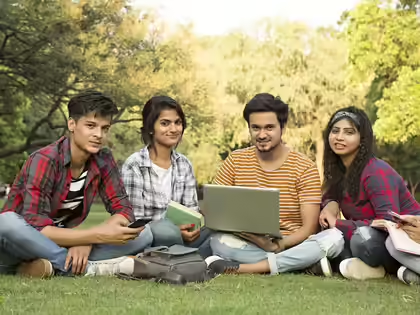
Small-town stories have become Bollywood and OTT’s most successful storytelling formula in 2026. Audiences across India are increasingly connecting with films and web series based on Tier-2 and Tier-3 cities because of their realism, relatable characters, cultural familiarity, and emotionally grounded narratives.
Indian Entertainment Has Shifted Beyond Metro-Centric Storytelling
For many years, mainstream Bollywood focused heavily on urban lifestyles, luxury settings, and metro-city characters. Big-budget films often revolved around elite families, foreign locations, or glamorous city environments that felt distant from everyday Indian life.
That formula has changed significantly over the last decade.
Today, some of the biggest successes in Bollywood and OTT entertainment come from stories set in smaller Indian towns. Cities like Bareilly, Bhopal, Lucknow, Indore, Kanpur, Patna, and Jaipur have become central backdrops for modern Indian storytelling.
This shift reflects changing audience preferences. Viewers now want stories that feel authentic and emotionally familiar rather than aspirational but disconnected.
Small-town narratives often focus on middle-class families, local traditions, social pressures, education, relationships, jobs, and everyday struggles. These themes resonate strongly with audiences across both metro and non-metro India.
OTT platforms accelerated this trend by giving creators more freedom to experiment with realistic storytelling styles and regional cultural settings.
Relatability Became More Important Than Glamour
One of the biggest reasons behind the popularity of small-town stories is relatability.
Audiences are increasingly drawn toward characters who resemble real people instead of exaggerated cinematic stereotypes. Small-town stories usually feature ordinary individuals dealing with practical challenges such as family expectations, career uncertainty, marriage pressure, financial struggles, or local politics.
These narratives feel emotionally honest to viewers from different social backgrounds.
Films and series based in smaller cities also use regional dialects, local humor, and culturally specific details that strengthen authenticity. Viewers often recognize their own lifestyles, neighborhoods, and social experiences in these stories.
Unlike highly stylized urban productions, small-town entertainment frequently avoids excessive glamour. The focus shifts toward storytelling depth, character development, and emotional realism.
This change has made audiences more emotionally invested in narratives that reflect India’s everyday social realities.
OTT Platforms Expanded Demand for Regional and Small-Town Content
The rise of OTT platforms played a major role in mainstreaming small-town storytelling.
Streaming services are not limited by traditional box office formulas or cinema distribution pressures. This allows creators to produce stories rooted in regional settings and niche social themes without depending entirely on mass-market theatrical success.
Platforms such as Netflix, Amazon Prime Video, JioHotstar, Sony LIV, ZEE5, and regional OTT services invested heavily in realistic Indian storytelling over the last few years.
Crime dramas set in Uttar Pradesh, family stories based in Rajasthan, comedy dramas from Madhya Pradesh, and rural political thrillers gained strong viewership across India.
OTT audiences also consume content differently from cinema audiences. Viewers now actively seek emotionally layered storytelling rather than only star-driven entertainment.
Subtitles and multilingual access helped small-town stories travel beyond regional boundaries. Audiences from southern India can watch Hindi small-town dramas, while Hindi-speaking viewers increasingly explore regional OTT content from Tamil, Telugu, or Malayalam industries.
This digital accessibility strengthened the popularity of grounded storytelling.
Smaller Cities Represent India’s Largest Audience Base
Another major reason for the rise of small-town stories is demographic reality.
A large percentage of India’s population lives outside major metropolitan cities. For years, entertainment industries underrepresented these audiences despite their massive cultural influence.
As internet penetration expanded into Tier-2 and Tier-3 regions, entertainment companies began recognizing the commercial potential of non-metro viewers. Small-town audiences became active OTT subscribers, social media participants, and digital consumers.
Content creators responded by building stories around locations and experiences familiar to these viewers.
What makes this trend important is that small-town stories are no longer limited to rural stereotypes or simplistic comedy. Modern productions often portray smaller cities as socially complex, aspirational, ambitious, and rapidly changing spaces.
This reflects broader economic and cultural changes happening across India, where Tier-2 cities are becoming increasingly influential in business, education, and digital culture.
Writers and Directors Are Prioritizing Authenticity
The growing popularity of small-town entertainment also reflects changing creative priorities within the industry.
Many younger writers and filmmakers come from non-metro backgrounds themselves. Their personal experiences influence the kind of stories they want to tell.
Instead of imitating westernized urban narratives, creators are exploring local identities, regional politics, social customs, and language diversity. This has produced more layered and realistic storytelling.
Casting choices have also evolved. Filmmakers increasingly prioritize actors who can naturally portray grounded characters instead of relying only on traditional star images.
Production design, costumes, dialogue writing, and music in small-town stories often feel more culturally specific and immersive. Audiences now notice and appreciate these details.
The success of such content has encouraged both Bollywood studios and OTT platforms to continue investing in locally rooted narratives.
Small-Town Stories Are Reshaping Mainstream Entertainment
What began as an alternative storytelling trend has now become one of Indian entertainment’s most successful mainstream formulas.
Small-town stories have proven that audiences value authenticity, emotional depth, and cultural familiarity alongside entertainment. They also demonstrate how India’s digital and entertainment economy is becoming less metro-centric.
As OTT competition grows and audience preferences evolve further, realistic stories rooted in smaller Indian cities are expected to remain central to Bollywood and streaming platforms alike.
Takeaways
- Small-town stories are becoming one of Bollywood and OTT’s strongest content formats
- Audiences connect with relatable characters, local culture, and realistic storytelling
- OTT platforms helped expand the reach of regional and non-metro narratives
- Tier-2 and Tier-3 audiences now strongly influence India’s entertainment industry
FAQ
Why are small-town stories becoming popular in Bollywood?
Audiences increasingly prefer realistic and emotionally relatable stories over heavily glamorized urban narratives.
How did OTT platforms help small-town storytelling grow?
Streaming platforms gave creators more freedom to produce regionally rooted and socially grounded content without traditional box office pressure.
What makes small-town stories relatable?
They often focus on middle-class life, family relationships, local culture, career struggles, and everyday social realities familiar to Indian audiences.
Are small-town stories only popular in Hindi entertainment?
No. Regional film industries and OTT platforms across Tamil, Telugu, Malayalam, Marathi, and Bengali entertainment are also seeing strong demand for locally rooted narratives.










Leave a comment