

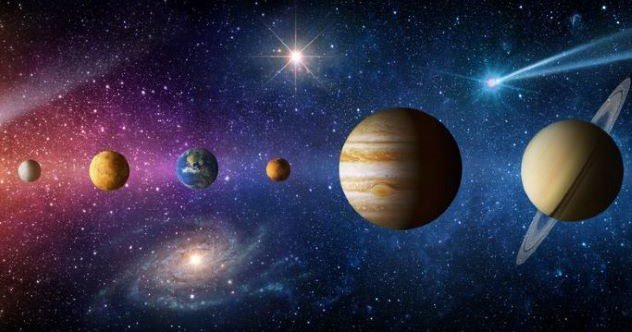
Space has fascinated humans for centuries, yet misconceptions about the cosmos persist. Even with growing access to science news and astronomy content, many common beliefs about planets, stars, and the universe are inaccurate. For readers in India’s Tier-2 cities, understanding these myths can spark curiosity and encourage a clearer perspective on the realities of space exploration and science.
Myth 1: The Moon Has a Dark Side
There is no permanent dark side. The Moon rotates, so all parts get sunlight at different times.
Myth 2: Black Holes Suck Everything In
Black holes don’t act like cosmic vacuum cleaners. Objects must be very close to be affected.
Myth 3: Space Is Completely Silent
Sound cannot travel in the vacuum of space, but electromagnetic waves still move, which can be detected as signals.
Myth 4: Astronauts Are Weightless Because There Is No Gravity
Gravity exists everywhere in orbit. Weightlessness occurs because astronauts are in free fall along with the spacecraft.
Myth 5: The Sun Is Yellow
The Sun appears white in space. Its yellow hue from Earth is due to the atmosphere scattering light.
Myth 6: Meteors Are Always Hot When They Hit Earth
Many meteors cool down quickly in the atmosphere and are cold or lukewarm when they land.
Myth 7: The Great Wall of China Is Visible from Space
It’s barely visible even from low Earth orbit, contrary to popular belief.
Myth 8: Mars Is Red Because of Its Atmosphere
The reddish color comes from iron oxide on the surface, not the thin atmosphere.
Myth 9: Saturn’s Rings Are Solid
Saturn’s rings are made of ice and rock particles floating independently, creating a visually continuous ring.
Myth 10: Space Travel Is Safe and Comfortable
Space travel is harsh, with exposure to radiation, microgravity effects, and extreme temperatures posing real challenges.
Conclusion
Dispelling these myths helps people appreciate the real wonders of space. For young learners and enthusiasts in India’s growing cities, knowing the facts encourages curiosity and a deeper understanding of the universe beyond popular misconceptions.












Leave a comment