

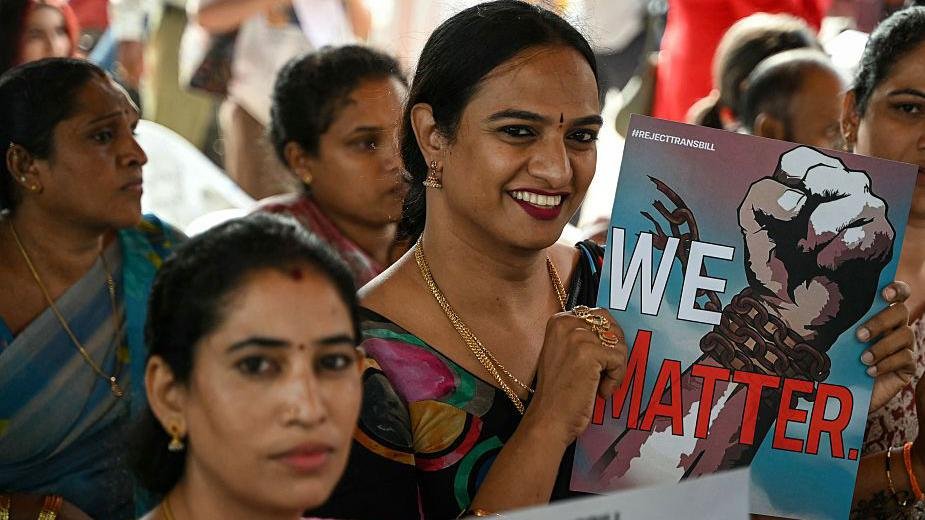
The ongoing transgender bill debate in India has brought renewed attention to how policy changes affect social inclusion in smaller cities. Recent discussions around amendments and implementation gaps are shaping how rights, welfare, and recognition reach transgender communities beyond metro areas.
Why the Transgender Bill Debate Matters Now
The transgender bill debate has regained focus due to continued discussions around the implementation of the Transgender Persons Act, 2019, and demands for stronger protections. While the law established a legal framework for recognition and welfare, activists and experts have raised concerns about gaps in execution, especially in Tier-2 and Tier-3 cities.
Issues such as identity certification, access to welfare schemes, and protection from discrimination remain uneven across regions. In larger cities, awareness and institutional support have improved, but smaller cities still face challenges in translating policy into practice.
The debate is not just legal. It reflects a broader question about how inclusive governance functions at the grassroots level in India.
Key Policy Changes and Proposed Reforms
Recent discussions around transgender policy changes focus on strengthening rights related to identity, employment, and social security. One of the central issues is the process of obtaining a transgender identity certificate, which currently requires interaction with district authorities.
Activists argue that this process can be intrusive and inconsistent, particularly in smaller cities where administrative systems may lack sensitivity or training. Proposed reforms aim to simplify procedures and ensure self-identification is respected without unnecessary barriers.
There is also growing emphasis on expanding reservations in education and public employment. While some states have taken steps in this direction, implementation varies widely. Uniform guidelines and clearer policy direction are being discussed to bridge these gaps.
Another key area is healthcare access, including gender-affirming services, which remain limited outside major urban centers.
Challenges in Tier-2 and Tier-3 Cities
The impact of the transgender bill debate is most visible in smaller cities where social attitudes and institutional capacity differ significantly from metros. Awareness about transgender rights is often limited, leading to continued stigma and discrimination.
In cities like Nagpur, Indore, or Patna, local administrations may not have dedicated support systems or trained personnel to handle transgender welfare programs effectively. This results in delays or denial of benefits that are legally guaranteed.
Employment opportunities also remain restricted. Many transgender individuals in smaller cities continue to rely on informal work due to lack of inclusion in formal sectors. Without targeted policy enforcement, economic inclusion remains a challenge.
Education is another concern. Dropout rates among transgender youth are higher due to social exclusion, making it harder for them to benefit from long-term policy initiatives.
Social Policy and Ground-Level Implementation
Social policy changes are only as effective as their implementation at the local level. The transgender bill debate highlights the gap between legislative intent and ground realities in Tier-2 India.
For example, welfare schemes such as housing support, skill development programs, and financial assistance are often underutilized due to lack of awareness or administrative hurdles. In some cases, local bodies are not fully equipped to identify and support beneficiaries.
Non-governmental organizations play a crucial role in bridging this gap, but their reach is limited in smaller towns. Strengthening collaboration between government agencies and community groups can improve policy outcomes.
There is also a need for sensitization programs for law enforcement, healthcare workers, and educators to ensure that transgender individuals are treated with dignity and fairness.
Changing Social Attitudes in Smaller Cities
Despite challenges, there are signs of gradual change in social attitudes. Increased visibility of transgender individuals in media, education, and public life is contributing to greater acceptance.
In some Tier-2 cities, local initiatives and community-led efforts are creating safe spaces and support networks. Social media has also played a role in amplifying voices and raising awareness about rights and issues.
However, progress is uneven. Deep-rooted cultural biases and lack of exposure continue to influence perceptions in many regions. Policy changes alone cannot address these issues without parallel efforts in education and awareness.
The transgender bill debate is therefore not just about legal reform but about shaping a more inclusive social environment.
The Way Forward for Inclusive Policy
For the transgender bill debate to translate into meaningful change, a multi-layered approach is required. Simplifying administrative processes, ensuring uniform implementation across states, and increasing funding for welfare programs are critical steps.
Equally important is building institutional capacity in smaller cities. Training officials, improving infrastructure, and integrating transgender inclusion into broader social policies can create long-term impact.
Monitoring and accountability mechanisms must also be strengthened to ensure that rights are not limited to paper. Regular data collection and reporting can help identify gaps and improve policy design.
As India continues to evolve socially and economically, the focus must remain on ensuring that inclusion reaches every part of the country, not just metropolitan centers.
Key Takeaways
- The transgender bill debate highlights gaps between policy and implementation in smaller cities
- Administrative processes and lack of awareness create barriers to accessing rights
- Social attitudes and limited infrastructure affect inclusion in Tier-2 regions
- Stronger enforcement and local-level reforms are needed for meaningful change
FAQs
Q1: What is the main issue in the transgender bill debate?
The debate focuses on improving implementation, simplifying identity certification, and ensuring better access to rights and welfare schemes.
Q2: Why are smaller cities more affected by policy gaps?
Limited infrastructure, lower awareness, and lack of trained personnel make implementation weaker in Tier-2 and Tier-3 cities.
Q3: What changes are being proposed in transgender policies?
Proposals include easier identity recognition, better access to healthcare, and expanded opportunities in education and employment.
Q4: How can inclusion be improved at the local level?
Through awareness programs, stronger enforcement, and collaboration between government and community organizations.









Leave a comment