

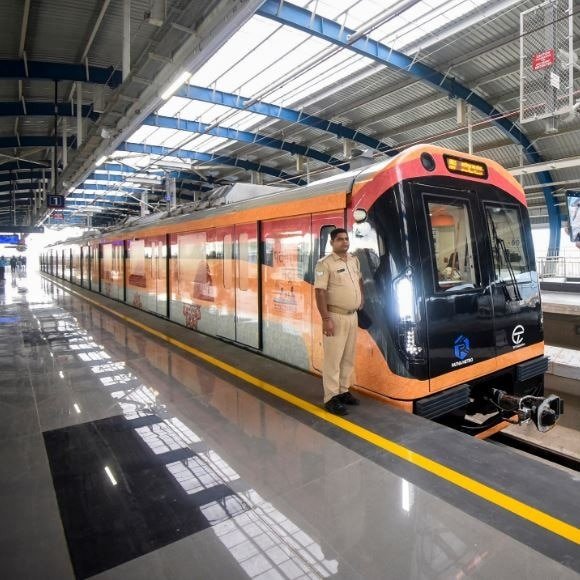
Patna Metro Phase 1 progress update indicates steady construction activity across key corridors, with visible infrastructure work shaping the city’s urban transport future. The project is now entering a crucial stage where execution speed and timelines will directly impact expected partial operations.
Current Status of Patna Metro Phase 1 Construction
The Patna Metro Phase 1 project is being executed by Delhi Metro Rail Corporation, which is overseeing planning and implementation. The phase includes two major corridors designed to connect important residential and commercial zones across the city.
As of early 2026, elevated sections along priority routes have shown visible progress, especially in areas like Danapur and Khemni Chak. Pillar construction and viaduct work are advancing steadily, while underground tunneling in central Patna has also picked up pace.
Stations are in different stages of development, with some structures already taking shape. However, underground sections remain more complex due to dense urban layouts and utility diversions. Overall, the project has moved beyond initial groundwork and into full-scale construction.
Patna Metro Route Details and Key Coverage Areas
Patna Metro Phase 1 consists of two corridors aimed at improving connectivity across east-west and north-south directions. The East-West Corridor will link Danapur to Khemni Chak, covering major residential areas and business zones.
The North-South Corridor is planned to connect Patna Junction with key parts of the city, improving access to railway connectivity and reducing dependence on road transport.
These routes are designed to reduce travel time significantly across congested stretches. For example, daily commuters traveling from western suburbs to central Patna could see a reduction in travel time by up to 40 to 50 percent once operations begin.
The project is also expected to integrate with existing transport systems, including buses and railway networks, making last-mile connectivity more efficient.
Expected Timeline and Operational Plans in 2026
The Patna Metro Phase 1 progress update suggests that full completion will take additional time, but partial operations may be targeted in stages. Authorities have previously indicated that priority sections could be opened first to provide early relief to commuters.
Trial runs typically begin after major civil work and track installation are completed. As of now, the project is still in the structural development phase, which means commercial operations across full corridors are unlikely within 2026.
However, visible acceleration in construction activity indicates that key milestones could be achieved this year. Track laying, signaling systems, and station finishing work are expected to gain momentum in the coming months.
Timelines may vary depending on land acquisition challenges, technical hurdles, and funding flow. Urban metro projects often face delays, but current progress suggests that execution is moving forward without major stoppages.
Impact on Traffic and Urban Mobility in Patna
Patna has long struggled with traffic congestion, narrow roads, and increasing vehicle density. The metro project is expected to bring a structural shift in how people move across the city.
Once operational, the metro will reduce dependence on autos, buses, and private vehicles for long-distance travel within the city. This can lead to lower traffic congestion and improved travel predictability.
For daily commuters, especially office workers and students, the metro offers a faster and more reliable alternative. It also has the potential to reduce fuel consumption and urban pollution levels over time.
Cities like Lucknow and Nagpur have already demonstrated how metro systems can improve mobility in Tier-2 environments. Patna is expected to follow a similar trajectory once services begin.
Challenges Affecting Patna Metro Progress
Despite steady progress, several challenges continue to influence the pace of construction. Underground tunneling in densely populated areas requires careful planning to avoid disruption to existing infrastructure.
Utility shifting, including water pipelines and electrical lines, has been a recurring issue. These factors often slow down work in central zones where space is limited.
Funding and coordination between multiple agencies also play a critical role in maintaining timelines. Any delays in approvals or resource allocation can impact project schedules.
Additionally, public inconvenience due to construction activities remains a concern. Traffic diversions and road closures have affected daily movement in some areas.
What Locals Can Expect Going Forward
For residents of Patna, 2026 will likely be a year of visible transformation rather than immediate metro access. Construction activity will continue to intensify, with more stations and elevated sections becoming prominent.
Authorities are expected to provide periodic updates on progress and timelines. As the project moves closer to completion stages, public awareness campaigns and trial operations will begin.
The long-term impact of the metro will depend on execution quality and integration with other transport systems. If delivered efficiently, it could redefine urban mobility in Patna and reduce long-standing traffic issues.
Takeaways
• Patna Metro Phase 1 construction is progressing steadily across key corridors in 2026
• Elevated and underground sections are at different stages of development
• Partial operations may begin in phases, but full completion will take more time
• The metro is expected to significantly improve traffic and connectivity in Patna
FAQs
Q1. Is Patna Metro Phase 1 operational in 2026?
No, the project is still under construction, and full operations are not expected within 2026.
Q2. Which areas will Patna Metro Phase 1 cover?
It will connect major zones including Danapur, Khemni Chak, and Patna Junction through two corridors.
Q3. Who is executing the Patna Metro project?
The project is being implemented by Delhi Metro Rail Corporation.
Q4. How will the metro impact daily travel in Patna?
It will reduce travel time, ease congestion, and provide a reliable public transport option.








Leave a comment