

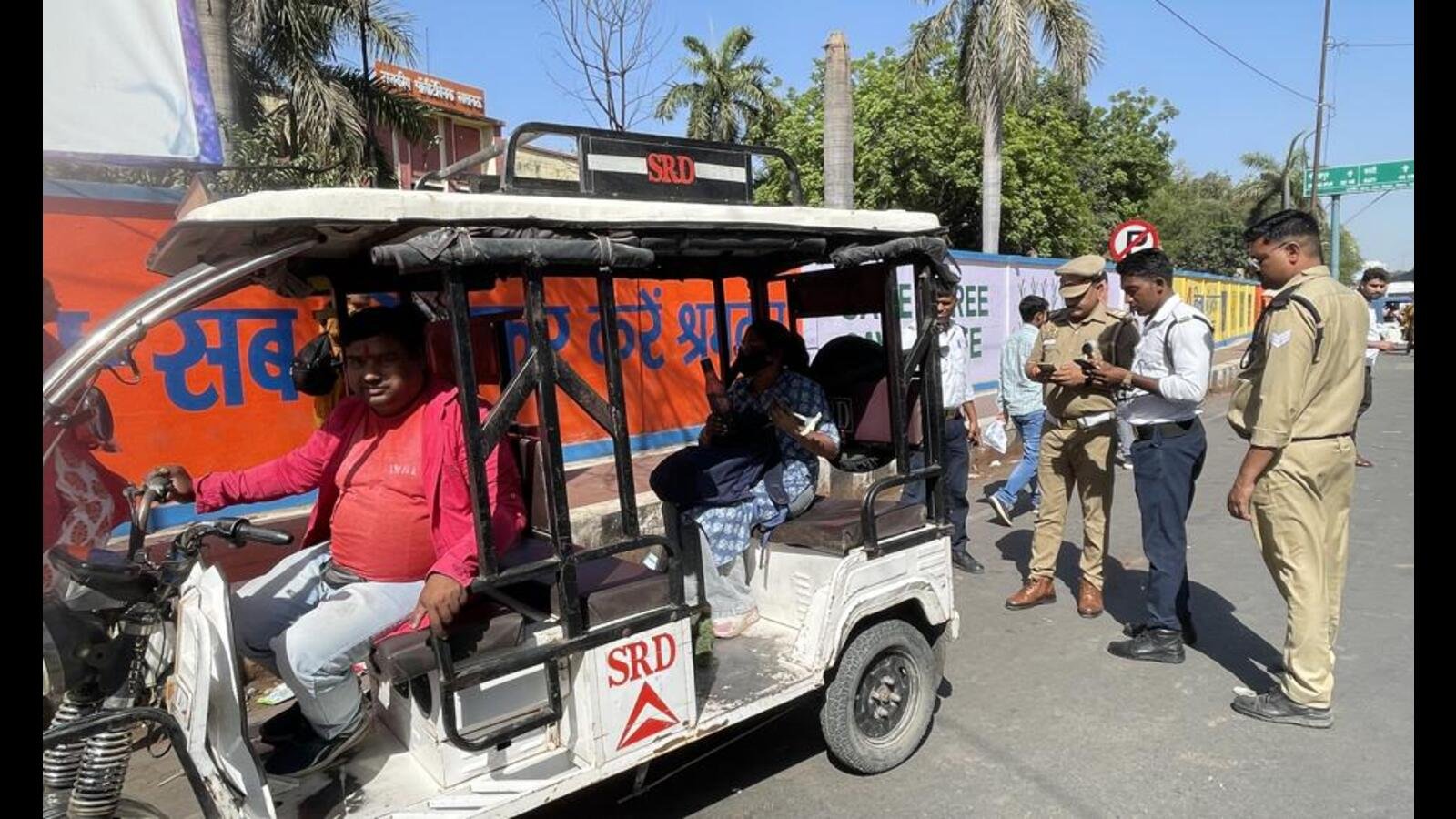
Lucknow e-rickshaw policy changes have triggered mixed reactions among drivers in 2026, as new regulations aim to control congestion and improve urban mobility. While authorities focus on better traffic management, many drivers are raising concerns over income impact and compliance challenges.
New E-Rickshaw Policy in Lucknow Explained
The Lucknow e-rickshaw policy update is part of broader traffic regulation measures introduced by the Uttar Pradesh Transport Department. The revised rules focus on route restrictions, mandatory registration enforcement, and designated parking zones.
Authorities have identified uncontrolled e-rickshaw movement as a key contributor to congestion in high-traffic areas such as Hazratganj, Charbagh, and Aminabad. The new policy aims to streamline operations by limiting access in certain zones and introducing fixed routes.
Additionally, stricter documentation checks and licensing requirements are being enforced. Many unregistered or informally operating vehicles are now under scrutiny, which has led to increased enforcement drives across the city.
Driver Concerns Over Income and Route Restrictions
One of the major concerns surrounding the Lucknow e-rickshaw policy changes is the impact on driver earnings. E-rickshaw drivers, many of whom rely on daily income, are facing uncertainty due to restricted movement in busy areas where passenger demand is highest.
Drivers operating near railway stations and markets have reported reduced trip frequency after the implementation of route limitations. Fixed routes, while intended to reduce chaos, are limiting flexibility that drivers previously depended on to maximize earnings.
There are also concerns about penalties and fines for non-compliance. Drivers unfamiliar with new rules are at risk of facing enforcement action, adding to operational stress.
Driver associations have voiced the need for clearer communication and phased implementation to allow time for adaptation.
Government’s Objective: Reducing Traffic and Improving Safety
From the administration’s perspective, the policy is aimed at addressing long-standing urban mobility issues. Lucknow has seen a sharp rise in e-rickshaw numbers over the past few years, leading to unregulated growth.
E-rickshaws, while eco-friendly, often operate without adherence to traffic rules, contributing to congestion and safety risks. Narrow roads and high pedestrian movement in commercial areas make regulation necessary.
The government is also focusing on improving passenger safety by ensuring that only registered and verified vehicles operate within city limits. Designated stands are being introduced to reduce random stopping and road blockages.
Officials argue that structured operations will benefit both commuters and the overall traffic ecosystem in the long run.
Mixed Public Response to E-Rickshaw Regulation
Public reaction to the policy has been divided. Some commuters have welcomed the move, citing improved traffic flow and reduced roadside chaos in busy areas.
Others, however, have expressed concerns about reduced availability of last-mile transport. E-rickshaws play a crucial role in connecting residential areas with main roads, metro stations, and markets.
Any restriction on their movement can affect daily commuting convenience, especially for students, office workers, and elderly passengers.
Local businesses that depend on footfall generated by easy transport access are also monitoring the situation closely.
Challenges in Implementing the New Policy
Implementing the Lucknow e-rickshaw policy changes comes with several challenges. Enforcement consistency is a key issue, as uneven implementation across areas can create confusion among drivers.
Infrastructure gaps, such as lack of sufficient designated parking spaces and clear route signage, can also limit effectiveness. Without proper planning, drivers may struggle to adapt to new operational rules.
Awareness remains another challenge. Many drivers are not fully informed about policy details, leading to misunderstandings and resistance.
Authorities will need to balance regulation with practical considerations to ensure that the policy achieves its intended outcomes without disrupting livelihoods.
What Lies Ahead for Lucknow’s E-Rickshaw Ecosystem
The coming months will be critical in determining how the policy evolves. Adjustments based on feedback from drivers and commuters are likely as authorities assess ground realities.
Training sessions, awareness campaigns, and improved infrastructure could help ease the transition. Technology-based solutions, such as route mapping and digital registration systems, may also play a role in streamlining operations.
E-rickshaws remain an important part of Lucknow’s transport system, especially for last-mile connectivity. The challenge will be to regulate without restricting accessibility and affordability.
Takeaways
• Lucknow has introduced new e-rickshaw regulations to control traffic and improve safety
• Drivers are concerned about income loss due to route restrictions and enforcement
• Public response is mixed, with both support and concerns over reduced availability
• Successful implementation will depend on awareness, infrastructure, and policy flexibility
FAQs
Q1. What changes have been made in the Lucknow e-rickshaw policy?
The policy includes route restrictions, stricter registration enforcement, and designated parking zones.
Q2. Why are drivers opposing the new rules?
Drivers are concerned about reduced income, limited movement, and penalties for non-compliance.
Q3. How will the policy impact commuters?
It may improve traffic flow but could also reduce availability of e-rickshaws in certain areas.
Q4. Is the policy permanent or subject to change?
The policy may be adjusted based on feedback and ground-level implementation challenges.











Leave a comment