

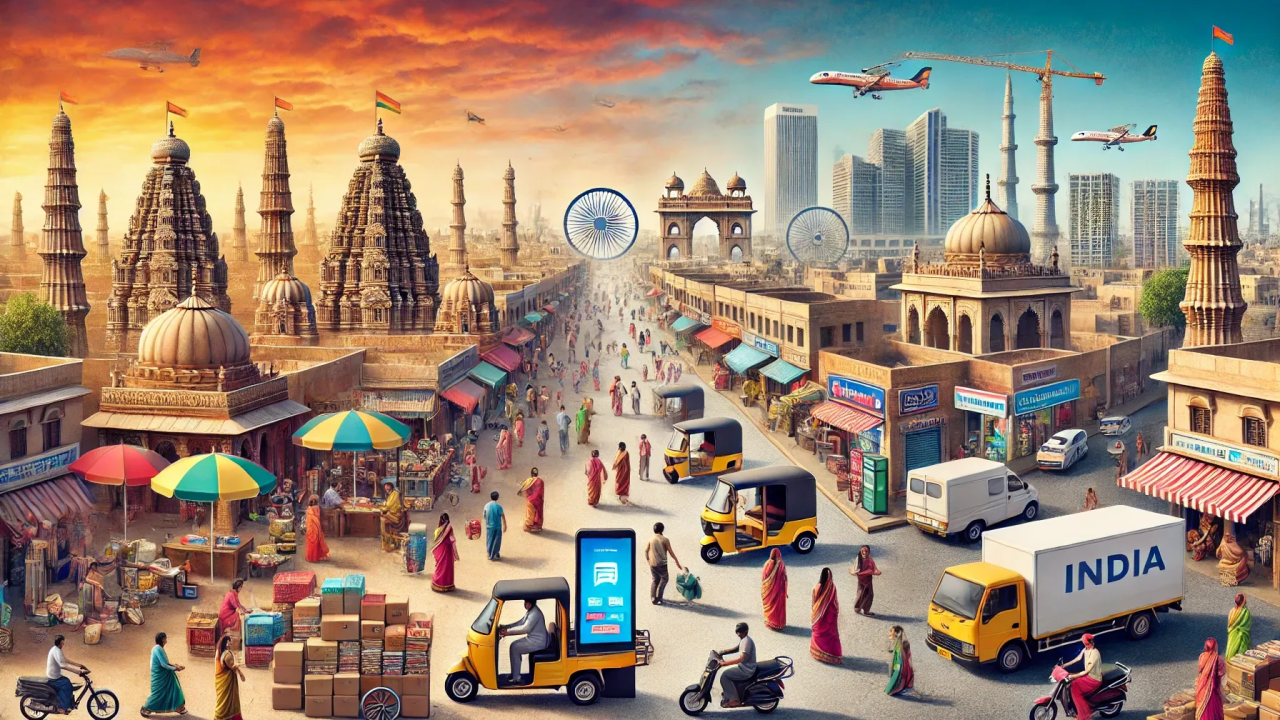
Smaller Indian cities are witnessing unprecedented infrastructure investments as governments and private companies focus on regional growth. New highways, airports, industrial parks, and urban transport systems are transforming Tier-2 and Tier-3 cities into important centers for business, manufacturing, and employment.
Infrastructure Investment Is Shifting Beyond Metro Cities
Infrastructure investment in India is increasingly moving beyond major metros like Mumbai, Delhi, and Bengaluru. Cities such as Nagpur, Indore, Lucknow, Coimbatore, Surat, and Bhubaneswar are receiving significant funding for roads, airports, logistics hubs, and public transport.
This shift reflects a broader economic strategy. Policymakers want to reduce pressure on overcrowded metros while creating growth opportunities across the country. Better infrastructure helps businesses expand into new markets and gives residents access to jobs and services closer to home.
For smaller cities, this investment is changing both their economic prospects and quality of life.
Government Spending Is Driving Regional Development
A major reason for this surge is sustained public capital expenditure.
In recent Union Budgets, the Indian government has sharply increased spending on highways, railways, airports, and industrial corridors. Programs such as Bharatmala, Sagarmala, Smart Cities Mission, PM Gati Shakti, and AMRUT are channeling funds into non-metro areas.
State governments are also investing in regional airports, tourism infrastructure, and industrial zones.
For example, Nagpur has benefited from the MIHAN logistics hub, while cities like Indore and Lucknow have expanded their metro and road networks. These projects make regional cities more attractive for investors.
Lower Costs Make Smaller Cities Attractive
Land and construction costs are significantly lower in Tier-2 and Tier-3 cities than in metros.
This allows governments to build infrastructure at a lower cost and gives private companies more room to invest in factories, warehouses, and office spaces. Businesses can also hire local talent at competitive salaries while avoiding the high rental and congestion costs associated with major metros.
As a result, infrastructure investments often deliver stronger economic returns in smaller cities where there is more room for expansion.
Manufacturing and Logistics Need Better Connectivity
India’s manufacturing ambitions depend on efficient logistics networks, and smaller cities play a crucial role.
Many industrial clusters are located outside the largest metros. Cities such as Rajkot, Aurangabad, Tiruppur, and Hosur are known for engineering, textiles, and automotive manufacturing.
Improved roads, freight corridors, inland container depots, and airports help these cities connect with domestic and export markets.
As supply chains modernize, infrastructure investment in these regions becomes essential for reducing transport costs and improving competitiveness.
Rising Urbanization Is Expanding Demand
India is urbanizing rapidly, and much of this growth is occurring in smaller cities rather than only in metros.
As populations rise, demand increases for better roads, water supply, sewage systems, housing, and public transport. Infrastructure investment helps cities manage this growth more efficiently.
Improved civic amenities also make these locations more attractive to skilled professionals and businesses.
Cities that invest early in infrastructure are better positioned to sustain long-term development without facing severe urban stress.
Private Investment Follows Public Infrastructure
Public infrastructure often acts as a catalyst for private investment.
When governments build expressways, airports, and industrial parks, real estate developers, manufacturers, retailers, and service providers tend to follow. New hotels, housing projects, shopping centers, and office spaces emerge around these assets.
The expansion of the Jewar Airport region in Uttar Pradesh and logistics development around Nagpur are examples of this multiplier effect.
Infrastructure does more than improve connectivity. It creates an ecosystem that attracts long-term investment.
Better Quality of Life Supports Economic Growth
Infrastructure investment is not only about economic output. It also improves everyday living conditions.
Reliable roads, public transport, healthcare facilities, and digital connectivity make smaller cities more livable. This encourages professionals to stay in their hometowns rather than relocating to metros.
Hybrid work trends have strengthened this shift, allowing many people to build careers while living in cities with lower costs and shorter commutes.
This combination of affordability and improving infrastructure is a major competitive advantage.
Challenges That Still Need Attention
Despite strong momentum, several smaller cities face execution challenges.
Project delays, land acquisition issues, and uneven urban planning can slow progress. Some cities also need better maintenance and stronger governance to ensure infrastructure assets deliver lasting benefits.
The long-term success of these investments will depend on coordinated planning and efficient implementation.
Why the Trend Is Likely to Continue
The surge in infrastructure investments in smaller Indian cities reflects a structural shift in how India is growing.
As governments seek balanced regional development and businesses look for lower-cost expansion opportunities, Tier-2 and Tier-3 cities are becoming central to the country’s economic strategy.
For residents, this means more jobs, better connectivity, and improved living standards in cities that were once overlooked.
Key Takeaways
- Government capital expenditure is increasingly focused on smaller Indian cities.
- Lower land and construction costs make infrastructure projects more economical.
- Better connectivity supports manufacturing, logistics, and new businesses.
- Improved infrastructure enhances both economic opportunities and quality of life.
FAQs
Why are smaller Indian cities receiving more infrastructure investment?
Governments and businesses see them as cost-effective growth centers with rising populations and strong economic potential.
Which sectors benefit most from infrastructure development?
Manufacturing, logistics, real estate, tourism, and retail typically benefit the most.
What government programs are driving this trend?
PM Gati Shakti, Bharatmala, Smart Cities Mission, AMRUT, and industrial corridor projects are major contributors.
How does this affect local residents?
It creates jobs, improves transport and civic services, and raises overall living standards.











Leave a comment