

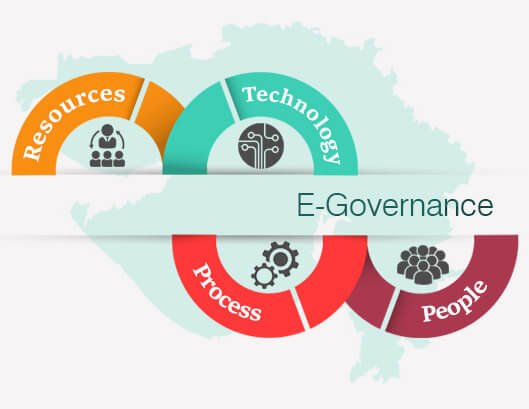
State governments across India are accelerating the rollout of digital governance services, bringing public administration closer to citizens in Tier-2 and Tier-3 cities. From online certificates and digital grievance systems to smart municipal services, governance in smaller cities is becoming faster, more transparent, and increasingly citizen-centric.
Digital Governance Becomes a Priority for State Governments
Digital governance has emerged as a major focus area for state governments seeking to improve public service delivery. Over the past few years, states have expanded online platforms that allow citizens to access government services without visiting offices repeatedly.
Services such as birth and death certificates, property tax payments, utility bill payments, income certificates, caste certificates, and grievance redressal systems are increasingly available through digital portals and mobile applications.
The shift gained momentum after the rapid expansion of internet connectivity and smartphone usage across India. Government initiatives promoting digital inclusion have also encouraged citizens to use online platforms for everyday administrative tasks.
For residents of smaller cities, this transformation is reducing paperwork, minimizing delays, and making interactions with government departments more convenient.
How Tier-2 and Tier-3 Cities Are Benefiting
The impact of digital governance is particularly visible in Tier-2 and Tier-3 cities, where access to government offices has traditionally involved long queues and multiple visits.
Online service delivery allows citizens to submit applications, upload documents, track requests, and receive approvals from their homes. This is especially valuable for working professionals, students, senior citizens, and small business owners who often face time constraints.
Many municipal corporations in smaller cities have introduced online property tax systems, building permission applications, and public complaint portals. These platforms help local governments respond faster while maintaining digital records that improve accountability.
Cities such as Indore, Surat, Nagpur, Coimbatore, Mysuru, and several emerging urban centers have increasingly adopted digital systems to streamline civic administration and improve citizen engagement.
Smart City Initiatives and Digital Public Services
One of the major drivers behind this transformation has been the Smart Cities Mission and related state-level modernization programs. While the initiative initially focused on urban infrastructure, it also encouraged local administrations to adopt technology-driven governance models.
Digital command centers, online service dashboards, intelligent traffic management systems, and integrated public service platforms have become more common in smaller urban centers.
Many cities now provide real-time information related to water supply, sanitation, public transport, waste collection, and civic maintenance through digital channels.
The growing use of digital public services allows municipal authorities to identify service gaps more quickly and respond to citizen complaints with greater efficiency. It also improves transparency by enabling residents to track the status of applications and requests.
Digital Inclusion Remains an Important Challenge
Despite significant progress, digital governance faces several challenges. Internet access has expanded considerably, but disparities still exist among different regions and population groups.
Some citizens, particularly elderly residents and those with limited digital literacy, may find online systems difficult to navigate. Language barriers can also affect accessibility when platforms are available primarily in English or a limited number of regional languages.
To address these issues, many state governments have adopted hybrid service models that combine digital platforms with physical service centers. Common Service Centres (CSCs) and citizen facilitation centers continue to play an important role in helping people access government services.
Training programs focused on digital literacy are also helping citizens become more comfortable using online public services.
Transparency and Accountability Through Technology
One of the most significant advantages of digital governance is increased transparency. Digital systems create electronic records that reduce opportunities for manual errors and improve monitoring of administrative processes.
Online tracking mechanisms allow citizens to know exactly where an application stands, reducing uncertainty and unnecessary follow-ups. Automated workflows can also shorten processing times for approvals and certifications.
For governments, digital records generate valuable data that can be used to improve planning and resource allocation. Administrations can identify service bottlenecks, monitor departmental performance, and respond more effectively to public needs.
As smaller cities continue to grow, technology-driven governance is becoming an essential tool for managing urban expansion and delivering services efficiently.
The Future of Governance in Smaller Cities
India’s smaller cities are expected to play a major role in the country’s economic and demographic growth over the coming decades. As urban populations expand, efficient governance systems will become increasingly important.
State governments are likely to continue investing in digital infrastructure, integrated service platforms, and citizen-focused technologies. Emerging tools such as artificial intelligence, data analytics, and digital identity systems may further enhance service delivery in the future.
While challenges related to accessibility and digital literacy remain, the overall direction is clear. Governance in smaller cities is becoming more responsive, transparent, and technology-driven.
The success of these initiatives will depend on ensuring that digital transformation remains inclusive and accessible to all citizens, regardless of their location or technical expertise.
Key Takeaways
- State governments are expanding digital governance services across Tier-2 and Tier-3 cities.
- Citizens can increasingly access certificates, tax services, grievance systems, and municipal services online.
- Smart city initiatives have accelerated the adoption of technology-driven public administration.
- Digital inclusion and literacy remain important challenges that governments must continue addressing.
FAQ
What is digital governance?
Digital governance refers to the use of technology and online platforms to deliver government services, improve administration, and enhance citizen engagement.
How does digital governance help citizens in smaller cities?
It reduces paperwork, shortens waiting times, allows online applications, and improves access to public services without frequent visits to government offices.
Are traditional government service centers being replaced?
No. Most governments currently use a hybrid model that combines digital services with physical support centers to ensure wider accessibility.
Why is digital governance important for India’s future?
As cities grow, technology can help governments manage resources more efficiently, improve transparency, and provide faster public services.
(Primary Keywords: Digital Governance India, State Government Digital Services, Governance in Smaller Cities, E-Governance India
Secondary Keywords: Tier-2 Cities India, Tier-3 Cities Development, Smart City Mission, Online Government Services, Digital Public Services, Municipal Digital Transformation, Citizen Services India)











Leave a comment