

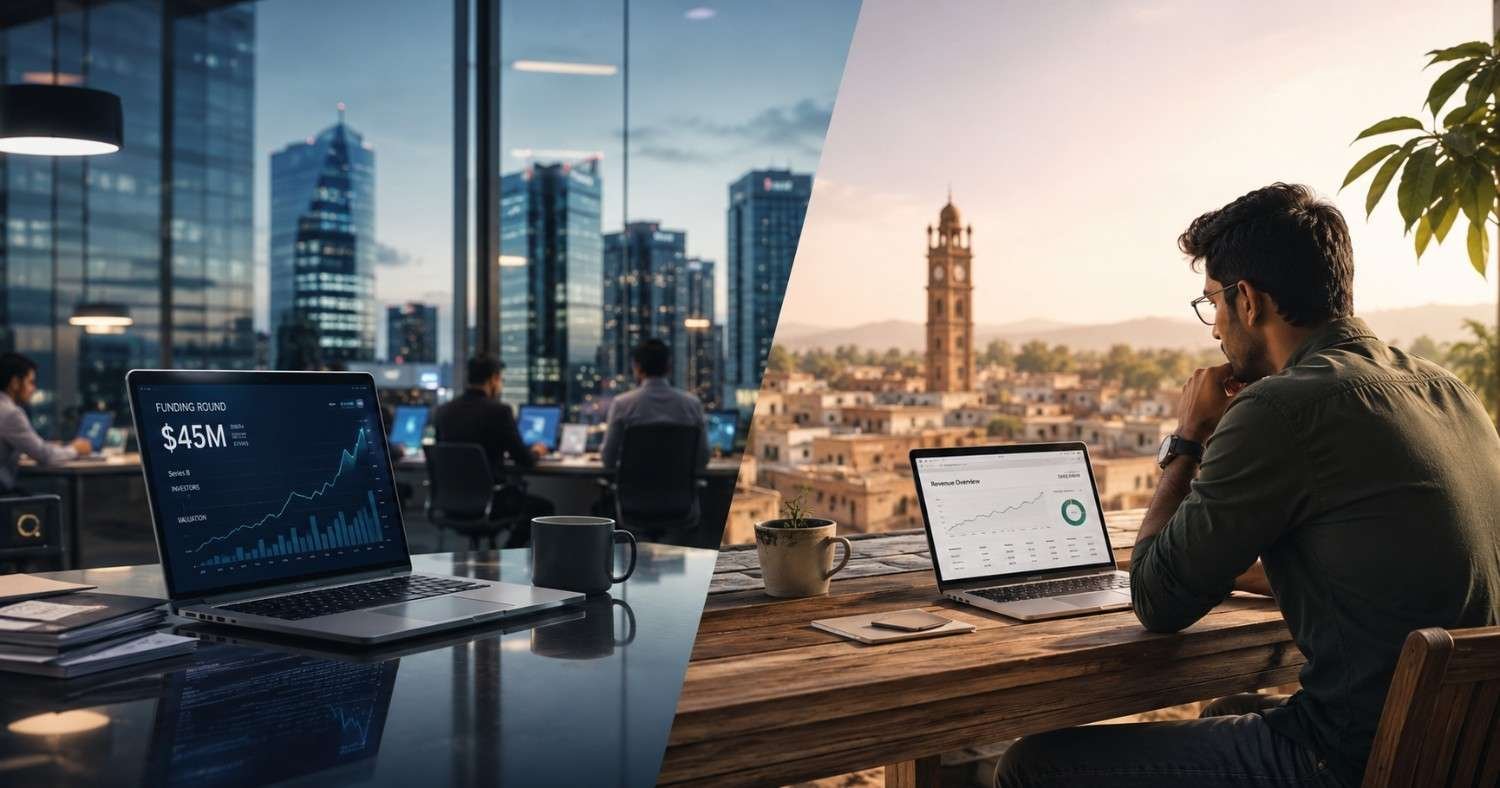
Tier-2 founders are reshaping India’s startup ecosystem by building innovative businesses beyond metro cities. Lower operating costs, improved digital infrastructure, government support, and access to skilled talent are enabling entrepreneurs from smaller cities to create scalable ventures across technology, manufacturing, fintech, healthcare, and consumer brands.
The topic is evergreen with current relevance, not tied to a single news event. While recent startup funding trends and government initiatives strengthen the discussion, the subject is best presented as an informative and analytical feature.
India’s Startup Revolution Is No Longer Limited to Metro Cities
Tier-2 founders are rapidly emerging as the driving force behind India’s next generation of businesses. For years, cities like Bengaluru, Mumbai, Delhi, and Hyderabad dominated the startup conversation. Today, entrepreneurs from cities such as Indore, Jaipur, Nagpur, Kochi, Coimbatore, Surat, Bhubaneswar, Lucknow, Chandigarh, and Mysuru are proving that successful businesses can be built without relocating to metropolitan hubs.
Several factors have contributed to this shift. Affordable internet, improved logistics, digital payment systems, government-backed startup initiatives, and the widespread adoption of cloud technology have lowered entry barriers for entrepreneurs. At the same time, changing consumer behaviour has created opportunities for businesses that understand regional markets better than larger corporations.
As a result, Tier-2 cities are becoming important contributors to India’s growing entrepreneurial ecosystem.
Digital Infrastructure Has Changed the Playing Field
One of the biggest reasons behind the rise of Tier-2 startups is India’s rapidly improving digital infrastructure. High-speed internet connectivity, widespread smartphone adoption, UPI-based digital payments, online banking, and cloud computing have enabled entrepreneurs to launch businesses with relatively low initial investment.
Earlier, founders often moved to metro cities seeking investors, mentors, and customers. Today, virtual meetings, remote work, online marketplaces, and digital marketing allow businesses to reach national audiences regardless of their location.
Government initiatives such as Startup India, Digital India, ONDC, and various state startup policies have also encouraged entrepreneurship by improving access to incubation centres, funding support, and business registration services.
These developments have significantly reduced the geographical disadvantages once faced by founders outside metro cities.
Lower Costs Give Tier-2 Businesses a Competitive Advantage
Compared to metro cities, Tier-2 locations offer substantial cost advantages across multiple areas.
Office rentals are considerably lower. Employee salaries remain competitive while attracting highly skilled professionals who prefer staying closer to their hometowns. Daily operating expenses such as transportation, utilities, and administrative costs are also more manageable.
Lower expenses allow founders to extend their financial runway and focus on improving products before seeking external funding. This financial flexibility is especially valuable for bootstrapped startups that rely on sustainable growth rather than aggressive spending.
Many successful founders now intentionally choose smaller cities because profitability can often be achieved earlier than businesses operating in expensive metropolitan markets.
Local Understanding Is Creating Better Business Opportunities
Tier-2 entrepreneurs often possess a deeper understanding of regional customer behaviour than businesses headquartered in metro cities.
This local knowledge enables founders to develop products and services tailored to specific communities. Businesses are addressing challenges in agriculture, healthcare, education, logistics, retail, financial services, and manufacturing while solving real problems faced by consumers in smaller towns.
Direct-to-consumer brands are also expanding rapidly from Tier-2 locations by using social media, e-commerce platforms, and digital advertising to reach customers across India.
Rather than copying existing startup models, many founders are creating businesses around regional needs, giving them stronger customer relationships and sustainable long-term growth.
Technology and AI Are Accelerating Startup Growth
Artificial intelligence, automation, SaaS platforms, and affordable software tools have dramatically reduced the cost of building scalable businesses.
Today, small teams can develop products that previously required hundreds of employees. AI-powered customer support, automated marketing, data analytics, accounting software, and cloud infrastructure enable startups to compete with larger organisations.
Technology has also opened opportunities in sectors including healthtech, edtech, agritech, fintech, logistics, renewable energy, cybersecurity, and manufacturing technology.
As digital adoption continues to increase across India, Tier-2 founders are expected to play an even bigger role in developing innovative technology solutions for both domestic and international markets.
Funding Is Improving but Challenges Still Remain
Access to startup funding has improved considerably over the past few years, although founders outside metro cities still face challenges.
Angel investors, venture capital firms, incubators, accelerators, and state-backed innovation programs are increasingly exploring opportunities beyond traditional startup hubs. Investors now recognise that strong businesses can emerge from any location if the fundamentals are sound.
However, founders continue to face obstacles such as limited networking opportunities, smaller local investor communities, talent retention, and access to experienced mentors.
Many entrepreneurs overcome these limitations by participating in accelerator programs, startup competitions, online networking communities, and national entrepreneurship events.
The growing acceptance of remote work has also made it easier to collaborate with employees, advisors, and investors located across the country.
The Future Belongs to India’s Emerging Startup Cities
India’s startup landscape is becoming more geographically diverse than ever before.
As digital infrastructure continues to improve and government support expands, Tier-2 cities are expected to produce an increasing number of high-growth companies across multiple sectors.
Young entrepreneurs are choosing innovation over relocation, proving that world-class businesses can be built from smaller cities while creating local employment and contributing to regional economic development.
Rather than competing directly with metro startup ecosystems, Tier-2 founders are creating their own strengths by combining local insights, operational efficiency, technology adoption, and sustainable business models.
Their success reflects a broader transformation in India’s economy, where entrepreneurial talent is no longer limited by geography.
Key Takeaways
- Tier-2 cities are becoming major centres for startup growth across India.
- Lower operating costs provide founders with significant business advantages.
- Digital infrastructure and government initiatives have reduced barriers to entrepreneurship.
- Local market knowledge is helping entrepreneurs build scalable and sustainable businesses.
Frequently Asked Questions
1. What are Tier-2 cities in India?
Tier-2 cities are developing urban centres that are smaller than major metropolitan cities but have strong economic growth, improving infrastructure, and expanding business opportunities.
2. Why are startups growing rapidly in Tier-2 cities?
Lower costs, better internet connectivity, digital payments, government support, skilled local talent, and access to national markets have accelerated startup growth.
3. Which sectors are seeing the highest growth among Tier-2 founders?
Technology, fintech, agritech, healthcare, education technology, manufacturing, logistics, consumer brands, and SaaS businesses are experiencing significant expansion.
4. Can Tier-2 startups compete with metro-based companies?
Yes. Modern digital tools, remote work, cloud technology, and online commerce enable startups from smaller cities to serve customers across India and globally.
(Internal keyword suggestions: Tier-2 founders, Indian startups, startup ecosystem India, entrepreneurship in Tier-2 cities, Startup India, Digital India, small city entrepreneurs, business opportunities in India, emerging startup cities, Indian startup growth, startup funding India, regional entrepreneurship, Tier-2 business growth)











Leave a comment