

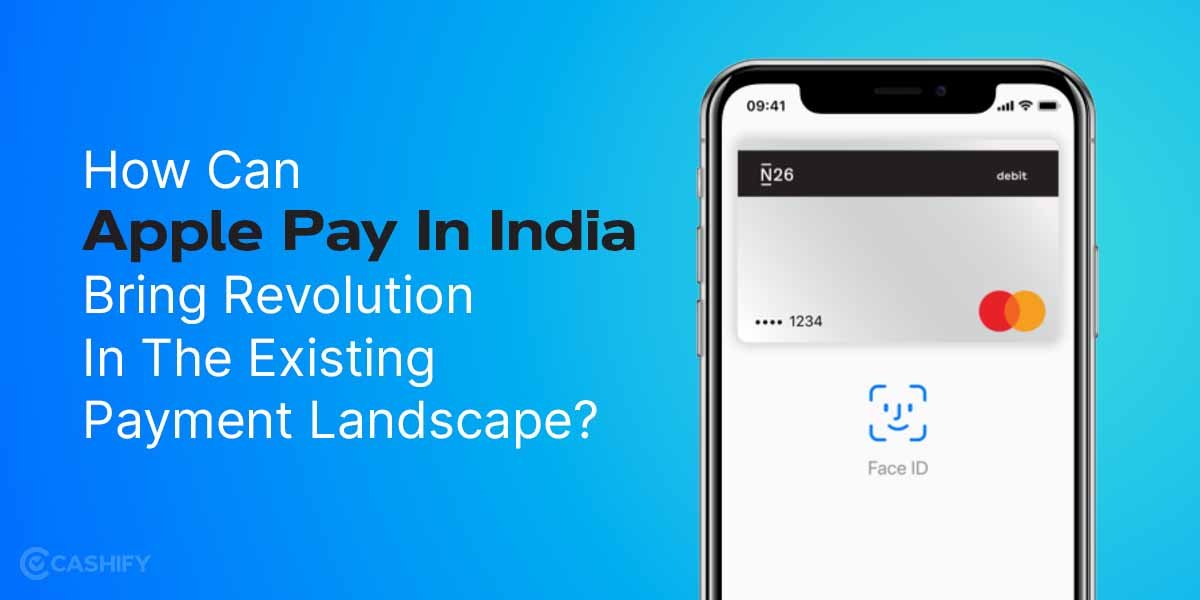
Apple Pay is expected to enter India in October 2026, with Apple reportedly preparing an initial rollout with Axis Bank. The move comes as India’s UPI ecosystem adds tap-and-pay capabilities, creating a new intersection between Apple’s card-based payment system and India’s established digital payments infrastructure.
Apple Pay India Entry Could Begin With Axis Bank
Apple Pay has not yet been available as a full domestic payment service in India, despite the country being one of the world’s largest digital payments markets. That could change soon.
Reuters reported on September 18 that Apple is preparing to launch Apple Pay in India as early as October 2026, initially in partnership with Axis Bank. The reported first phase would support Axis Bank credit cards, while Apple has also been in discussions with HDFC Bank and ICICI Bank about potential partnerships. Commercial arrangements with those banks had not been finalised at the time of the report.
The expected launch would therefore be phased rather than an immediate nationwide rollout covering every bank and card.
Apple’s official India availability pages currently do not list India among the countries where Apple Pay is available. This means the reported October launch represents a potential upcoming change rather than an existing nationwide Apple Pay service.
Why Apple Pay Is Entering India Now
India’s payment market has changed significantly since Apple Pay first expanded into international markets.
The Unified Payments Interface, or UPI, has become the dominant digital payment infrastructure for everyday transactions. Reuters reported that UPI accounted for around 84% of India’s digital transaction volume, making India very different from markets where Apple Pay entered before the widespread adoption of instant bank-to-bank payments.
That creates an unusual situation for Apple.
Instead of entering a market where mobile wallets are the primary digital payment option, Apple would be entering one where consumers already use QR codes, UPI IDs and bank-linked payment apps extensively.
Apple therefore needs to position Apple Pay around capabilities that complement existing payment habits rather than simply replacing them.
The reported partnership with Axis Bank suggests that credit card payments could be an important starting point.
How Apple Pay Differs From UPI
Apple Pay and UPI are not identical payment systems.
Apple Pay allows users to add eligible debit or credit cards to Apple Wallet and make contactless payments using supported Apple devices. Card details are tokenised, meaning the actual card number is not directly shared with merchants during a transaction.
UPI, by comparison, connects bank accounts through India’s instant payment infrastructure. Users can make payments through participating apps using methods such as QR codes, UPI IDs and other supported mechanisms.
This distinction could shape Apple’s strategy in India.
A customer may continue using UPI for small everyday payments while using Apple Pay for an eligible credit card at a contactless terminal. The two systems can therefore coexist rather than necessarily competing for exactly the same transactions.
Apple’s existing global model also supports contactless payments at compatible payment terminals using an iPhone or Apple Watch.
India Has Just Added UPI Tap-and-Pay
The timing of the reported Apple Pay launch is particularly notable because India’s payment infrastructure has recently introduced a feature that brings UPI closer to the contactless experience associated with Apple Pay.
NPCI has introduced UPI Tap & Pay, which allows users to make payments by tapping a smartphone against a compatible NFC-enabled point-of-sale terminal. Reuters reported that the feature can work in areas with low or no internet connectivity because it uses near-field communication technology.
The development means Indian consumers could increasingly have multiple ways to make contactless payments.
A user with an eligible Apple device and card could potentially use Apple Pay, while another consumer could use UPI Tap & Pay through a supported application.
The underlying payment systems remain different, but the user experience could become increasingly similar at physical payment terminals.
Apple Pay Could Expand Contactless Card Payments
One potential impact of Apple Pay’s India entry is greater visibility for contactless card payments.
India already has widespread card acceptance in organised retail, restaurants, hotels, airports and other urban businesses. Apple Pay could make it easier for iPhone and Apple Watch users to use eligible cards without physically presenting the card.
For Apple’s ecosystem, this also creates a more direct connection between the iPhone, Apple Watch, Wallet and financial services.
Apple says Apple Pay is now available in 89 markets globally. The company also reported that Tap to Pay on iPhone had expanded to 50 markets by the end of 2025, with more than 15 million merchants accepting contactless payments through compatible iPhones.
However, those global figures should not be interpreted as an indication of how quickly Apple Pay would be adopted in India. Local banking partnerships, card availability, merchant infrastructure and consumer habits will determine the scale of adoption.
What It Could Mean for Banks and Card Networks
Apple Pay’s entry could also change how banks think about digital card experiences.
If customers can securely store cards in Apple Wallet and authenticate transactions through their Apple devices, banks may gain another digital channel for card usage.
The reported initial partnership with Axis Bank could give that bank an opportunity to make its credit cards available to Apple users through the Wallet ecosystem. Other banks could potentially follow if the service expands.
Apple has reportedly held discussions with HDFC Bank and ICICI Bank, but the terms of those potential partnerships were not finalised according to Reuters.
The eventual list of participating banks will therefore be important for consumers. A service that initially supports only a limited number of cards would have a smaller addressable user base than one that eventually supports most major Indian banks.
Tier-2 Cities Could See a Different Impact
For India’s Tier-2 and Tier-3 cities, the impact of Apple Pay may depend heavily on contactless payment infrastructure.
Large cities already have substantial acceptance of card-based contactless payments. Smaller cities are increasingly adopting digital payments too, but UPI QR codes remain particularly convenient for small retailers, local businesses and informal merchants.
This means Apple Pay may initially be more relevant to consumers shopping at organised retail outlets, hotels, restaurants, malls, airports and other businesses equipped to accept contactless card payments.
UPI, meanwhile, is likely to remain central to everyday transactions where QR-based payments are already deeply established.
For a small shopkeeper, there may be little immediate reason to replace a QR-based UPI setup with a contactless card terminal. For a customer paying at a modern point-of-sale terminal, however, Apple Pay could offer another payment option.
Privacy and Security Will Be Part of the Conversation
Security is another important aspect of Apple Pay’s potential entry.
Apple’s payment system uses tokenisation, which replaces the actual card number used for transactions with a device-specific payment credential. Apple also supports biometric authentication on compatible devices.
This does not mean digital payments are completely risk-free. Users still need to protect their devices, account credentials and authentication methods.
India’s expanding digital payment ecosystem also means consumers increasingly need to understand the difference between secure payment authentication and scams involving fake links, fraudulent calls or social engineering.
Apple Pay’s security model could be attractive to some users, but consumer trust will depend on how the service works with Indian banks and payment networks in practice.
UPI Will Remain Central to India’s Payment Ecosystem
Apple Pay’s entry should not be viewed as a replacement for UPI.
India’s payment habits are strongly built around UPI, particularly for low-value everyday transactions. Reuters reported that UPI processed 24.51 billion transactions worth ₹29.82 trillion in August 2026 alone.
The system’s scale is difficult for any new payment service to replicate quickly.
Apple Pay’s more realistic role could be within the card-payment segment, particularly among iPhone users who already hold eligible credit or debit cards.
The distinction will become clearer once the service launches and participating banks, supported cards and transaction options are officially confirmed.
What Consumers Should Watch Before the Launch
Indian iPhone users should not assume that every Apple device or bank card will automatically work with Apple Pay when the service launches.
The important factors will include participating banks, eligible card types, supported iPhone and Apple Watch models, merchant terminal compatibility and Apple’s final terms for India.
Apple’s existing support documentation confirms that Apple Pay works with compatible iPhone, iPad and Apple Watch models in supported markets, but availability of individual features varies by country and region.
For consumers, the first phase of the rollout will therefore be more important for understanding the actual service than the announcement itself.
India’s Payment Market Is Becoming More Competitive
The reported Apple Pay entry comes at a time when India’s digital payment market is already undergoing changes.
UPI is introducing new payment experiences such as Tap & Pay, while regulatory changes are also affecting how payment platforms and merchants approach transactions. Reuters recently reported that India is moving toward a 0.4% merchant discount rate on UPI transactions above ₹2,000 from October 15, 2026, adding another layer to the evolving payments landscape.
Apple Pay would add another major technology company to this changing environment, although its initial focus appears likely to be card payments rather than replacing UPI.
The significance of Apple’s India entry will ultimately depend on how many banks participate, how widely contactless payments are accepted and whether consumers find a clear reason to add Apple Pay to their existing payment habits.
Key Takeaways
- Apple is reportedly preparing an India launch for Apple Pay in October 2026, initially with Axis Bank credit cards.
- Apple Pay and UPI use different payment infrastructures, meaning they can potentially coexist rather than directly replace one another.
- India’s new UPI Tap & Pay feature is bringing NFC-based contactless payments to the UPI ecosystem.
- The actual impact of Apple Pay will depend on participating banks, eligible cards, merchant acceptance and consumer adoption.
FAQ
Is Apple Pay launching in India?
Apple is reportedly preparing to launch Apple Pay in India in October 2026, according to Reuters. The reported initial partnership is with Axis Bank, although Apple’s official India availability page has not yet listed India as an Apple Pay market.
Will Apple Pay replace UPI in India?
No. Apple Pay and UPI are based on different payment systems. Apple Pay primarily enables payments using eligible cards stored in Apple Wallet, while UPI connects bank accounts through India’s instant payment infrastructure.
Can Apple Pay be used with UPI?
The reported India rollout has focused on Apple Pay and bank-issued cards, not on replacing UPI transactions. Users should wait for Apple’s and participating banks’ official India launch details for the exact supported payment methods.
Why is Apple Pay’s India entry significant?
India is one of the world’s largest digital payment markets and is heavily dependent on UPI. Apple Pay’s entry could give iPhone and Apple Watch users another way to make contactless card payments while increasing competition and choice within India’s broader digital payments ecosystem.










Leave a comment