

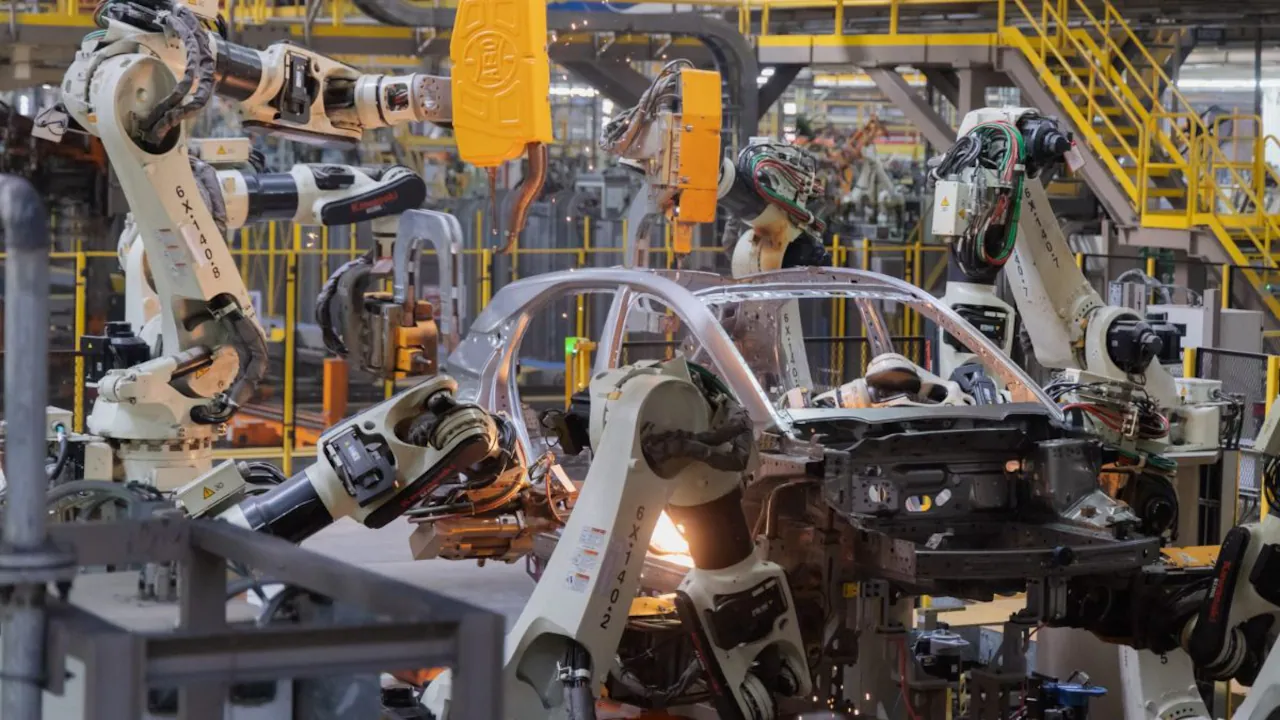
India’s advanced manufacturing push is increasingly moving beyond traditional industrial centres. New industrial parks, manufacturing corridors, technology-focused policies and stronger MSME infrastructure could create opportunities for smaller industrial cities, provided connectivity, skilled workers and local ecosystems keep pace.
India’s Manufacturing Strategy Is Moving Toward Advanced Production
India’s manufacturing strategy is no longer focused only on increasing factory capacity. The policy direction is increasingly centred on technology, integrated industrial infrastructure, skilled workers and stronger domestic value chains.
The National Manufacturing Mission, announced in the Union Budget 2025-26, focuses on five areas: ease and cost of doing business, workforce readiness, MSME growth, access to technology and product quality. The mission is intended to support small, medium and large industries rather than concentrating only on major corporations.
This shift matters for smaller industrial cities because advanced manufacturing does not necessarily require every company to be located in a major metropolitan centre. A manufacturing ecosystem can develop around industrial parks, supplier networks, logistics hubs, engineering institutes and specialised clusters.
For cities that already have an industrial base, the opportunity could be to move from conventional production towards electronics, automotive components, defence equipment, pharmaceuticals, renewable-energy equipment and other technology-intensive sectors.
BHAVYA Scheme Puts Smaller Industrial Locations in Focus
One of the most significant recent developments is the Bharat Audyogik Vikas Yojna, or BHAVYA.
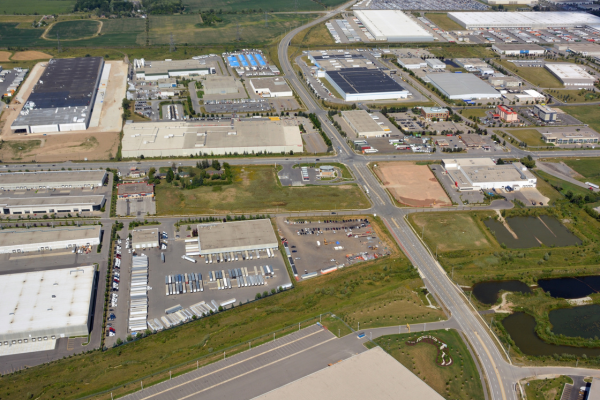
Approved in March 2026, the scheme has an allocation of ₹33,660 crore for developing 100 plug-and-play industrial parks over six years. The parks are intended to provide investment-ready infrastructure, including utilities, logistics connectivity and other facilities needed by manufacturing companies.
The government has also explicitly highlighted Tier-2 and Tier-3 cities and industrially backward states as priorities under the scheme. The first phase involves selecting up to 50 parks through a competitive process.
For smaller cities, plug-and-play infrastructure can address one of the biggest barriers to industrial expansion: the time and cost required to establish basic infrastructure before production can begin.
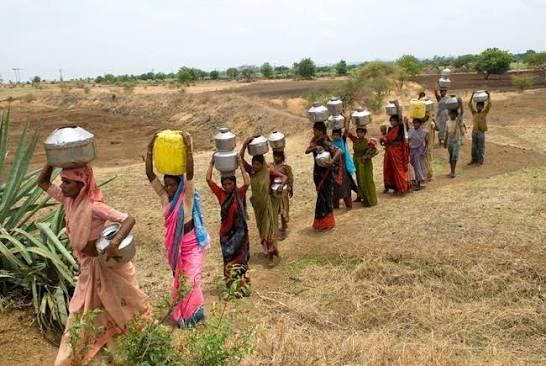
However, the creation of an industrial park alone does not guarantee investment. Companies also need reliable power, water, roads, digital connectivity, logistics services and access to skilled labour.
Industrial Corridors Could Connect Smaller Cities to Larger Markets
Industrial corridors are another important part of India’s manufacturing expansion.
In August 2024, the government approved 12 industrial nodes and cities across 10 states under the National Industrial Corridor Development Programme. The locations included Agra and Prayagraj in Uttar Pradesh, Gaya in Bihar, Dighi in Maharashtra, Palakkad in Kerala, Zaheerabad in Telangana and Jodhpur-Pali in Rajasthan.
By August 2026, the government reported that 20 industrial nodes had been approved under the programme, with ₹16,172.95 crore sanctioned for industrial corridor development.
These projects are designed around connectivity, industrial infrastructure and integrated development. That could allow smaller cities and surrounding districts to participate in national and international supply chains rather than depending entirely on local demand.
For example, a component manufacturer located in a smaller industrial city does not necessarily need a large consumer market nearby if it has efficient road, rail, port or freight connections to major manufacturing and export centres.
MSMEs Could Become Key Beneficiaries
The impact of advanced manufacturing will not depend only on large factories.
Small and medium enterprises are important because large manufacturing companies typically depend on networks of suppliers for components, maintenance, tooling, packaging, logistics and specialised services.
The government’s 2026 manufacturing-hub framework places emphasis on MSME manufacturing clusters and Common Facility Centres. These facilities can provide shared access to production, testing and quality infrastructure that individual smaller companies may struggle to afford.
This model could be particularly relevant to Tier-2 and Tier-3 cities.
Instead of every company purchasing expensive testing equipment or specialised machinery separately, a cluster can potentially share infrastructure. This can reduce entry barriers and help smaller manufacturers meet quality requirements for larger domestic and international buyers.
The Production Linked Incentive schemes have also contributed to the wider manufacturing push. As of March 2026, the government reported more than ₹2.16 lakh crore in investment, ₹20.41 lakh crore in production and 14.39 lakh jobs generated across PLI schemes.
Advanced Manufacturing Will Require Different Skills
Factories using robotics, artificial intelligence, automation, digital twins and advanced materials need a different workforce from traditional manufacturing units.
NITI Aayog’s 2025 roadmap on advanced manufacturing identified technologies including artificial intelligence and machine learning, advanced materials, digital twins and robotics as important enablers across priority manufacturing sectors.
This creates both an opportunity and a challenge for smaller cities.
Industrial expansion can create demand for technicians, engineers, machine operators, software specialists, quality-control professionals and maintenance workers. But companies may find it difficult to recruit these workers locally if educational and training institutions do not evolve alongside industry.
That makes skill development a critical part of the manufacturing story. The National Manufacturing Mission specifically includes future-ready workforce development as one of its focus areas.
For young people in smaller cities, this could mean more technical career opportunities without necessarily requiring permanent relocation to Mumbai, Bengaluru, Hyderabad or Delhi.
Which Sectors Could Benefit?
The opportunity is not limited to one manufacturing category.
Government policy has identified areas such as electronics, electric vehicles, renewable-energy equipment, pharmaceuticals, defence, textiles and capital goods as important parts of India’s broader manufacturing ecosystem.
The 2026-27 Budget framework also includes three new chemical parks, continued development of seven PM MITRA parks, stronger MSME manufacturing clusters and the ₹10,000 crore Biopharma SHAKTI programme.
Different cities could therefore develop different specialisations.
A city with an existing automotive ecosystem could attract component manufacturers. Another with a strong textile base could move towards technical textiles. Cities close to defence corridors could benefit from aerospace and defence supply chains, while locations with suitable infrastructure could develop electronics or renewable-energy manufacturing.
The long-term outcome will depend on how effectively these clusters connect suppliers, manufacturers, logistics providers, training institutions and research organisations.
Infrastructure Will Decide How Much Smaller Cities Gain
The biggest question is not whether India is investing in manufacturing infrastructure. It is whether that infrastructure becomes commercially useful for businesses.
Advanced manufacturing requires predictable electricity, industrial water supply, transportation, warehousing, broadband connectivity and efficient movement of goods.
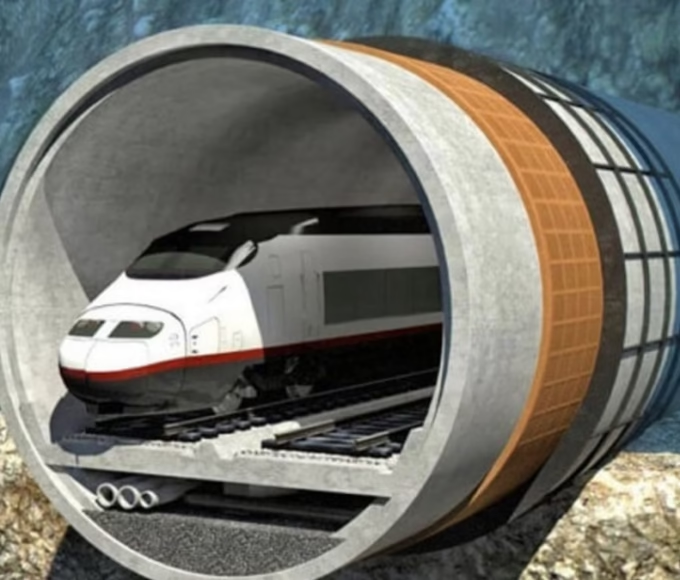
PM Gati Shakti and industrial corridor planning are intended to improve multimodal connectivity and reduce logistical friction. Government manufacturing-hub plans also emphasise shared infrastructure and stronger links between industrial locations and transport networks.
For smaller cities, this is especially important. A factory may have affordable land and labour, but higher transportation costs or unreliable infrastructure can reduce its competitiveness.
Local governments will also need to ensure that industrial expansion is supported by housing, healthcare, education and other urban services. Manufacturing growth can put pressure on existing city infrastructure if expansion happens faster than urban planning.
What This Could Mean for Tier-2 and Tier-3 India
If industrial parks and manufacturing clusters develop successfully, the impact could extend well beyond factory employment.
New industrial activity can create demand for transport operators, warehouses, equipment suppliers, restaurants, rental housing, repair services, professional services and local retailers.
It can also encourage migration in the opposite direction, with workers moving towards smaller industrial cities because of new employment opportunities.
But these outcomes are not automatic. Industrial projects can face delays related to land, approvals, environmental requirements, infrastructure and investment decisions. The presence of a government-approved industrial park does not itself mean that factories or jobs will arrive immediately.
For smaller cities, the real test will be whether policy support translates into functioning industrial ecosystems.
Takeaways
- India is increasingly linking manufacturing growth with technology, infrastructure, MSMEs and workforce development.
- BHAVYA aims to develop 100 plug-and-play industrial parks and gives attention to Tier-2 and Tier-3 locations.
- Industrial corridors could connect smaller cities with national supply chains and export markets.
- Skills, logistics, reliable utilities and successful execution will determine how much smaller cities ultimately benefit.
FAQ
What is India’s advanced manufacturing push?
It refers to efforts to increase manufacturing competitiveness through technologies such as automation, AI, robotics and advanced materials, along with better infrastructure, skilled workers and stronger supply chains.
What is the BHAVYA scheme?
BHAVYA is a Central Sector Scheme approved in 2026 with an outlay of ₹33,660 crore to develop 100 investment-ready plug-and-play industrial parks over six years.
Can Tier-2 cities benefit from India’s manufacturing expansion?
Yes, policy initiatives are explicitly giving attention to Tier-2 and Tier-3 cities and industrially backward regions. However, actual benefits will depend on infrastructure, investment, workforce availability and project execution.
Which industries could expand in smaller industrial cities?
Potential areas include automotive components, electronics, pharmaceuticals, defence manufacturing, textiles, renewable-energy equipment, chemicals and other specialised manufacturing activities. The exact opportunities will vary by location and existing industrial capabilities.









Leave a comment