

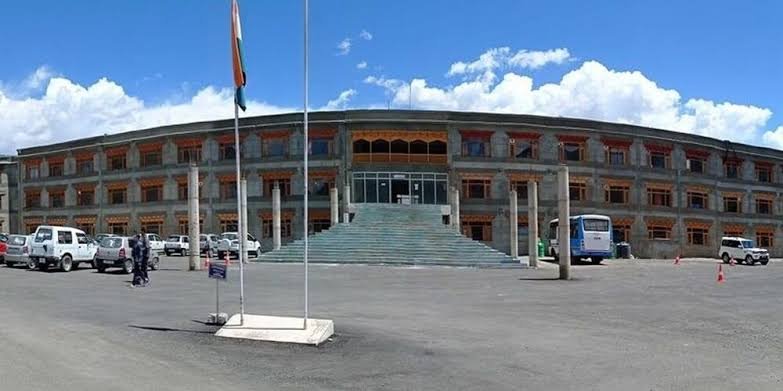
Ladakh’s administration has dissolved the Ladakh Autonomous Hill Development Council (LAHDC), Kargil, following district reorganisation and the resignation of several council members. The decision comes as the Union Territory prepares for panchayat elections on November 21, 2026, alongside a broader restructuring of its local governance system.
Kargil Hill Council Dissolved With Immediate Effect
The Ladakh administration dissolved the Ladakh Autonomous Hill Development Council, Kargil, with immediate effect on October 21, 2026. The decision marks a significant change in the region’s local governance structure as the Union Territory moves towards establishing separate hill development councils across its newly reorganised districts.
According to reports published on October 21 and 22, the administration cited district reorganisation and the need to restructure local administrative institutions as key reasons behind the move. The decision also followed the resignation of the council’s Chief Executive Councillor, three executive councillors and six other councillors on October 20.
The dissolution brings the functioning of the existing Kargil council to an end. The administration has stated that an interim arrangement will ensure the continuation of public services and administrative responsibilities until separate councils are constituted under the applicable legal framework.
The development comes at a crucial time for Ladakh, where changes to local governance, electoral representation and constitutional safeguards remain important political issues.
Why Was the LAHDC Kargil Dissolved?
The principal reason cited by the administration is the reorganisation of Ladakh’s district structure. Several new districts, including Drass, Zanskar and Sankoo, have been created from areas previously administered as part of the larger Kargil district.
The existing Kargil Hill Council was established to represent and administer development-related matters within its earlier territorial framework. Changes to district boundaries have created the need to reconsider how local representation and development responsibilities should be organised.
The administration’s decision is intended to align the hill council structure with the revised district arrangement. The broader plan provides for separate Autonomous Hill Development Councils across eight districts of Ladakh.
However, the transition also raises questions about how elected representation will operate during the interim period. Hill councils are statutory institutions with responsibilities connected to local development and administration. Their structure and functioning therefore matter to residents who depend on public authorities for civic services and regional development.
The dissolution should not be confused with the November panchayat elections. Panchayats and autonomous hill development councils are distinct institutions, with different responsibilities and legal frameworks.
Deputy Commissioner to Handle Interim Responsibilities
Following the dissolution, the Deputy Commissioner and Chief Executive Officer of Kargil will temporarily administer the powers, duties and functions previously exercised by the former hill council.
The administration has described the arrangement as necessary to prevent an administrative vacuum and maintain uninterrupted public service delivery. Under the interim system, the district administration will oversee the responsibilities assigned to it until separate hill development councils are fully constituted in accordance with the applicable law.
This arrangement is particularly important in a geographically challenging region such as Ladakh, where distance, weather conditions and difficult terrain can complicate the delivery of government services.
Residents will be watching how the transition affects development projects, administrative decisions and access to local authorities. Continuity in public services will be an important measure of the interim arrangement’s effectiveness.
The administration has linked the next stage of local governance to the provisions of the Ladakh Autonomous Hill Development Councils Act, 1997, and the relevant rules as amended. The process of establishing the new councils will determine how elected representation is restored under the revised structure.
Ladakh Panchayat Elections Scheduled for November 21
Alongside the dissolution of the Kargil Hill Council, the Ladakh State Election Commission has announced panchayat elections across all Panchayat Halqas in the Union Territory. Polling is scheduled for November 21, 2026.
The elections will be significant because the previous general elections to Panchayat Halqas in Ladakh were held in November 2018. The upcoming polls are expected to renew grassroots representation after an eight-year gap.
According to the announced schedule, the election notification will be issued on October 26. The last date for filing nomination papers is November 2, followed by scrutiny on November 3. Candidates will be able to withdraw their nominations until November 5.
Polling will take place on November 21, and the election process is scheduled to be completed by November 30.
The State Election Commission has also brought the Model Code of Conduct into force with immediate effect. Candidates, political parties and public officials are required to follow the applicable election guidelines.
The code is intended to support a fair electoral process by restricting practices such as voter intimidation, bribery, communal campaigning and the misuse of government machinery for political purposes.
Eight Hill Councils Planned Under the Revised Structure
Ladakh’s administration has also notified 100 elected constituencies across eight Autonomous Hill Development Councils under the amended legal framework.
The proposed distribution is as follows:
- Leh: 22 constituencies
- Kargil: 21 constituencies
- Sankoo: 13 constituencies
- Changthang: 10 constituencies
- Nubra: 9 constituencies
- Sham: 9 constituencies
- Zanskar: 9 constituencies
- Drass: 7 constituencies
The total of 100 constituencies represents a substantial expansion from the previous arrangement, which had 52 elected councillor seats across the existing hill councils.
The revised structure is intended to accommodate the new district boundaries and provide a separate council framework for the reorganised areas. The administration has indicated that the distribution takes into account factors including population and geographical area.
The actual functioning of the new councils will depend on the applicable legal provisions and the completion of the required constitution and election processes. The notification of constituencies is an important administrative step, but it should not be interpreted as meaning that all eight councils are already functioning.
For residents, the key question will be how the new arrangements translate into representation, local development decisions and accountability.
Political Significance for Ladakh’s Local Governance
The dissolution of the Kargil Hill Council comes amid continuing political discussions over Ladakh’s administrative future, elected representation and demands for constitutional safeguards.
Following the reorganisation of the former state of Jammu and Kashmir in 2019, Ladakh became a separate Union Territory. Since then, demands for stronger democratic representation and greater constitutional protection have remained prominent in political discussions involving regional groups and local leaders.
The Leh Apex Body and the Kargil Democratic Alliance have been among the groups advocating safeguards and a stronger elected political framework for the region. Representatives associated with these groups have also raised concerns about changes to the powers and structure of hill councils.
The new administrative arrangement is therefore likely to be assessed not only in terms of district reorganisation but also in relation to the extent of local decision-making authority.
The distinction between administrative restructuring and democratic representation is important. Creating additional districts and constituencies can change the geographical reach of governance, but the practical impact depends on the powers assigned to institutions, the resources available to them and the accountability mechanisms in place.
The coming weeks will be important as Ladakh prepares for panchayat elections and moves towards establishing the revised hill council structure.
What Happens Next?
The immediate priority is the conduct of panchayat elections according to the announced schedule. Candidates must complete the nomination process, comply with election rules and prepare for polling on November 21.
At the same time, the administration will need to manage Kargil’s interim governance arrangements while the process of constituting separate hill councils moves forward.
Residents will also be looking for clarity on how development responsibilities will be divided among district administrations, panchayats and the future autonomous hill councils.
The outcome of the transition will depend on whether the revised structure provides effective local representation while maintaining reliable public services. The November elections will renew grassroots representation, while the establishment of the new hill councils will shape the next phase of Ladakh’s local governance.
Key Takeaways
- The Ladakh administration dissolved the Kargil Autonomous Hill Development Council with immediate effect on October 21, 2026.
- The decision followed the resignation of several council members and the reorganisation of districts, including the creation of Drass, Zanskar and Sankoo.
- Panchayat elections across Ladakh are scheduled for November 21, with the election process expected to conclude by November 30.
- The administration has notified 100 elected constituencies across eight proposed hill councils, while the Deputy Commissioner will manage Kargil’s interim responsibilities.
Frequently Asked Questions
1. Why was the Kargil Hill Council dissolved?
The administration cited district reorganisation and the need to restructure the local governance framework. The decision also followed the resignation of the Chief Executive Councillor, three executive councillors and six other councillors.
2. When will panchayat elections take place in Ladakh?
Panchayat elections across Ladakh are scheduled for November 21, 2026. The election process is expected to be completed by November 30.
3. Who will manage Kargil after the council’s dissolution?
The Deputy Commissioner and Chief Executive Officer of Kargil will temporarily exercise the former council’s powers, duties and functions until separate hill development councils are constituted under the applicable legal framework.
4. How many constituencies have been notified for Ladakh’s hill councils?
The administration has notified 100 elected constituencies across eight proposed Autonomous Hill Development Councils: Leh, Kargil, Sankoo, Changthang, Nubra, Sham, Zanskar and Drass.








Leave a comment