

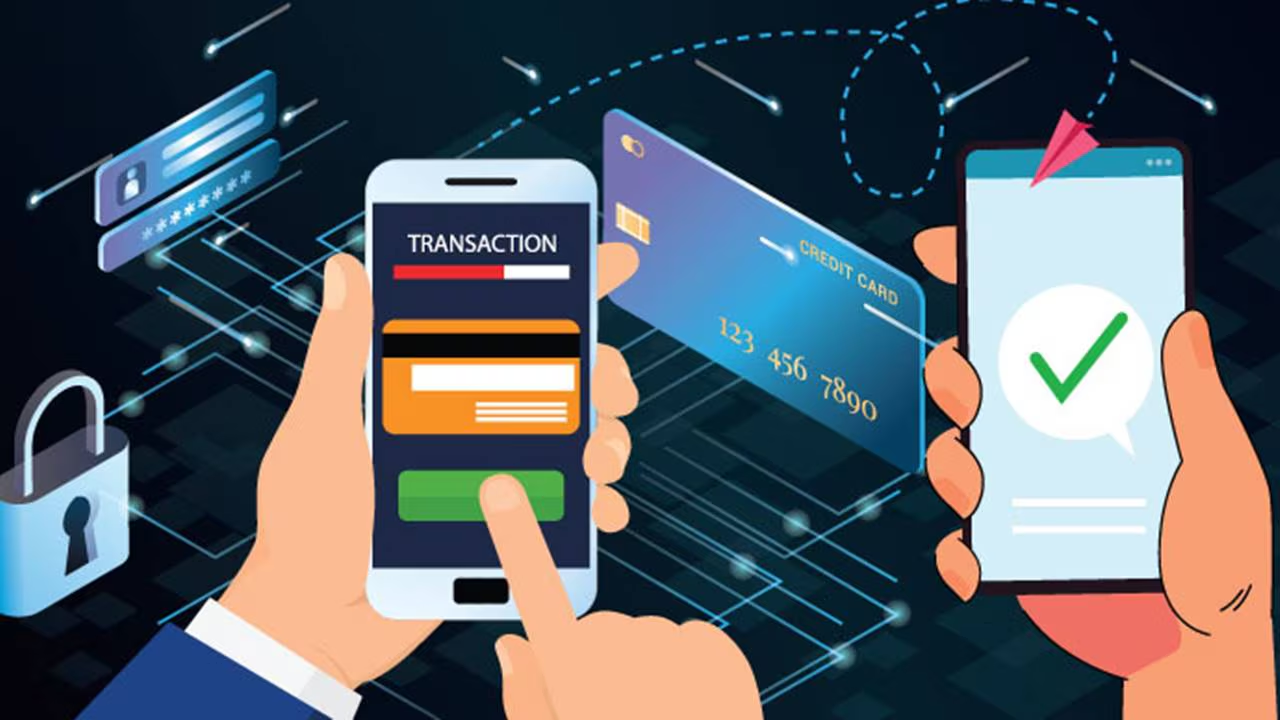
Digital payments in small cities are expanding rapidly as more users adopt UPI, wallets, and online banking. While growth is strong, concerns around fraud, security, and user awareness continue to shape how consumers engage with digital transactions.
Digital Payments in Small Cities See Rapid Adoption
Digital payments in small cities represent an ongoing financial and technological trend rather than a single news event. Over the past few years, the use of platforms like Unified Payments Interface has increased significantly across Tier-2 and Tier-3 regions.
Affordable smartphones, low-cost internet, and simplified payment apps have made digital transactions accessible to a wider population. Users can now transfer money, pay bills, and shop online without relying on cash.
Government initiatives promoting cashless transactions have also contributed to this growth. Incentives, awareness campaigns, and improved infrastructure have encouraged adoption.
This shift is transforming how people manage daily financial activities.
Role of UPI and Mobile Wallets in Driving Growth
UPI and mobile wallets are central to the growth of digital payments in India. Platforms such as Google Pay, PhonePe, and Paytm have simplified transactions with user-friendly interfaces.
UPI allows instant bank-to-bank transfers without the need for complex details. QR code payments have become common in local markets, small shops, and service providers.
In smaller cities, this convenience has reduced dependence on cash. Even small-value transactions are increasingly being conducted digitally.
Merchants are also adopting digital payment systems due to ease of use and reduced handling of physical currency.
Benefits of Digital Payments for Consumers and Businesses
Digital payments offer several advantages for both consumers and businesses. Transactions are faster, more transparent, and easier to track compared to cash-based systems.
For consumers, digital payments reduce the need to carry cash and provide access to financial services. Features such as transaction history and instant notifications improve financial management.
Businesses benefit from improved efficiency and record-keeping. Digital payments can reduce errors, enhance accountability, and support business growth.
In smaller cities, these benefits are helping modernise local economies and encourage formal financial practices.
Risks and Challenges in Digital Transactions
Despite growth, digital payments in small cities come with risks. Cyber fraud and scams are among the most significant concerns. Users may fall victim to phishing, fake links, or unauthorized transactions.
Limited digital literacy increases vulnerability. Many users are not fully aware of security practices, making them easier targets for fraudsters.
Technical issues such as network disruptions or app failures can also affect transactions. In areas with inconsistent connectivity, this can create inconvenience.
Data privacy is another concern. Protecting personal and financial information is essential for maintaining trust in digital systems.
Addressing these risks is critical for sustainable growth.
Importance of Consumer Awareness and Education
Consumer awareness plays a key role in safe digital payment adoption. Users need to understand basic security practices, such as not sharing OTPs, using secure networks, and verifying payment requests.
Educational campaigns by banks, government agencies, and digital platforms are helping improve awareness. Messages about fraud prevention and safe usage are being widely promoted.
In smaller cities, community-based initiatives and local outreach programs can be particularly effective. Training sessions and workshops can help users build confidence in digital transactions.
Awareness is essential to reduce risks and encourage responsible usage.
Impact on Financial Inclusion in Tier-2 Cities
Digital payments are contributing to financial inclusion in smaller cities. People who previously had limited access to banking services can now participate in the formal financial system.
Mobile-based payment solutions enable users to perform transactions without visiting banks. This is especially useful in areas where banking infrastructure is limited.
Government schemes and direct benefit transfers are also facilitated through digital platforms, improving efficiency and transparency.
This inclusion is helping bridge the gap between urban and rural financial systems.
Role of Regulation and Security Measures
Regulation and security frameworks are important for maintaining trust in digital payments. The Reserve Bank of India oversees payment systems and sets guidelines to ensure safety and reliability.
Measures such as two-factor authentication, transaction limits, and fraud monitoring systems are in place to protect users. Payment platforms are continuously updating security features to address emerging threats.
Collaboration between regulators, banks, and technology providers is essential for strengthening the ecosystem.
Strong regulatory support helps build confidence among users.
Future Outlook for Digital Payments in Small Cities
The future of digital payments in small cities looks promising, with continued growth expected. As internet connectivity improves and smartphone penetration increases, more users will adopt digital transactions.
Innovations such as voice-based payments and simplified interfaces may further expand accessibility. These solutions can help users who are less familiar with technology.
At the same time, ongoing efforts in awareness and security will be crucial. Building trust and ensuring safe usage will determine long-term success.
Digital payments are set to remain a key component of India’s financial ecosystem.
Takeaways
- Digital payments in small cities are growing rapidly due to UPI and mobile apps
- Benefits include convenience, transparency, and improved financial access
- Risks such as fraud and low awareness remain significant challenges
- Consumer education and strong regulation are essential for safe adoption
FAQs
What is driving digital payment growth in small cities?
Affordable internet, smartphones, and user-friendly apps like UPI are key drivers.
Are digital payments safe to use?
They are generally safe if users follow security practices and remain cautious.
What are common risks in digital transactions?
Fraud, phishing scams, and data privacy issues are common risks.
How can users protect themselves while making digital payments?
By not sharing sensitive information, using secure apps, and staying informed about safety measures.












Leave a comment