

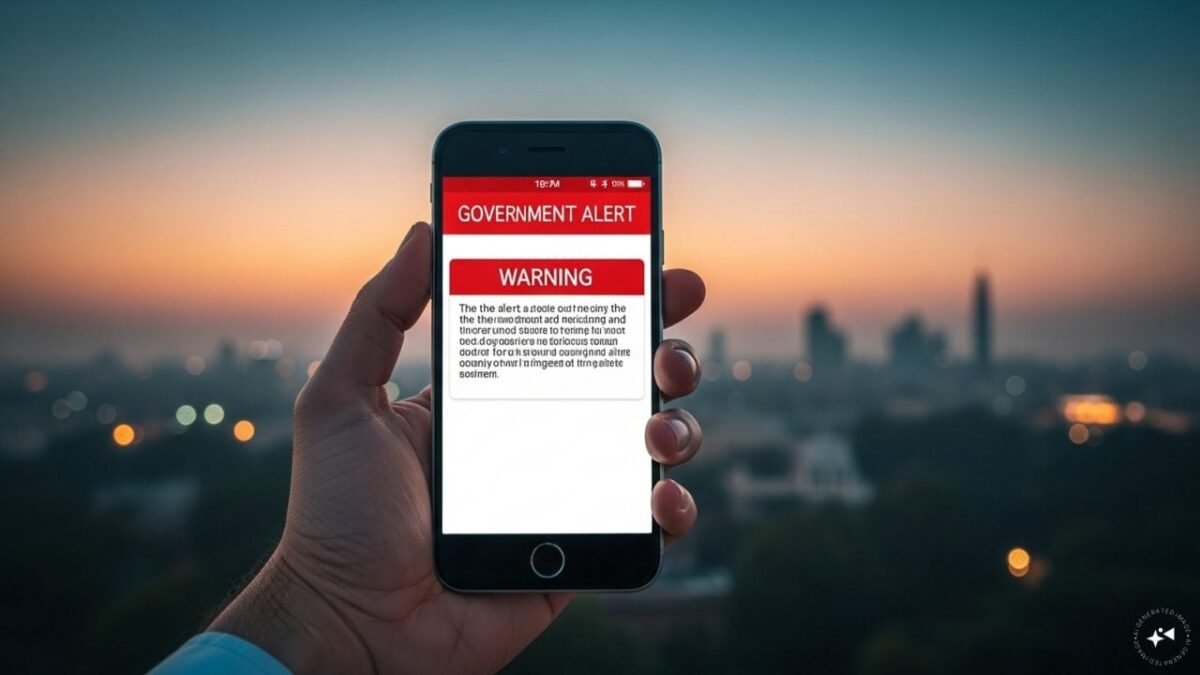
India’s emergency alert system rollout marks a significant step toward smarter disaster management, aiming to deliver real-time warnings directly to mobile users. The initiative focuses on improving response time and reducing risks during natural and man-made emergencies across urban and rural regions.
India’s Emergency Alert System Rollout Gains Momentum
India’s emergency alert system rollout is a time-sensitive development linked to ongoing disaster preparedness efforts. Authorities have begun deploying cell broadcast-based alerts that can reach millions of mobile users instantly during emergencies.
These alerts are designed to notify citizens about events such as cyclones, floods, earthquakes, and extreme weather conditions. Unlike standard SMS messages, the system sends location-based notifications with a distinct alert tone, ensuring immediate attention.
The rollout is being implemented in phases, with testing already conducted in several states. Early trials indicate that the system can effectively reach users across different telecom networks, although performance may vary depending on connectivity.
This initiative reflects a broader shift toward technology-driven disaster response systems.
How the Emergency Alert System Works in India
The emergency alert system in India operates using cell broadcast technology, which allows messages to be transmitted to all devices within a specific geographic area. This ensures that alerts are delivered quickly without relying on individual phone numbers.
Government agencies, including meteorological and disaster management authorities, are responsible for issuing alerts. Messages can include warnings, safety instructions, and evacuation guidelines.
The system is designed to work across multiple telecom providers, making it accessible to a wide user base. It does not require internet access, which is crucial for reaching users in areas with limited connectivity.
However, device compatibility and network strength can influence how effectively alerts are received.
Importance of Real-Time Alerts in Disaster Management
Real-time alerts play a critical role in disaster management by providing early warnings that allow people to take preventive action. Timely information can reduce casualties and minimise damage.
In a country like India, where natural disasters are frequent, early warning systems are essential. Cyclones in coastal regions, floods in river basins, and heatwaves in inland areas all require rapid communication.
The emergency alert system aims to bridge the gap between information generation and public awareness. By delivering alerts directly to individuals, it reduces reliance on traditional communication channels such as television or radio.
This direct approach can significantly improve response efficiency.
Challenges in Rural and Semi-Urban Implementation
While the rollout is promising, challenges remain in rural and semi-urban areas. Network connectivity can be inconsistent, affecting the delivery of alerts in remote regions.
Device limitations also play a role. Older mobile phones may not fully support advanced alert features, reducing effectiveness.
Language diversity is another factor. Alerts need to be delivered in regional languages to ensure clarity and understanding. Without proper localisation, messages may not be fully effective.
Infrastructure gaps and varying levels of digital literacy can also impact how people respond to alerts.
Addressing these challenges will be key to ensuring nationwide effectiveness.
Role of Government and Inter-Agency Coordination
The success of the emergency alert system depends on coordination between multiple agencies. Disaster management authorities, weather departments, and telecom operators must work together to ensure timely and accurate alerts.
The National Disaster Management Authority plays a central role in overseeing disaster preparedness initiatives. State-level agencies are responsible for implementing systems locally.
Effective coordination ensures that alerts are issued quickly and contain accurate information. Delays or errors in communication can reduce the effectiveness of the system.
Regular testing and updates are also necessary to maintain reliability.
Public Awareness and Response Preparedness
An effective alert system requires public awareness and readiness. People need to understand what alerts mean and how to respond appropriately.
In many regions, especially smaller cities and rural areas, awareness about emergency alerts is still developing. Some users may ignore alerts or fail to recognise their importance.
Awareness campaigns, community training, and mock drills can improve response rates. Clear and simple messaging in alerts can also help users take immediate action.
Preparedness at the individual and community level is essential for the system to achieve its full potential.
Future Potential of Smart Disaster Management Systems
India’s emergency alert system rollout is part of a broader move toward smart disaster management. Future developments may include integration with weather forecasting systems, GPS tracking, and real-time data analytics.
Advanced technologies can enhance accuracy and speed, allowing more targeted and effective alerts. Integration with local emergency services can further improve response coordination.
As digital infrastructure continues to improve, the reach and reliability of such systems are expected to increase.
The focus will be on creating a comprehensive network that combines technology, infrastructure, and public awareness.
Takeaways
- India’s emergency alert system rollout aims to deliver real-time disaster warnings
- Cell broadcast technology enables location-based alerts without internet
- Challenges include connectivity, device compatibility, and language diversity
- Public awareness and inter-agency coordination are key to effectiveness
FAQs
What is India’s emergency alert system?
It is a system that sends real-time disaster warnings directly to mobile devices using cell broadcast technology.
Does the system require internet access?
No, it works through mobile networks and does not require internet connectivity.
Who issues these alerts?
Government agencies such as disaster management authorities and meteorological departments.
How can people respond effectively to alerts?
By following the instructions provided and staying informed about local emergency procedures.











Leave a comment