

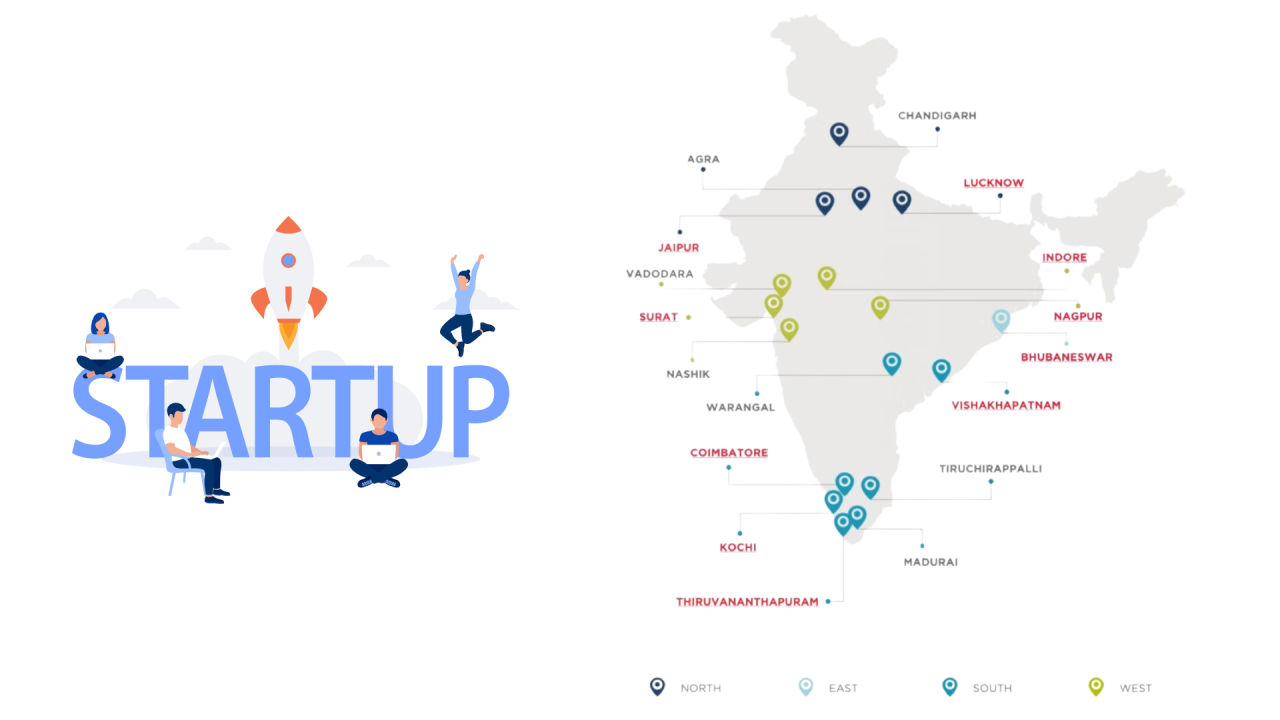
Startup activity in India’s Tier 2 cities is rising rapidly as government policies, digital infrastructure and funding access expand beyond major metros. Several national and state level schemes are encouraging entrepreneurs in smaller cities to launch technology and service based businesses.
Tier 2 cities startup growth in India has become a defining trend in the country’s innovation ecosystem. While cities like Bengaluru, Delhi and Mumbai once dominated the startup landscape, entrepreneurs from cities such as Jaipur, Indore, Nagpur, Coimbatore and Bhubaneswar are increasingly launching new ventures. A mix of government schemes, startup incubators, digital connectivity and lower operational costs has created favorable conditions for startups to emerge outside traditional tech hubs.
Startup India initiative supporting entrepreneurs beyond metro cities
One of the most important government schemes encouraging Tier 2 cities startup growth is the Startup India initiative launched by the Government of India in 2016. The program was designed to promote innovation, reduce regulatory barriers and improve access to funding for early stage startups.
Startup India provides several benefits including tax exemptions, easier company registration and support through incubators and accelerators. The initiative also introduced the Startup India Seed Fund Scheme which helps early stage startups obtain financial support during the idea and prototype stages.
Through these programs, startups in smaller cities can receive mentorship, funding support and regulatory guidance. Government supported incubators across universities and research institutions have helped founders develop technology products without needing to relocate to major metropolitan centers.
Many emerging startups from Tier 2 cities are working in sectors such as fintech, agritech, health technology and education technology. These industries benefit from digital platforms that allow businesses to operate nationally even if they are based in smaller cities.
Role of Digital India and improved internet infrastructure
Digital connectivity has played a major role in expanding the startup ecosystem beyond metro regions. The Digital India program has improved internet access across the country, allowing entrepreneurs in smaller cities to build digital businesses and reach national markets.
Affordable mobile data and widespread smartphone usage have made it easier for startups to offer online services. Many founders in Tier 2 cities are building businesses that rely on digital platforms, including e commerce services, local logistics platforms and software development companies.
Cloud computing tools, online payment systems and digital marketing platforms have lowered the barriers to entry for new businesses. Entrepreneurs no longer need to be located in major technology hubs to build scalable digital products.
Improved internet connectivity has also allowed startup incubators and mentoring programs to operate remotely. Founders from cities such as Surat, Kochi and Chandigarh can participate in accelerator programs and investor meetings through virtual platforms.
State government startup policies encouraging local innovation
Several Indian states have introduced their own startup policies to encourage innovation in regional cities. These state level initiatives complement national programs by offering financial incentives, incubation support and infrastructure.
States such as Karnataka, Telangana, Gujarat and Maharashtra have created startup policies that specifically target entrepreneurs in smaller cities. These policies often include grants for early stage startups, subsidized office spaces in incubation centers and mentorship programs.
For example, many states operate technology parks and innovation hubs located outside major metropolitan areas. These facilities provide office infrastructure, networking opportunities and access to research institutions.
Universities in Tier 2 cities have also begun launching incubation centers to support student entrepreneurs. These incubators help young founders develop ideas into viable businesses by offering technical guidance, funding access and industry connections.
Lower operating costs attracting founders to smaller cities
Another factor contributing to Tier 2 cities startup growth is the relatively lower cost of doing business compared to metro cities. Office space, employee salaries and operational expenses are often significantly lower in smaller cities.
Lower costs allow startups to operate with smaller funding rounds while extending their financial runway. This advantage can be especially important for early stage companies that are still developing their products and market strategies.
In addition to cost benefits, many founders prefer smaller cities because of better work life balance and reduced commuting times. Entrepreneurs can build teams locally while maintaining strong digital connectivity with clients and investors across India.
Investors have also begun recognizing the potential of startups from non metro cities. Venture capital firms and angel networks increasingly explore opportunities in emerging startup clusters beyond traditional tech hubs.
Emerging sectors from Tier 2 startup ecosystems
Startups from Tier 2 cities are particularly active in sectors that address regional challenges. Agritech companies are building solutions for farmers, logistics startups are improving rural supply chains and health technology firms are expanding digital healthcare services.
Education technology platforms are also emerging from smaller cities where founders often understand the needs of regional students. Many edtech startups are creating multilingual learning platforms that cater to students outside major urban centers.
Another growing sector is software services and SaaS businesses. Developers from cities such as Indore and Coimbatore are launching software products that serve global clients. Remote work culture has further accelerated this trend by allowing distributed teams to collaborate effectively.
As digital infrastructure and government support continue to expand, the startup ecosystem in Tier 2 cities is expected to grow further in the coming years.
Takeaways
• Government programs like Startup India have expanded funding and support for startups outside major metros
• Digital India and improved internet connectivity have enabled entrepreneurs to build online businesses from smaller cities
• State level startup policies provide grants, incubators and infrastructure for local innovation
• Lower operating costs make Tier 2 cities attractive locations for early stage startups
FAQs
What are Tier 2 cities in India’s startup ecosystem?
Tier 2 cities refer to emerging urban centers such as Jaipur, Indore, Nagpur, Kochi and Coimbatore where startup activity is increasing but the scale is smaller than major tech hubs like Bengaluru and Delhi.
Which government scheme supports startups in smaller cities?
The Startup India initiative and the Startup India Seed Fund Scheme provide financial support, tax benefits and mentorship to startups across India including those in Tier 2 cities.
Why are startups choosing smaller cities instead of metros?
Lower operational costs, improving digital infrastructure and access to government support programs make smaller cities attractive for early stage startups.
Which sectors are growing in Tier 2 startup ecosystems?
Agritech, health technology, education technology, logistics and SaaS businesses are among the fastest growing sectors emerging from smaller cities.










Leave a comment