

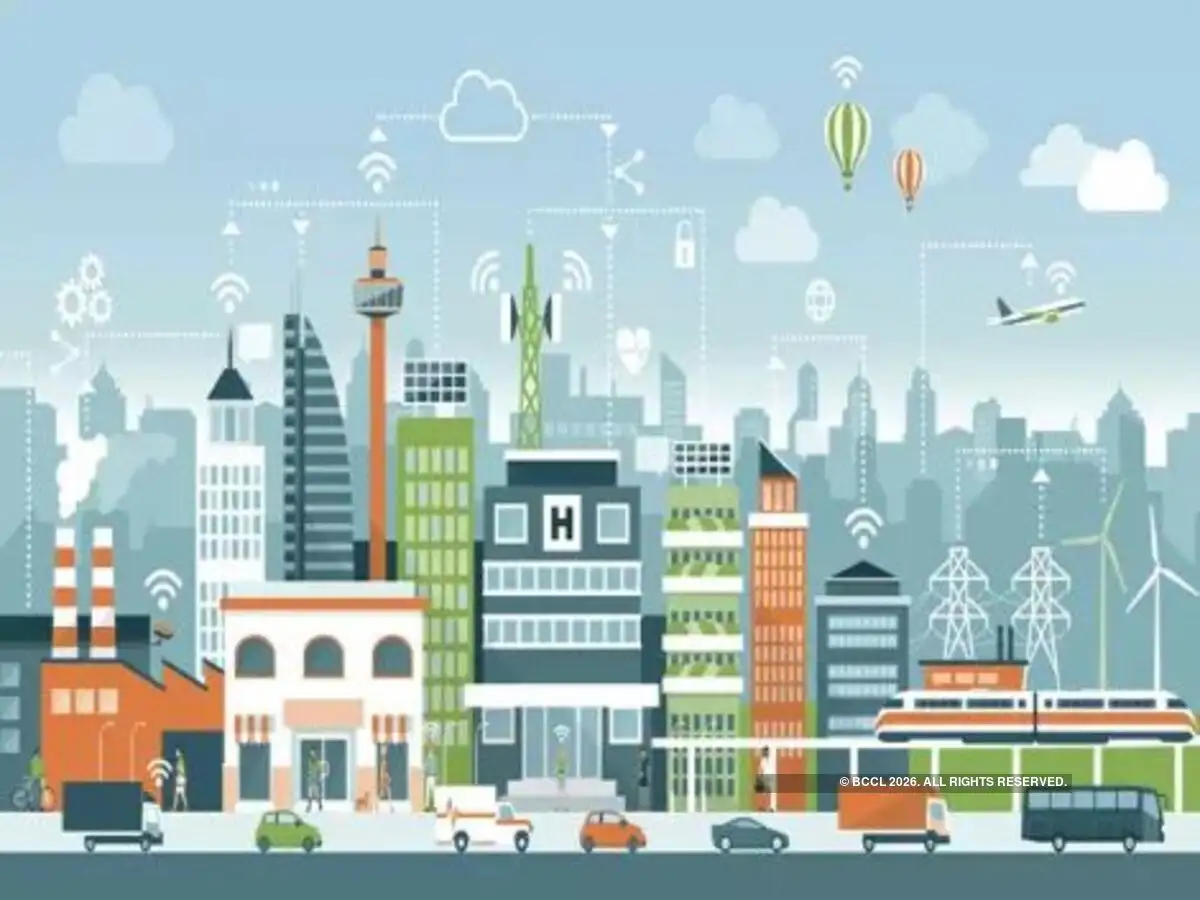
From Digital India to Intelligent India marks a structural shift in how mid-sized cities function, govern and grow. Artificial intelligence and smart systems are moving beyond pilots to become core infrastructure, reshaping urban services, jobs and daily life in cities that sit between metros and small towns.
This transformation is gradual but decisive. It builds on digital foundations laid over the past decade and converts data into actionable intelligence at scale.
Digital India Laid the Groundwork for Intelligent Systems
Digital India focused on access. Internet connectivity, digital payments, online government services and cloud-based tools brought mid-sized cities into the formal digital economy. Municipal records moved online, citizens adopted UPI, and businesses digitised accounting and compliance.
This phase generated massive data trails across transport, utilities, healthcare and commerce. However, most systems remained reactive. Data was stored but rarely analysed in real time. Decision-making still depended on manual intervention.
Intelligent India begins where Digital India stops. It uses artificial intelligence, machine learning and automation to interpret data continuously. Instead of responding after problems occur, systems anticipate issues and optimise outcomes. Mid-sized cities are ideal candidates because they are large enough to generate meaningful data but small enough to implement changes faster than metros.
Smart Urban Governance Through Predictive Decision Making
One of the clearest impacts of Intelligent India will be in city governance. AI-driven dashboards allow municipal bodies to monitor water supply, waste collection, traffic flow and electricity usage in real time. Predictive analytics can identify leak-prone pipelines, congestion hotspots or transformer overloads before failures happen.
In mid-sized cities, this reduces service disruptions and operating costs. Smart grievance systems automatically categorise complaints and route them to the right departments. Chatbots handle basic citizen queries, freeing staff for complex tasks.
Urban planning also becomes data-led. Population growth patterns, housing demand and mobility trends inform zoning and infrastructure investment. This improves efficiency without the scale-related complexity faced by larger metros.
AI in Public Transport and Traffic Management
Transport is a critical area where smart systems reshape daily life. Mid-sized cities often struggle with rising vehicle ownership and limited road expansion. AI-powered traffic management systems analyse live camera feeds and sensor data to adjust signal timings dynamically.
Public transport benefits through demand forecasting. Bus routes and frequencies can be modified based on commuter patterns, reducing overcrowding and idle capacity. Intelligent ticketing systems integrate payments, scheduling and usage analytics.
These changes shorten commute times and lower emissions. Unlike mega-cities, mid-sized cities can deploy such systems citywide without fragmented jurisdictions, accelerating impact.
Healthcare and Education Becoming More Accessible
AI adoption in healthcare improves service reach in mid-sized cities where specialist availability is limited. Smart diagnostic tools assist doctors with imaging analysis, early disease detection and patient prioritisation. Telemedicine platforms supported by AI triage systems help manage patient flow.
Public health departments use data models to track disease trends and allocate resources proactively. This reduces pressure on hospitals during seasonal outbreaks.
In education, intelligent systems personalise learning. AI-driven assessment tools help teachers identify learning gaps early. Municipal schools benefit from data-backed planning around attendance, nutrition programs and teacher deployment.
These improvements address long-standing quality gaps without requiring massive physical expansion.
Local Economies Powered by Intelligent Infrastructure
Intelligent India directly affects local economies. Smart logistics platforms optimise supply chains for local manufacturers and traders. Predictive demand analytics help small businesses manage inventory and reduce wastage.
Urban employment also evolves. Demand rises for technicians, data analysts, system integrators and AI maintenance roles. Mid-sized cities become talent hubs for applied technology rather than just service delivery.
Startups and MSMEs benefit from access to intelligent public infrastructure such as open data platforms and digital service APIs. This lowers entry barriers and encourages local innovation aligned with city-specific problems.
Energy, Water and Sustainability Gains
Resource management is another area of transformation. Smart grids use AI to balance electricity supply and demand, reducing outages and transmission losses. Rooftop solar integration becomes more efficient through predictive load management.
Water systems benefit from leak detection algorithms and consumption analytics. Cities facing seasonal shortages can plan distribution scientifically rather than through emergency measures.
Waste management systems classify and route waste automatically, improving recycling rates. These sustainability gains are critical for mid-sized cities experiencing rapid population growth without metro-level budgets.
Challenges in Moving Toward Intelligent Cities
Despite potential, the shift to Intelligent India faces challenges. Data quality remains uneven across departments. Legacy systems often lack interoperability. Cybersecurity risks increase as systems become interconnected.
Skill shortages are another concern. Municipal staff require training to interpret AI-driven insights rather than rely on manual processes. Public trust must also be built through transparency and data protection.
Funding models need alignment. While technology costs are falling, long-term maintenance and upgrades require sustainable budgeting. Cities that treat intelligent systems as one-time projects risk underperformance.
Why Mid-Sized Cities Are Central to Intelligent India
Mid-sized cities offer the best testbed for intelligent systems. They combine scale with manageability. Governance structures are simpler, and stakeholder coordination is easier than in mega-urban regions.
Success in these cities creates replicable models for nationwide adoption. It also prevents excessive migration pressure on metros by improving quality of life locally.
The shift from Digital India to Intelligent India is not about replacing human decision-making. It is about augmenting it with timely, accurate insights. For mid-sized cities, this shift represents a chance to leapfrog stages of urban development rather than follow outdated paths.
Takeaways
Intelligent India builds on Digital India by turning data into real-time decisions
Mid-sized cities benefit faster due to manageable scale and governance structures
AI-driven systems improve urban services, healthcare, transport and sustainability
Skill development, data quality and cybersecurity are key to long-term success
FAQs
What is the difference between Digital India and Intelligent India?
Digital India focused on connectivity and digitisation, while Intelligent India uses AI and analytics to automate and optimise decisions.
Why are mid-sized cities important for this transition?
They generate sufficient data for AI systems while allowing faster, citywide implementation compared to metros.
Will AI replace jobs in mid-sized cities?
Some roles will change, but new jobs will emerge in system management, analytics and technology services.
Are intelligent city systems expensive to maintain?
Initial costs exist, but predictive maintenance and efficiency gains often reduce long-term operational expenses.










Leave a comment