

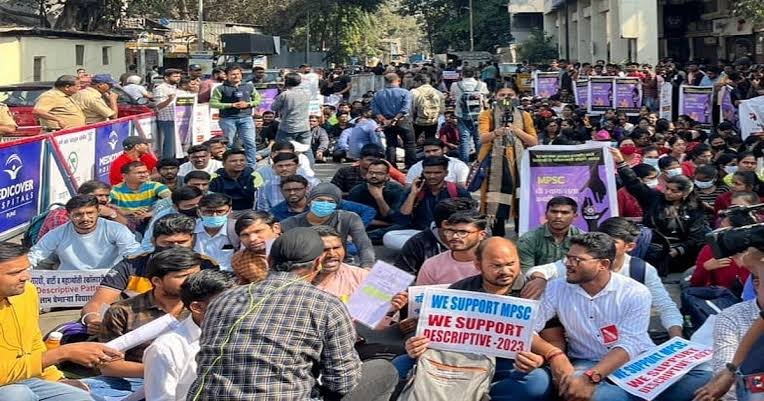
Maharashtra Public Service Commission (MPSC) aspirants are continuing their protests in Pune over alleged examination irregularities, paper leaks and delays in government recruitment. The agitation has renewed questions about transparency, accountability and the future of thousands of young people preparing for competitive examinations across Maharashtra.
Why Are MPSC Aspirants Protesting in Maharashtra?
The ongoing MPSC protests in Pune reflect growing dissatisfaction among candidates preparing for Maharashtra government jobs. Aspirants have raised concerns about alleged examination irregularities, paper leak controversies, recruitment delays and the need for greater accountability within the commission.
The protests intensified in early October 2026, with candidates gathering near S M Joshi Bridge in Pune and at other locations. Protesters have demanded stronger safeguards for examinations and accountability from the commission’s leadership.
One of their central demands is the resignation of MPSC chairman Vivek Bhimanwar. Candidates argue that confidence in the recruitment system depends on transparent examination procedures, timely decisions and clear responsibility when irregularities are reported.
The agitation has continued despite government assurances and administrative action. According to reports published on October 8, protesters remained at the demonstration site even after police denied permission for the gathering to continue there. The authorities cited concerns about traffic disruption and public order. (Source: The Indian Express, October 8, 2026)
Government Response and Promised Recruitment Reforms
The Maharashtra government announced several measures following a meeting between Chief Minister Devendra Fadnavis and representatives of MPSC aspirants on September 30.
The reported measures included transferring MPSC secretary Mahendra Harpalkar, ordering a judicial inquiry into the functioning of former and current commission leadership, retaining offline examinations and increasing Group C vacancies.
The government also indicated plans for a more structured recruitment schedule covering vacancies over three years. These assurances prompted candidates to postpone their planned October 2 protest, although demonstrations subsequently continued over concerns that important demands remained unresolved.
The secretary was relieved of his responsibilities on October 2, according to subsequent reporting. However, the chairman’s position became a separate point of contention because removing a constitutional office-holder involves a different legal process.
These developments demonstrate that administrative action can address some immediate concerns, but restoring candidates’ confidence requires more than announcements. Aspirants will be looking for clear timelines, published decisions and evidence that the promised reforms are being implemented. (Sources: The Times of India, September 30 and October 3, 2026; The Indian Express, October 8, 2026)
How Recruitment Disputes Affect Young Job Seekers
For many candidates, preparing for MPSC examinations is a long-term commitment involving several years of study, coaching expenses and financial support from their families.
When examinations are delayed, cancelled or surrounded by allegations of irregularities, candidates can face uncertainty about their preparation schedules and career plans.
Aspirants may need to pay for accommodation, study rooms, books, internet access and coaching while waiting for new examination dates or recruitment decisions. Students who have moved to Pune or other educational centres can face additional living expenses.
The financial pressure can be particularly difficult for candidates from rural Maharashtra and smaller cities such as Amravati, Akola, Yavatmal, Wardha and Chandrapur. Many come from families that expect government employment to provide long-term financial stability.
Recruitment uncertainty can also affect decisions about private-sector employment, postgraduate education and other competitive examinations. Some candidates may find it difficult to commit to an alternative career while waiting for an examination or result.
These consequences make timely communication essential. Even when a recruitment process encounters a genuine problem, candidates benefit from clear information about what has happened, what action is being taken and when the next decision is expected.
Why Transparent Examinations Matter for Maharashtra
The MPSC conducts recruitment examinations for various state government services and posts. Its processes influence the career prospects of candidates across Maharashtra, making fairness and predictability important public concerns.
An examination system must protect the interests of both candidates and the wider public. If allegations of paper leaks or other irregularities emerge, the authorities need to investigate them properly and communicate the findings.
Unverified allegations should not automatically be treated as proven wrongdoing. At the same time, complaints should be examined through a credible process that allows evidence to be assessed and responsibility to be established.
A transparent system also requires consistent rules regarding examination formats, eligibility conditions, answer keys, results and recruitment timelines. Candidates should have access to official notices rather than relying on rumours circulating through social media or coaching networks.
The government and commission can help rebuild trust by publishing recruitment calendars, explaining changes promptly and providing clear channels for candidates to raise grievances.
An independent inquiry, where ordered, must also be allowed to follow the applicable legal process. Its findings and subsequent corrective measures will be important in determining whether the current dispute leads to lasting institutional improvements.
Bombay High Court Intervention Adds Another Dimension
The Bombay High Court has also addressed the ongoing protests. In proceedings reported on October 7 and 8, the court urged aspirants to return to their studies while emphasising the need for fair examinations and a credible recruitment process.
The court sought a roadmap from the state government for addressing recruitment concerns, with the government indicating that it would submit an affidavit. The Indian Express reported that the court expected a roadmap within three weeks and listed the matter for a further hearing on November 25.
The proceedings highlight two issues that need to be addressed together: candidates’ right to raise legitimate concerns and the need to prevent demonstrations from disrupting public life.
Police have directed protesters to seek permission for an alternative location. Legal proceedings and administrative decisions will therefore shape how the agitation develops in the coming weeks.
The court’s intervention does not, by itself, establish the truth of every allegation raised by protesters. The inquiry process, official records and subsequent decisions will determine the outcome of specific complaints. (Sources: The Indian Express, October 8, 2026; The Times of India, October 8, 2026)
What the Dispute Means for Future Government Recruitment
The MPSC controversy raises broader questions about how public recruitment should be managed in Maharashtra.
First, examination authorities need to communicate changes as early as possible. Last-minute decisions can create avoidable costs for candidates who travel long distances or arrange accommodation to appear for examinations.
Second, recruitment calendars should account for vacancies, examination schedules, evaluation periods and appointment procedures. A predictable timetable would help candidates plan their preparation and reduce uncertainty.
Third, complaints about examination integrity need a clear process for reporting, investigating and resolving them. Candidates should know where to submit evidence and how official findings will be communicated.
Finally, the government must distinguish between announcing vacancies and completing recruitment. A promise to fill posts is meaningful only when it is followed by notifications, examinations, results, verification and appointments within reasonable timelines.
For candidates across Maharashtra, the central issue is not simply the number of government vacancies available. It is whether the system offers a fair opportunity to compete for those positions.
What Happens Next?
The immediate focus will be on the continuing protests in Pune, the government’s response to the court’s directions and the implementation of the reforms announced in September.
Aspirants will also be watching for official recruitment notifications, examination schedules and updates on the inquiry into the commission’s functioning.
The government has announced steps intended to address the dispute, but the extent to which these measures resolve candidates’ concerns remains to be seen. The next phase will depend on the implementation of those commitments and the findings of the relevant legal and administrative processes.
For Maharashtra’s young job seekers, the outcome could have implications beyond a single examination cycle. A more predictable recruitment system would help candidates make informed decisions about education, employment and long-term career plans.
Key Takeaways
- MPSC aspirants in Pune are protesting over alleged examination irregularities, paper leak controversies and recruitment delays.
- The Maharashtra government announced the transfer of the commission’s secretary, a judicial inquiry and measures concerning offline examinations and vacancies.
- The Bombay High Court has called for a fair recruitment process and sought a government roadmap while addressing concerns about public disruption.
- Candidates need transparent examination procedures, reliable recruitment calendars and timely official communication to plan their careers.
Frequently Asked Questions
1. Why are MPSC aspirants protesting in Maharashtra?
Candidates are demanding greater transparency and accountability over alleged examination irregularities, paper leak controversies, recruitment delays and the functioning of the Maharashtra Public Service Commission.
2. What action has the Maharashtra government announced?
The government announced the transfer of MPSC secretary Mahendra Harpalkar, a judicial inquiry into the functioning of former and current commission leadership, continued offline examinations and an increase in Group C vacancies. It also indicated plans for structured recruitment over three years.
3. How do MPSC recruitment disputes affect candidates?
Recruitment uncertainty can increase preparation and living expenses, disrupt study schedules and delay career decisions. Candidates from rural areas and smaller cities may face additional financial pressure when they move to coaching centres.
4. What should MPSC aspirants do while waiting for further decisions?
Candidates should follow official MPSC notifications, maintain their preparation schedules, preserve relevant documents and rely on verified government announcements for examination dates and recruitment updates. They should avoid making career decisions based solely on unverified social media claims.









Leave a comment