

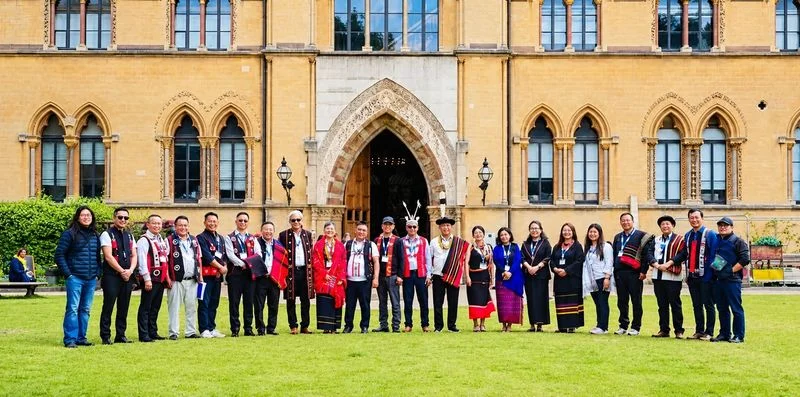
Nagaland is preparing to welcome 39 ancestral human remains returning from the University of Oxford’s Pitt Rivers Museum in the United Kingdom. Expected to arrive on November 27, 2026, the homecoming marks a significant moment in the Naga community’s six-year effort to reclaim its ancestral heritage and address the legacy of colonial-era collections.
39 Naga Ancestral Remains to Arrive in Nagaland on November 27
Nagaland is preparing for a historic homecoming as 39 ancestral human remains, previously held at the Pitt Rivers Museum in Oxford, are expected to reach the Naga homeland on November 27.
The Naga Tribes Hoho and the Forum for Naga Reconciliation (FNR) announced the arrival schedule through a public invitation issued on November 24. The organisations have described the return as an important moment of remembrance, dignity, healing and reconciliation for Naga communities.
The remains were formally handed over to Naga representatives by the University of Oxford Council on November 9, 2026. Following the handover, arrangements were made to transport them from the United Kingdom to India.
A public homecoming programme will take place at the Nagaland Baptist Church Council (NBCC) Convention Centre in Kohima on November 28 at 12 noon.
The return is the result of a six-year community-led process involving Naga tribal organisations, researchers, elders and representatives of the Oxford museum.
Why Were Naga Ancestral Remains Held at Oxford University?
The 39 ancestral remains had been held at the Pitt Rivers Museum, part of the University of Oxford, for more than a century.
Many of these remains were taken from Naga communities during the British colonial period, particularly between approximately 1910 and 1940. Historical records associate their collection with British colonial administrators and anthropologists John Henry Hutton and James Philip Mills.
During the colonial period, human remains from different Indigenous communities were collected and transported to museums and academic institutions for anthropological research.
The Naga ancestral remains eventually became part of the Pitt Rivers Museum’s collections, which contain a substantial collection of Naga cultural material.
For Naga communities, the presence of their ancestors’ remains in a foreign institution raised concerns about cultural dignity, historical justice and the right to care for their ancestors according to their own traditions.
The museum removed all human remains from public display in 2020. This decision also helped open discussions about the future of the Naga ancestral remains and the possibility of returning them to their homeland.
Six-Year Repatriation Process Led by Naga Organisations
The campaign to bring the ancestral remains back to Nagaland began in 2020 and involved sustained discussions between the Naga community and the Pitt Rivers Museum.
The Forum for Naga Reconciliation played an important role in facilitating the process. Its Recover, Restore and Decolonise (RRaD) team worked alongside tribal Hohos, elders, churches, researchers and community representatives.
The process involved archival research, identification efforts, consultations and discussions about the appropriate way to receive and care for the ancestors.
The participation of different Naga tribes was particularly important because the remains were associated with multiple communities. Establishing a shared understanding of their return required discussions across tribal organisations and representatives.
The process was not limited to securing permission from the museum. Naga representatives also worked towards deciding how the ancestors should be welcomed, honoured and laid to rest after their return.
The community’s approach has focused on dignity, collective responsibility and reconciliation rather than treating the return as simply an administrative transfer.
Oxford University Approves Return of 39 Ancestors
The University of Oxford Council formally approved the return of 39 Naga ancestral human remains on July 13, 2026.
The decision followed a formal claim and consultations involving the university, museum representatives and Naga organisations.
However, one additional human remain was not included in the approved return because its Naga provenance could not be clearly established.
The formal handover took place at the Pitt Rivers Museum on November 9, 2026.
Professor Laura Van Broekhoven, representing the museum, and Reverend Dr Wati Aier, representing the Forum for Naga Reconciliation, jointly signed the Transfer of Title Form.
The document was also witnessed by Visier Sanyü on behalf of the FNR and Thejao Vihienuo representing the Naga Tribe Hoho.
Through this transfer, the University of Oxford formally handed over custodianship of the 39 ancestral remains to the Naga people.
Following the ceremony, the remains began their journey towards their ancestral homeland.
Kohima to Host Public Homecoming Programme on November 28
The return of the ancestral remains will be marked by a public homecoming programme in Kohima.
The Naga Tribes Hoho and Forum for Naga Reconciliation, in partnership with the Naga Students’ Federation and Naga Peoples’ Movement for Human Rights, have invited members of Naga communities and supporters to participate.
The programme is scheduled as follows:
- Date: November 28, 2026
- Time: 12 noon
- Venue: NBCC Convention Centre, Kohima
- Occasion: Public Homecoming Programme
The event will provide an opportunity for community members to gather, pay their respects and recognise the significance of the ancestors’ return.
Following the homecoming programme, the ancestral remains will be available for public viewing, homage, wreath-laying and prayers at the convention centre.
The organisers have described the gathering as a collective moment for the Naga people to honour their history and reaffirm their commitment to healing and unity.
Naga Solidarity Park to Become Final Resting Place
After the public homecoming programme, the 39 ancestral remains will be laid to rest at Naga Solidarity Park in Kohima.
The burial ceremony is scheduled for November 30, 2026, at 2 pm.
The decision to establish a shared resting place reflects the collective approach adopted by Naga organisations throughout the repatriation process.
Rather than returning the remains separately to different institutions or locations, the Naga community has committed to a joint memorial resting place.
The proposed resting place is intended to represent healing, peace and the shared identity of Naga communities across different tribes.
It will also serve as a place where future generations can remember their ancestors and understand the historical circumstances behind their return.
For the community, the burial is expected to mark an important stage in a longer process of cultural restoration and reconciliation.
Why the Repatriation Matters for Indigenous Communities
The return of the 39 Naga ancestral remains has significance beyond Nagaland because it highlights wider international discussions about the repatriation of Indigenous human remains held in museums.
For decades, museums and academic institutions across Europe and other regions have faced questions about collections acquired during colonial rule.
Many Indigenous communities have argued that ancestral remains should be returned so they can receive culturally appropriate care and burial.
The Naga repatriation process demonstrates the importance of community participation in such decisions.
The Forum for Naga Reconciliation and its RRaD team worked with the Pitt Rivers Museum through discussions, research and consultations rather than relying only on a formal institutional request.
The process also reflects the importance of identifying ancestral remains accurately and respecting the wishes of communities connected to them.
According to the Pitt Rivers Museum, the return is part of a broader commitment to long-term partnerships with communities whose cultural belongings and ancestors are held in museum collections.
The Naga experience could therefore provide an important reference for other Indigenous communities seeking the return of ancestral remains from overseas institutions.
A Historic Homecoming for the Naga People
The arrival of the 39 ancestral remains represents the culmination of years of research, dialogue and collective effort by Naga organisations and community representatives.
The November 27 arrival, November 28 public homecoming and November 30 burial ceremony mark three important stages in the return process.
For Naga communities, the significance of the occasion goes beyond bringing historical remains back from another country. It represents an opportunity to restore dignity to ancestors who were separated from their homeland during the colonial period.
The shared memorial at Naga Solidarity Park will provide a place for remembrance and reflection for future generations.
The repatriation also raises a wider question about how museums and institutions should address historical collections acquired under colonial circumstances.
As the ancestors return to Nagaland, the process stands as an example of how dialogue, community participation and historical research can contribute to cultural restoration and reconciliation.
Key Takeaways
- Thirty-nine Naga ancestral human remains are expected to arrive in Nagaland on November 27, 2026, after being held at Oxford University’s Pitt Rivers Museum.
- The University of Oxford Council formally transferred custodianship to Naga representatives on November 9, following a six-year community-led repatriation process.
- A public homecoming programme will take place at the NBCC Convention Centre in Kohima on November 28 at 12 noon.
- The ancestral remains will be laid to rest at Naga Solidarity Park in Kohima on November 30 at 2 pm.
Frequently Asked Questions
1. How many Naga ancestral remains are returning from Oxford?
A total of 39 ancestral human remains have been approved for return by the University of Oxford Council. One additional remain was excluded because its Naga provenance could not be clearly established.
2. When will the ancestral remains reach Nagaland?
The 39 ancestral remains are expected to arrive in the Naga homeland on November 27, 2026.
3. Where will the public homecoming programme take place?
The programme will be held at the NBCC Convention Centre in Kohima on November 28, 2026, at 12 noon. Public viewing, homage, wreath-laying and prayers will follow.
4. Where will the 39 ancestral remains be buried?
The ancestral remains will be laid to rest at Naga Solidarity Park in Kohima on November 30, 2026, at 2 pm.
(Internal keyword suggestions: Nagaland ancestral remains return 2026, 39 Naga ancestors Oxford, Pitt Rivers Museum repatriation, Oxford University Naga remains, Naga ancestral remains homecoming, Nagaland November 28 event, Naga Solidarity Park burial, Forum for Naga Reconciliation, Naga heritage repatriation, colonial history of Nagaland)










Leave a comment