

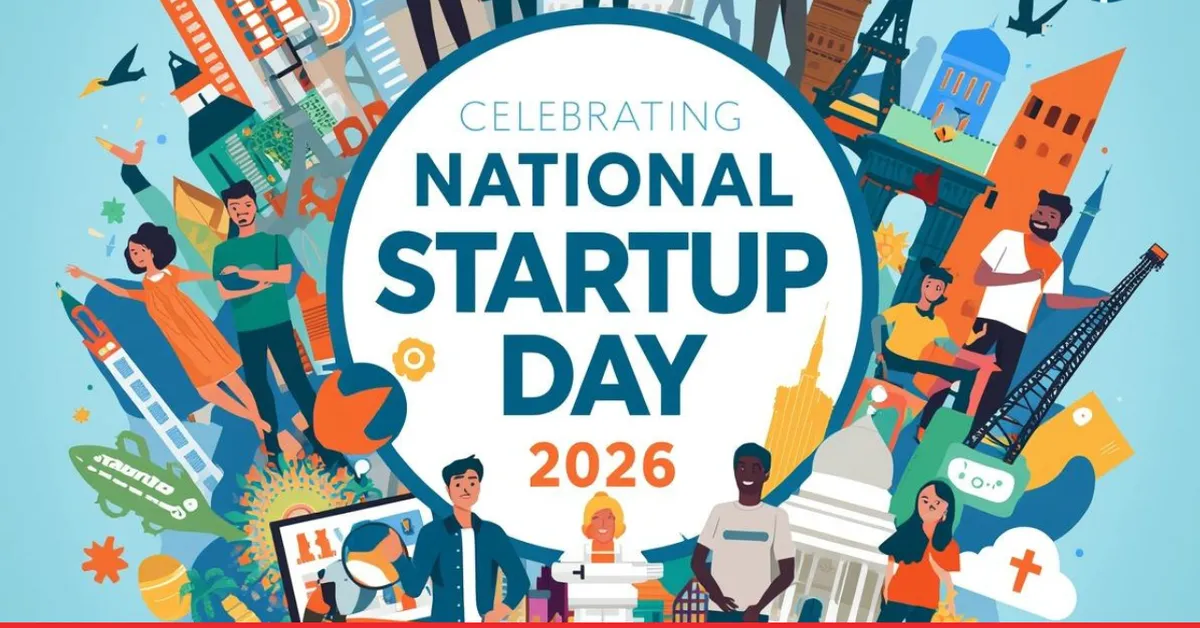
National Startup Day 2026 brings renewed attention to how Tier 2 founders are expanding India’s innovation map beyond metros. From manufacturing and agritech to SaaS and climate solutions, smaller cities are emerging as serious startup hubs with scale focused ambitions.
National Startup Day 2026 is a time sensitive moment for India’s startup ecosystem, as it reflects the current direction of policy, funding, and founder activity. This year’s focus is not limited to Bengaluru, Delhi, or Mumbai. Instead, it highlights the growing influence of Tier 2 cities such as Indore, Jaipur, Coimbatore, Kochi, Nagpur, Surat, and Bhubaneswar, where founders are building companies rooted in local problems but designed for national and global markets.
Why Tier 2 Founders Are Central to National Startup Day 2026
National Startup Day 2026 underlines a structural shift that has been developing for several years. Tier 2 founders are no longer peripheral participants in India’s startup story. They are increasingly central to it. Lower operating costs, access to regional talent, and proximity to real world problems have made these cities fertile ground for innovation.
Many startups emerging from Tier 2 regions are solving practical challenges in logistics, healthcare access, education delivery, and small business digitisation. These are sectors where firsthand exposure to inefficiencies provides a clear advantage. Founders often come from family run businesses, engineering colleges, or local industries, giving them a grounded understanding of market needs.
This year’s National Startup Day messaging reflects this reality by emphasising inclusivity, regional innovation, and sustainable entrepreneurship rather than unicorn driven narratives.
Infrastructure and Policy Support Driving Growth
One of the key reasons Tier 2 founders are scaling faster in 2026 is improved infrastructure and policy alignment. Incubation centres linked to state universities, industrial corridors, and local innovation hubs have reduced early stage friction.
Digital public infrastructure has played a crucial role. Access to digital payments, identity verification, and cloud services allows startups to operate nationally from smaller cities. Government backed startup recognition programs have also improved founders’ access to grants, credit support, and pilot opportunities.
State governments are becoming more proactive. Several Tier 2 focused policies now offer capital subsidies, office space support, and procurement access. National Startup Day 2026 reflects this decentralised push, with multiple states showcasing region specific startup success stories.
Funding Patterns Show a Clear Shift
Funding data around National Startup Day 2026 indicates a steady rise in capital flowing to non metro startups. While large late stage rounds still concentrate in metros, early and seed stage investments are increasingly distributed across Tier 2 cities.
Angel networks, micro venture funds, and family offices are actively scouting outside traditional hubs. Many investors see Tier 2 startups as capital efficient and more disciplined in execution. Burn rates are lower, and founder retention is higher due to reduced talent churn.
Bootstrapping remains common, especially in SaaS, manufacturing tech, and D2C segments. Several Tier 2 startups reach revenue sustainability before raising institutional funding, which improves long term resilience.
Sectoral Strengths Emerging From Tier 2 India
Tier 2 innovation is not uniform across sectors. Certain domains show stronger momentum. Manufacturing and deep tech startups benefit from proximity to industrial clusters. Agritech companies thrive due to direct access to farming communities and supply chains. Healthtech startups focus on diagnostics, affordability, and regional hospital networks.
Edtech in Tier 2 regions has shifted away from test preparation toward skill based learning and vocational training. Climate and clean energy startups are also emerging, particularly in waste management, water solutions, and renewable components.
National Startup Day 2026 highlights these sectoral patterns, showing that Tier 2 founders are building where India’s future demand is likely to grow, not just where investor hype exists.
Talent, Culture, and Founder Mindset
A critical factor behind Tier 2 startup growth is the changing founder mindset. Many entrepreneurs choose to stay rooted in their home cities even after achieving scale. Remote work acceptance and distributed teams make this possible.
Talent availability has improved as well. Engineers, designers, and sales professionals increasingly prefer Tier 2 cities for quality of life reasons. This helps startups build stable teams with lower attrition.
Culturally, Tier 2 founders tend to prioritise profitability, customer retention, and operational clarity. This contrasts with earlier growth at any cost models and aligns well with the more cautious funding environment of 2026.
What National Startup Day 2026 Signals for the Future
National Startup Day 2026 signals that India’s startup future will be geographically broader and structurally stronger. The innovation map is no longer metro centric. Instead, it is evolving into a network of regional hubs, each contributing distinct strengths.
For policymakers, this means designing region specific interventions rather than one size fits all programs. For investors, it means building local presence and longer term engagement models. For founders, it validates the choice to build from smaller cities without compromising ambition.
The coming years are likely to see Tier 2 cities produce more nationally relevant platforms, export oriented products, and employment generating enterprises.
Takeaways
- National Startup Day 2026 highlights the rising influence of Tier 2 founders
- Lower costs and real world problem exposure give regional startups an edge
- Funding and policy support are increasingly decentralised across states
- Tier 2 startups focus on sustainable growth rather than rapid scale alone
FAQs
What is National Startup Day 2026 focused on?
National Startup Day 2026 focuses on celebrating entrepreneurship across India, with strong emphasis on regional innovation and inclusive startup growth.
Why are Tier 2 cities important for India’s startup ecosystem?
Tier 2 cities offer lower costs, strong local problem statements, and access to emerging talent pools, making them ideal for sustainable startup growth.
Are Tier 2 startups attracting serious investment?
Yes, especially at early and seed stages. Investors increasingly view Tier 2 startups as capital efficient and execution focused.
Which sectors are growing fastest in Tier 2 India?
Manufacturing tech, agritech, healthtech, SaaS, and climate focused startups are showing strong momentum in Tier 2 regions.









Leave a comment