

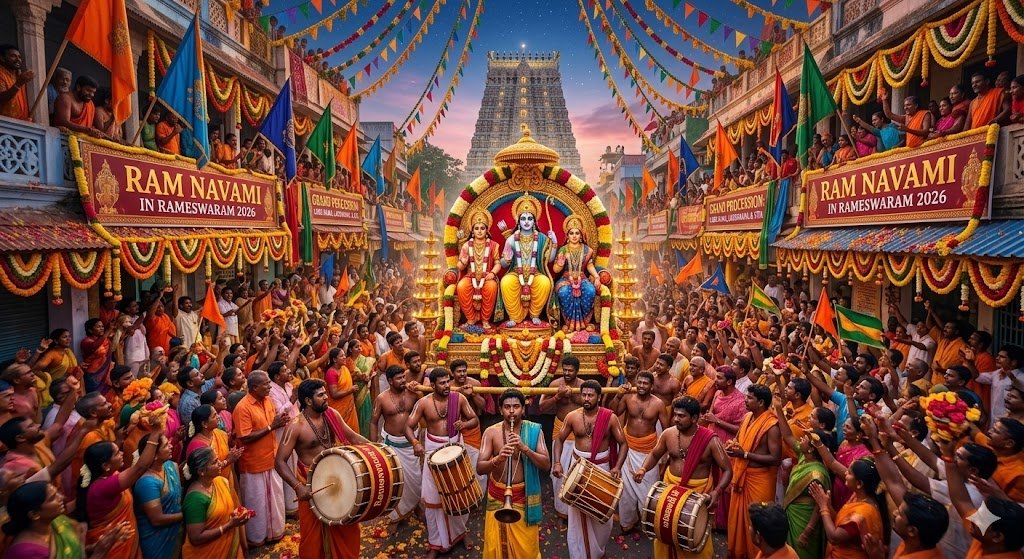
Preparations for Ram Navami 2026 have started in several small and mid-sized Indian cities, with local administrations focusing on security arrangements, procession routes and civic planning. Authorities are coordinating with police, community groups and municipal bodies to ensure peaceful celebrations.
Ram Navami 2026 preparations in small cities are already underway as local administrations across India begin planning for one of the most widely celebrated Hindu festivals. With large processions, temple gatherings and community events expected, officials are focusing on security measures, crowd management and civic readiness in Tier-2 and Tier-3 cities.
Ram Navami Celebrations Gain Momentum in Tier-2 Cities
Ram Navami marks the birth of Lord Ram and is celebrated on the ninth day of the Hindu month of Chaitra, which usually falls in March or April. In 2026, preparations have started early in many cities as authorities anticipate large gatherings and religious processions.
Cities such as Gaya, Varanasi, Nagpur, Indore and several district headquarters across northern and central India are organizing coordination meetings between police departments, municipal corporations and festival committees.
Local temple authorities and community groups typically organize Ram Navami processions featuring devotional music, religious tableaux and cultural performances. These events attract thousands of participants, especially in smaller cities where the festival is a major annual public celebration.
Administrations have begun mapping key procession routes and identifying sensitive areas where additional security and traffic control may be required.
Security Planning and Police Deployment for Ram Navami
Security arrangements are a major focus during Ram Navami preparations, particularly in cities where large religious processions pass through busy urban areas. District police authorities usually deploy additional personnel to monitor crowds and maintain law and order.
Police departments in several states have already started reviewing security plans. These plans often include surveillance cameras along procession routes, deployment of rapid response teams and coordination with local intelligence units.
Authorities also work closely with festival organizers to determine the timing of processions and ensure they follow approved routes. This helps reduce congestion and prevents disruptions to normal traffic.
In recent years, many states have introduced temporary control rooms during major festivals. These centers allow police, emergency services and municipal departments to coordinate responses quickly if any issues arise.
Civic Planning and Municipal Arrangements
Apart from security measures, municipal corporations in many small cities are focusing on civic arrangements ahead of Ram Navami. Public works teams are inspecting roads, street lighting and drainage systems along key procession routes.
Temporary barricades and signage are often installed to guide crowds and vehicles during the festival. Cleanliness drives are also carried out near major temples and public gathering spots.
Water supply points, first aid facilities and sanitation services are usually arranged in areas expecting large crowds. In some cities, local administrations also coordinate with health departments to deploy medical teams and ambulances during major events.
Traffic management plans are another important aspect of civic planning. Diversions may be introduced in certain areas to allow religious processions to pass smoothly without causing prolonged congestion.
Cultural and Religious Significance of Ram Navami
Ram Navami is one of the most important festivals in the Hindu calendar, commemorating the birth of Lord Ram, who is regarded as an embodiment of righteousness and dharma in Hindu tradition.
Temples dedicated to Lord Ram hold special prayers, devotional singing and recitations of the Ramayana during the festival. Devotees often observe fasting and participate in community events organized by local religious organizations.
In many cities, the festival culminates in large public processions where idols of Lord Ram are carried through the streets accompanied by traditional music and devotional chants.
For smaller cities and towns, Ram Navami celebrations often become major social gatherings that bring together residents from different communities.
Managing Crowds and Ensuring Public Safety
Managing large crowds is a key challenge during Ram Navami celebrations. Authorities typically work with volunteers from local religious groups to guide participants and maintain orderly movement during processions.
Public announcements and advisory messages are often issued to encourage residents to follow safety guidelines and avoid overcrowded areas.
Modern technology is also playing a role in festival management. Several cities now use CCTV monitoring and drone surveillance to observe large gatherings and identify potential safety concerns.
These measures help authorities respond quickly if any situation requires intervention.
With thousands of people expected to participate in Ram Navami celebrations across India, careful planning by both civic authorities and community organizers is essential to ensure that the festival remains peaceful and well organized.
Takeaways
Preparations for Ram Navami 2026 have begun in many Tier-2 and Tier-3 cities across India.
Authorities are focusing on security deployment, procession route planning and crowd management.
Municipal bodies are improving civic arrangements including sanitation, traffic control and medical support.
Ram Navami remains one of the largest public religious celebrations in many Indian towns and cities.
FAQs
What is Ram Navami and why is it celebrated?
Ram Navami marks the birth of Lord Ram, a central figure in Hindu tradition known for his adherence to righteousness and duty.
Why are authorities preparing early for Ram Navami celebrations?
Large processions and public gatherings require advance planning to ensure security, traffic management and public safety.
What kind of security measures are used during Ram Navami processions?
Police deployment, CCTV monitoring, traffic control and coordination with festival organizers are common security measures.
How do municipal authorities prepare for Ram Navami?
Municipal bodies manage sanitation, road inspections, lighting, water supply and emergency medical services during the festival.








Leave a comment