

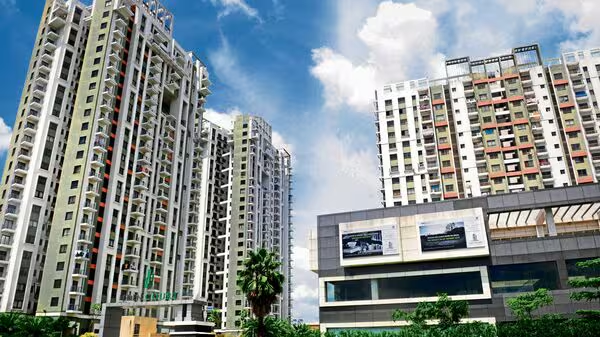
Tier-2 cities are becoming India’s next growth engines as economic activity, infrastructure investment, and digital adoption expand beyond metro regions. Cities like Indore, Nagpur, and Jaipur are driving this shift with rising business activity and improving urban ecosystems.
Economic Expansion Beyond Metro Cities
The rise of Tier-2 cities in India is closely linked to decentralization of economic growth. High costs, congestion, and saturation in metro cities have pushed businesses to explore smaller urban centers.
Manufacturing units, logistics hubs, and service-based industries are increasingly setting up operations in Tier-2 cities. Lower real estate costs and availability of land make these locations attractive for expansion.
Government initiatives such as industrial corridors and regional development schemes have further supported this transition. Cities like Indore and Nagpur are now positioned as logistics and industrial hubs due to strategic connectivity.
This shift is not temporary. It reflects a long-term redistribution of economic activity across the country.
Infrastructure Development Accelerating Growth
Infrastructure development is a key factor behind the growth of Tier-2 cities. Investments in highways, expressways, airports, and urban transport systems are improving connectivity and livability.
Projects like new expressways and upgraded railway networks are reducing travel time between cities. This enhances trade, mobility, and access to markets.
Smart city initiatives have also improved urban infrastructure, including water supply, waste management, and public services. Jaipur and similar cities are seeing visible improvements in urban planning.
Better infrastructure not only attracts businesses but also improves quality of life, making these cities more appealing for residents and investors.
Digital Adoption and Technology Penetration
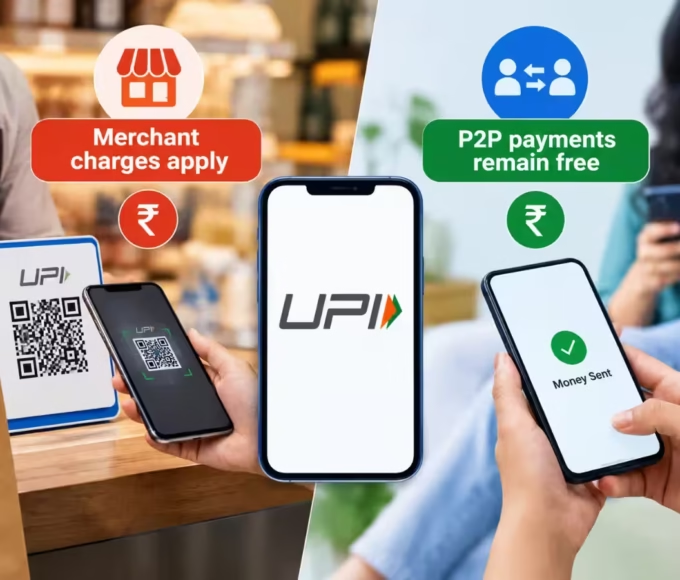
Digital growth is playing a major role in transforming Tier-2 cities into economic hubs. Affordable smartphones, low-cost data, and platforms like UPI have accelerated digital transactions.
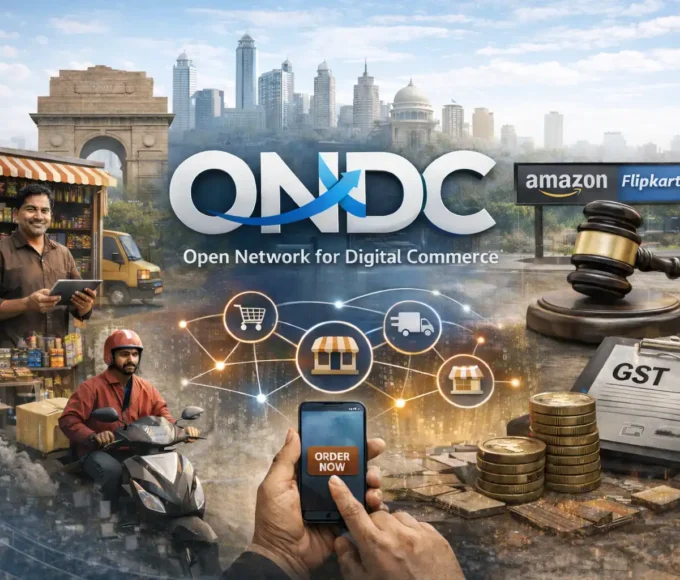
Small businesses are adopting digital tools for payments, marketing, and operations. E-commerce and social commerce are gaining traction, allowing local sellers to reach wider markets.
Remote work has also contributed to this shift. Many professionals are moving back to their hometowns while continuing to work for companies based in metro cities.
This combination of digital access and changing work patterns is strengthening the economic base of smaller cities.
Rise of Startup Ecosystems in Smaller Cities
Tier-2 cities are witnessing the emergence of startup ecosystems. Entrepreneurs are launching businesses in sectors such as edtech, fintech, logistics, and direct-to-consumer brands.
Lower operational costs and access to local markets provide a strong foundation for startups. Cities like Indore and Jaipur have already seen increased startup activity and funding interest.
Incubation centers, co-working spaces, and government support programs are further enabling this growth. Local talent is choosing to build businesses within their cities rather than relocating to metros.
This trend is contributing to job creation and economic diversification.
Real Estate and Cost Advantage Driving Migration
One of the biggest advantages of Tier-2 cities is affordability. Housing costs, office rentals, and overall living expenses are significantly lower compared to metro cities.
This cost advantage is attracting both individuals and businesses. Families are choosing smaller cities for better quality of life, while companies benefit from reduced operational expenses.
Real estate markets in these cities are witnessing steady demand, driven by both end-users and investors. Improved infrastructure and job opportunities are further supporting this growth.
Migration patterns are gradually shifting, with more people moving toward Tier-2 cities instead of away from them.
Changing Consumer Markets and Demand Patterns
Tier-2 cities are no longer secondary markets. Rising incomes and aspirations are creating strong consumer demand across sectors such as retail, education, healthcare, and entertainment.
Brands are increasingly targeting these cities with tailored products and marketing strategies. Local preferences and regional trends are shaping consumption patterns.
The growth of malls, multiplexes, and organized retail reflects this shift. Consumers in smaller cities are now accessing the same products and services as those in metros.
This expanding consumer base is a major driver of economic growth.
Challenges That Still Need Attention
Despite strong growth, Tier-2 cities face several challenges. Infrastructure development is uneven, and some cities still struggle with traffic, pollution, and basic civic issues.
Skilled workforce availability can also be a constraint for certain industries. While talent is present, specialized skills may require additional training and development.
Urban planning needs to keep pace with rapid growth to avoid issues seen in metro cities. Sustainable development will be critical in the coming years.
Addressing these challenges will determine how effectively Tier-2 cities can sustain their growth trajectory.
What This Means for India’s Economic Future
The emergence of Tier-2 cities as growth engines marks a structural shift in India’s economy. Growth is becoming more distributed, reducing dependence on a few major metros.
This transition can lead to more balanced regional development, improved employment opportunities, and better utilization of resources.
For businesses, it opens new markets and expansion opportunities. For individuals, it offers a chance to access opportunities without relocating to crowded metros.
As infrastructure and digital adoption continue to improve, Tier-2 cities are expected to play an even larger role in India’s economic growth.
Takeaways
• Tier-2 cities are driving economic growth through lower costs and better infrastructure
• Digital adoption and remote work are strengthening local economies
• Startup ecosystems and consumer markets are expanding rapidly
• Challenges like infrastructure gaps and skill shortages still need attention
FAQs
1. What are Tier-2 cities in India?
They are mid-sized cities with growing infrastructure, population, and economic activity, such as Indore, Nagpur, and Jaipur.
2. Why are businesses moving to Tier-2 cities?
Lower costs, better connectivity, and emerging markets make these cities attractive for expansion.
3. How is digital technology impacting these cities?
Digital tools are enabling businesses, increasing financial inclusion, and supporting remote work.
4. Will Tier-2 cities replace metro cities?
Not entirely, but they will play a larger role in India’s overall economic growth.









Leave a comment