

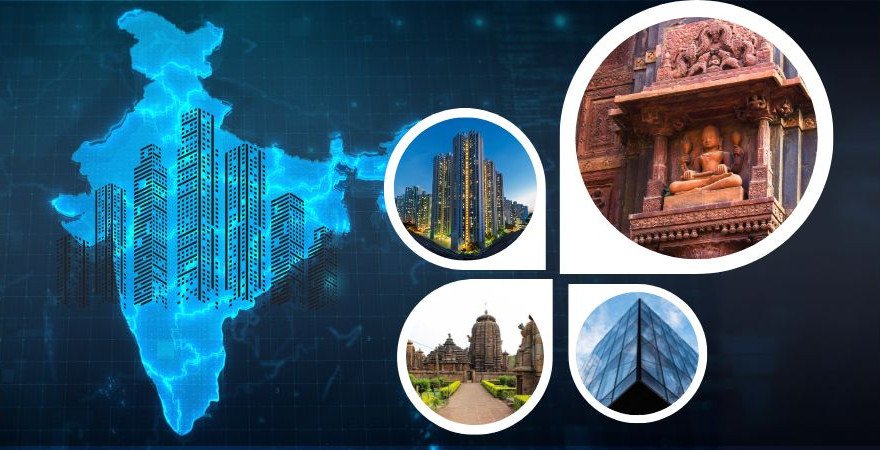
Tier-2 cities in India are increasingly being considered for AI-led workspaces and Global Capability Centres as companies expand beyond metros. The shift raises a key question about whether emerging cities have the infrastructure, talent, and ecosystem to support this next phase of growth.
Tier-2 cities AI workspaces is a time-sensitive business and technology trend, driven by the rapid expansion of Global Capability Centres in India and rising enterprise adoption of artificial intelligence across operations in 2026.
Why Companies Are Moving GCCs Beyond Metro Cities
Global Capability Centres in India have traditionally been concentrated in cities like Bengaluru, Hyderabad, and Pune. However, rising operational costs and saturation in these metros are pushing companies to explore alternatives.
Tier-2 cities offer lower real estate costs, reduced employee attrition, and access to a growing talent pool. Companies are now setting up smaller, distributed centres instead of relying on a single large hub.
AI-led workspaces are also enabling this transition. With cloud infrastructure and automation tools, teams can operate efficiently without being physically centralized.
This makes cities like Nagpur, Indore, and Coimbatore viable options for new GCC investments.
What Defines an AI-Led Workspace in Emerging Cities
AI-led workspaces go beyond basic automation. They integrate artificial intelligence into daily operations, including data analytics, customer support, cybersecurity, and workflow management.
In Tier-2 cities, this often translates into smart office setups with cloud-based systems, remote collaboration tools, and AI-assisted decision-making.
Companies are using AI to optimize resource allocation, improve productivity, and reduce manual processes. This allows them to operate effectively even in locations where traditional infrastructure may not be as advanced as metro cities.
However, the success of these workspaces depends heavily on reliable digital infrastructure and skilled talent.
Infrastructure Readiness in Tier-2 Cities
Infrastructure remains a mixed factor for Tier-2 expansion. While office space availability has improved, digital and urban infrastructure still varies across cities.
High-speed internet, uninterrupted power supply, and secure data networks are essential for AI-driven operations. Some cities have made significant progress, while others still face inconsistencies.
Transport connectivity and urban amenities also play a role. Employees relocating to these cities expect access to quality housing, healthcare, and lifestyle options.
Without these supporting systems, scaling AI-led workspaces becomes challenging.
Talent Availability and Skill Gaps in AI Adoption
Talent is a critical component in determining whether Tier-2 cities can support AI-led workspaces. Many of these cities have strong educational institutions producing graduates in engineering and IT.
However, there is a gap between academic training and industry-ready AI skills. Specialized roles in machine learning, data science, and AI engineering are still more concentrated in metro cities.
Companies are addressing this by investing in training programs and upskilling initiatives. Remote work models also allow them to combine talent from multiple locations.
Over time, as more companies establish a presence in Tier-2 cities, the talent ecosystem is expected to mature.
Cost Advantage vs Operational Efficiency Trade-Off
One of the biggest advantages of Tier-2 cities is cost efficiency. Lower rents, salaries, and operational expenses make them attractive for expanding GCCs.
However, companies must balance this with operational efficiency. Any gaps in infrastructure or talent can offset cost savings.
For example, delays in project execution due to connectivity issues or lack of specialized talent can impact productivity.
Successful companies are those that adopt a hybrid approach, combining metro expertise with Tier-2 scalability.
Government Policies Supporting GCC Expansion
Government initiatives are actively encouraging the expansion of Global Capability Centres into non-metro regions. Policies focused on digital infrastructure, IT parks, and startup ecosystems are creating a supportive environment.
State governments are offering incentives such as tax benefits, faster approvals, and infrastructure support to attract investments.
Programs promoting digital India and smart city development are also contributing to improved readiness in emerging cities.
These efforts are gradually reducing the gap between metro and non-metro capabilities.
Can Tier-2 Cities Sustain AI-Led Growth
The readiness of Tier-2 cities for AI-led workspaces and GCCs depends on how quickly they can address existing gaps. The foundation is being built, but scalability will be the real test.
Cities that invest in digital infrastructure, talent development, and urban planning will have a competitive edge. Those that lag may struggle to attract long-term investments.
The trend is clear. Companies are moving toward a distributed model, and Tier-2 cities are an important part of that strategy.
The next phase of growth will depend on execution rather than intent.
Takeaways
• Tier-2 cities are emerging as new hubs for AI-led workspaces and GCCs
• Cost advantages are driving companies to expand beyond metro cities
• Infrastructure and AI talent gaps remain key challenges
• Government policies are supporting the shift toward distributed growth
FAQs
What are Global Capability Centres (GCCs)?
They are offshore units set up by companies to handle functions like IT, analytics, and business operations.
Why are companies choosing Tier-2 cities for GCCs?
Lower costs, growing talent pools, and reduced congestion compared to metros.
Are Tier-2 cities ready for AI-driven operations?
Partially. Infrastructure and talent are improving, but gaps still exist.
Which cities are emerging as potential hubs?
Nagpur, Indore, Coimbatore, and similar Tier-2 cities are gaining attention










Leave a comment