

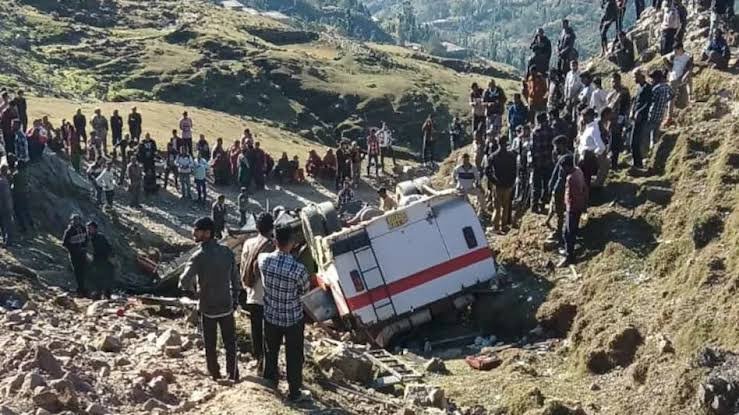
A devastating bus accident in Uttarakhand’s Tehri Garhwal district has once again highlighted the dangers of mountain road travel. Eight people were reported dead and 26 injured after a passenger bus plunged into a nearly 100-metre-deep gorge near Gular on November 17, raising questions about road safety, driver responsibility and emergency preparedness in India’s Himalayan regions.
Uttarakhand Bus Accident: What Happened Near Gular?
The Uttarakhand bus accident occurred near Gular Bazar in Tehri Garhwal district, along the Rishikesh-Badrinath highway, on Tuesday morning. The passenger bus was travelling from Haridwar towards the Badrinath region when it fell from a bridge into a deep gorge.
According to media reports, approximately 30 to 35 passengers were travelling in the vehicle. The bus plunged nearly 100 metres below the road, leaving several passengers trapped inside the damaged vehicle.
The accident triggered an emergency response involving the Uttarakhand Police and the State Disaster Response Force (SDRF). Rescue personnel reached the location and began evacuating injured passengers from the gorge.
Initial reports mentioned six fatalities and around 20 injured passengers. Subsequent updates reported that the death toll had increased to eight, with 26 people injured. The injured were transported to nearby medical facilities, including AIIMS Rishikesh, for treatment.
The difficult terrain made the rescue operation particularly challenging. Emergency personnel had to work in a steep area to reach passengers and bring them safely towards the road.
Rescue Operation Highlights Challenges in Himalayan Terrain
Rescue operations in mountainous regions are often considerably more complicated than those conducted on ordinary highways.
In the Gular accident, the bus fell into a gorge approximately 100 metres below the road. Reaching the vehicle required rescue teams to navigate difficult terrain while attending to injured passengers.
Teams from SDRF posts at Byasi and Dhalwala were deployed following information about the accident. Police personnel and emergency medical services also participated in the rescue effort.
The operation required coordination between different emergency agencies. Injured passengers had to be brought out of the gorge before being transported by ambulance for medical attention.
Such incidents demonstrate why emergency response infrastructure is particularly important in Uttarakhand. In remote mountain areas, the time required to reach an accident location can directly affect the availability of timely medical assistance.
The availability of trained rescue personnel, specialised equipment, ambulances and accessible medical facilities remains an important part of mountain road safety.
Why Mountain Roads in Uttarakhand Require Extra Caution
Uttarakhand has an extensive network of roads connecting towns, villages, pilgrimage destinations and remote settlements. These routes are essential for residents, tourists, transport workers and pilgrims.
However, driving through mountainous terrain involves risks that are different from those associated with travelling on flat highways.
Sharp turns, steep gradients, narrow road sections and changing weather conditions can make vehicle control difficult. In certain locations, roads run alongside deep valleys, leaving limited space for error if a vehicle loses control.
Visibility can also change quickly because of fog, rain and other weather conditions. Drivers unfamiliar with mountain routes may find it difficult to judge turns, slopes and road conditions.
Another concern is the condition of road infrastructure. Damaged road surfaces, inadequate protective barriers, poorly maintained drainage systems and insufficient warning signs can increase risks for motorists.
These challenges do not automatically establish the cause of the Gular accident. Investigators must determine the circumstances surrounding the crash before drawing conclusions about responsibility.
However, the incident reinforces the need for continuous safety assessments across frequently travelled mountain routes.
Driver Behaviour and Vehicle Maintenance Are Critical
Driver behaviour remains an important factor in road safety, particularly on mountain highways.
Speeding on narrow roads, sudden braking, unsafe overtaking and distracted driving can increase the possibility of accidents. Drivers need to adjust their speed according to road conditions rather than relying only on posted speed limits.
Long-distance journeys also require adequate rest. Fatigue can affect concentration, reaction time and decision-making, making it especially dangerous on routes involving sharp turns and steep slopes.
Commercial passenger vehicles require regular inspections to ensure that essential systems are functioning properly.
Important checks include:
- Brake performance and tyre condition.
- Steering systems and suspension.
- Headlights, indicators and warning lights.
- Vehicle fitness certificates and required permits.
- Passenger capacity and emergency equipment.
Transport authorities and operators also have a responsibility to ensure that vehicles are suitable for the routes on which they operate.
Until the official investigation establishes what caused the Gular accident, it would be premature to attribute the incident to speeding, mechanical failure or road conditions alone.
Mountain Road Infrastructure Needs Greater Attention
The accident has renewed attention on the infrastructure challenges faced by Himalayan states.
Mountain roads serve as essential connections for communities that depend on them for education, healthcare, employment and access to markets. They also support tourism and religious travel, particularly in Uttarakhand.
As traffic increases on important routes, road infrastructure must be assessed regularly to identify potential safety problems.
Protective crash barriers are particularly important along roads passing beside steep slopes and valleys. However, their installation must consider engineering standards, road geometry and the type of vehicles using the route.
Road maintenance is equally important. Damaged surfaces, loose material, poor drainage and unstable slopes can create additional hazards.
Authorities also need to pay attention to landslide-prone stretches and locations where road visibility is limited.
Safety improvements should not be restricted to major highways. Smaller connecting roads used by local residents also require regular inspections, maintenance and appropriate warning systems.
For people living in remote villages, these roads are often the only practical means of reaching essential services.
Emergency Medical Response Can Make a Difference
The difficulty of reaching accident locations in mountainous regions makes emergency medical preparedness particularly important.
Even when rescue teams reach a crash site quickly, transporting injured passengers to hospitals can take additional time because of narrow roads, steep terrain and long distances.
District-level emergency planning should account for these geographical challenges.
This includes maintaining functional ambulance networks, improving communication between emergency agencies and ensuring that hospitals along major routes have arrangements for handling road accident victims.
The availability of trained first responders in remote areas can also help provide initial assistance before specialised medical teams arrive.
Public awareness is another important part of emergency preparedness. Drivers, transport operators and local communities should know how to report accidents and provide basic assistance without putting themselves at additional risk.
The Gular accident demonstrates the importance of coordination between police, disaster response teams and healthcare facilities.
What Can Be Done to Improve Road Safety in Hill States?
Preventing mountain road accidents requires a combination of better infrastructure, responsible driving and effective enforcement.
First, authorities should conduct regular safety audits of accident-prone road sections. These assessments can help identify dangerous turns, damaged barriers, poor visibility and other infrastructure-related concerns.
Second, commercial vehicle operators should follow strict maintenance schedules. Vehicles travelling on steep mountain routes need properly functioning brakes, tyres and steering systems.
Third, driver training should include practical instruction on navigating mountain roads. Driving on steep gradients and narrow bends requires different skills from travelling on straight highways.
Fourth, traffic regulations must be enforced consistently. Overspeeding, overloading and unsafe driving practices should be addressed through inspections and appropriate penalties.
Finally, emergency response systems should be strengthened in remote districts. Better communication networks, trained rescue teams and accessible medical facilities can improve the response to serious accidents.
These measures require coordination between state transport departments, road authorities, police, vehicle operators and local administrations.
Takeaways
- Eight people were reported dead and 26 injured after a passenger bus fell into a nearly 100-metre-deep gorge near Gular in Uttarakhand’s Tehri Garhwal district.
- The accident occurred along the Rishikesh-Badrinath highway on November 17, 2026.
- SDRF teams, police personnel and medical services participated in the rescue operation.
- The incident highlights the importance of safer mountain roads, responsible driving, vehicle maintenance and emergency preparedness.
Frequently Asked Questions
1. Where did the Uttarakhand bus accident take place?
The accident occurred near Gular Bazar in Tehri Garhwal district, along the Rishikesh-Badrinath highway in Uttarakhand.
2. How many people died in the Uttarakhand bus accident?
Later reports on November 17, 2026, put the death toll at eight, with 26 people injured. Earlier reports had mentioned six deaths, and casualty figures were updated as rescue operations progressed.
3. What caused the Uttarakhand bus accident?
The exact cause had not been officially established in the initial reports. The circumstances surrounding the crash require investigation before any conclusion can be drawn about driver behaviour, mechanical failure or road conditions.
4. Why are mountain roads considered dangerous?
Mountain roads often involve sharp turns, steep slopes, narrow passages and changing weather conditions. Limited protective infrastructure and difficult access for emergency services can also increase the risks associated with accidents.









Leave a comment