

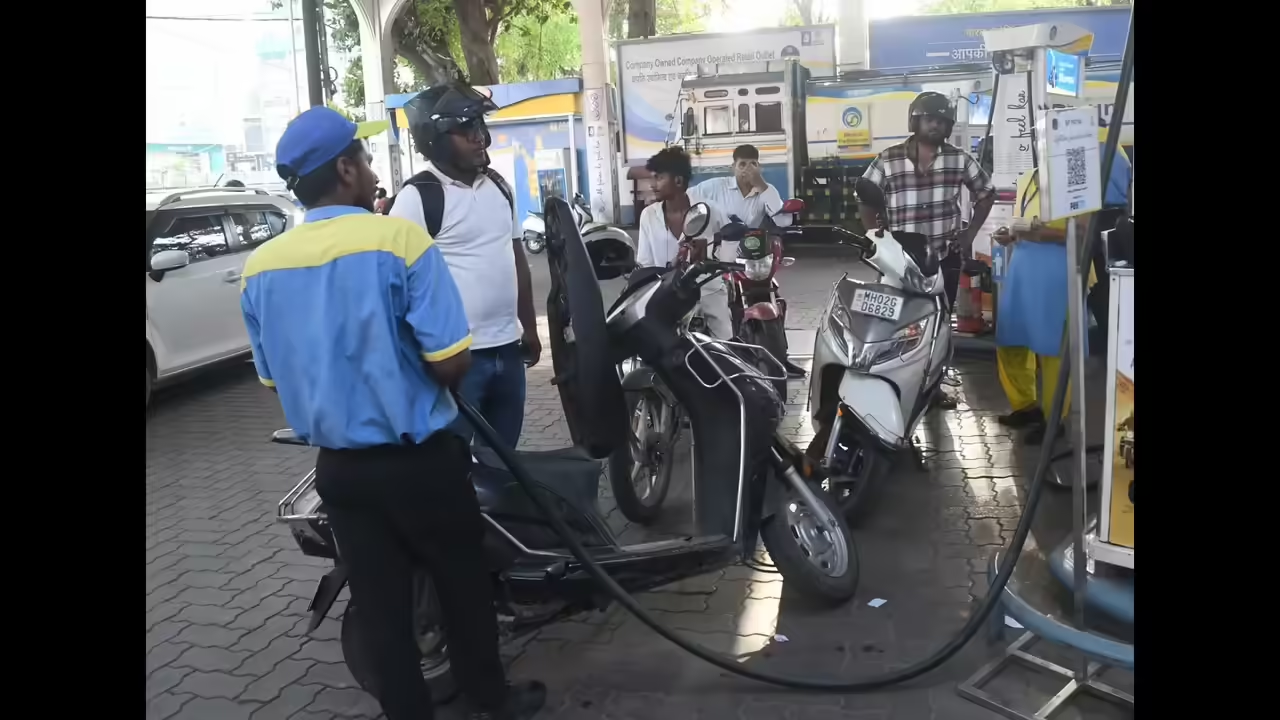
Fuel price hikes in India are creating a bigger burden for daily commuters living in Tier-2 cities than for many metro residents. Rising petrol and diesel costs are affecting office workers, students, delivery riders, small traders and transport operators who depend heavily on personal vehicles due to limited public transport systems.
Fuel prices have once again become a major concern for middle-class households across India. While metro cities have access to metro rail networks, local trains and app-based mobility alternatives, commuters in Tier-2 cities often rely on motorcycles, scooters and private vehicles for daily travel. This growing dependence means even small fuel price increases directly affect monthly budgets.
Why Tier-2 Cities Feel the Impact More
The effect of fuel price hikes is more visible in cities like Nagpur, Nashik, Indore, Ranchi, Jaipur, Surat and Kanpur because public transportation options remain limited or inconsistent. Many residents travel 15 to 30 kilometers daily for work, education or business activities.
In metropolitan cities such as Mumbai or Delhi, commuters can switch to metro services, suburban rail or shared public transport. However, in smaller cities, people often have no practical alternative to two-wheelers.
Motorcycles remain the most common commuting vehicle in Tier-2 India due to affordability and convenience. When petrol prices rise repeatedly within short periods, families begin adjusting expenses in other areas including food, entertainment and savings.
Auto-rickshaw drivers and cab operators are also facing higher operating costs. Many report reduced earnings because passengers resist fare increases even when fuel expenses rise sharply.
Rising Daily Costs Are Affecting Household Budgets
For salaried workers in Tier-2 cities, commuting expenses now consume a larger share of monthly income than before. A worker traveling 20 kilometers daily on a motorcycle may spend several hundred rupees more every month compared to last year.
This becomes especially difficult for households already dealing with inflation in groceries, electricity bills and school expenses. Families in smaller cities generally have lower average salaries compared to metro regions, making fuel inflation harder to absorb.
Delivery executives working for food and e-commerce platforms are among the worst affected groups. Many riders in non-metro cities depend entirely on fuel-powered vehicles for earnings. Higher petrol prices reduce take-home income unless companies revise incentives or delivery charges.
Small business owners are also feeling pressure. Traders transporting goods locally face higher logistics costs, which can eventually increase prices for consumers as well.
Public Transport Infrastructure Remains a Challenge
One major reason Tier-2 commuters are struggling is the lack of strong public transport infrastructure. Several Indian cities have expanded smart city projects and electric bus systems, but adoption remains uneven.
Bus frequency in many cities is still unreliable, particularly during early morning and late evening hours. Shared transport systems are often overcrowded or unavailable in developing suburban areas.
Urban expansion has further increased travel distances. Many affordable housing projects are located on city outskirts where metro rail networks do not exist. Residents living in these areas have little choice except private commuting.
Experts believe better urban planning and stronger investment in local transport systems could reduce fuel dependency in smaller cities over the long term.
Electric Vehicles Are Growing, But Slowly
Electric scooters and EV adoption are increasing in India, but affordability remains a challenge for many middle-income families. Although EV running costs are lower, the higher upfront price discourages first-time buyers in smaller cities.
Charging infrastructure is another concern. Metro cities have faster EV ecosystem growth due to better charging availability and stronger government-backed pilot projects.
In Tier-2 regions, many consumers are still uncertain about battery life, servicing networks and resale value. As a result, petrol-powered two-wheelers continue dominating the market despite rising fuel costs.
Government subsidies under EV promotion schemes have helped boost awareness, but experts say broader infrastructure support is needed before EVs become a practical mass solution for daily commuters outside metros.
Fuel Prices and the Wider Economic Effect
Fuel prices influence more than just transport costs. Higher petrol and diesel rates affect food transportation, public bus operations, cab fares and delivery charges across cities.
When transportation costs rise, local businesses may increase product prices to maintain profit margins. This creates a wider inflationary cycle that impacts ordinary consumers.
Economists often point out that fuel price sensitivity is stronger in smaller cities because households allocate a higher percentage of income toward transportation and essential expenses.
As India’s urban population continues expanding beyond metro cities, the demand for affordable and reliable commuting options is expected to become an even larger policy issue in the coming years.
Key Takeaways
- Tier-2 city residents depend more on private vehicles due to weaker public transport systems
- Fuel price hikes are reducing disposable income for middle-class households
- Delivery riders, auto drivers and small businesses face rising operational pressure
- Electric vehicles may help in the future, but affordability and charging access remain barriers
FAQ
Why are fuel price hikes affecting Tier-2 cities more than metros?
Tier-2 cities often lack strong metro rail and public transport systems, forcing residents to rely heavily on personal vehicles for daily travel.
Which groups are most affected by rising fuel prices?
Daily office commuters, delivery workers, auto-rickshaw drivers, cab operators and small business owners are among the most affected groups.
Can electric vehicles reduce commuting costs?
Yes, EVs generally have lower running costs compared to petrol vehicles. However, higher purchase prices and limited charging infrastructure remain challenges in smaller cities.
How do fuel prices affect the overall economy?
Higher fuel prices increase transportation and logistics costs, which can eventually raise prices for food, services and consumer goods.










Leave a comment