

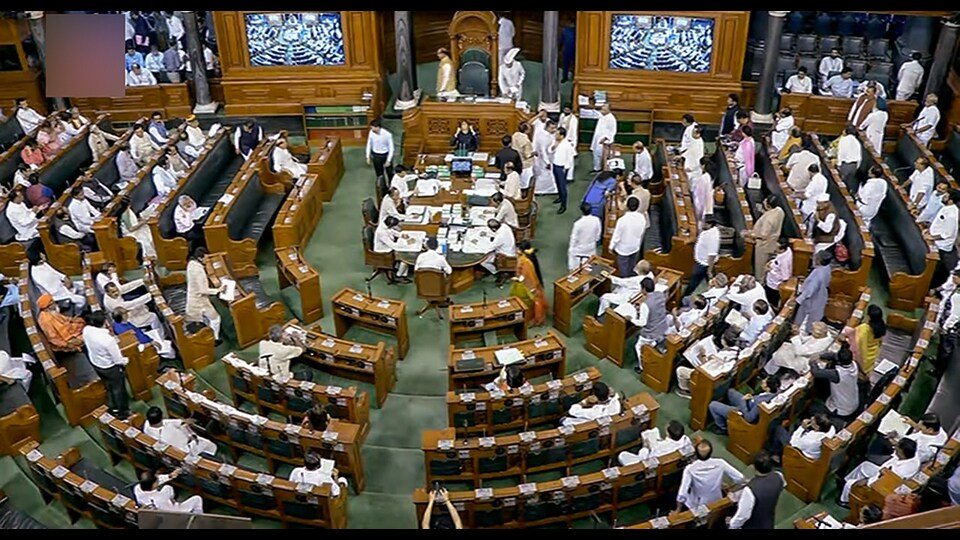
India’s Monsoon Session of Parliament has witnessed repeated disruptions, delaying discussions on several important bills. While political protests have dominated proceedings, legislation affecting taxation, MSMEs, higher education, foreign funding, and judicial reforms is still awaiting debate and passage.
The Parliament disruptions during the Monsoon Session have once again shifted attention from legislative business to political confrontation. Since the session began on July 20, repeated adjournments in both the Lok Sabha and Rajya Sabha have limited parliamentary work as opposition parties protested over issues including the NEET paper leak and related developments. As a result, several important government bills remain pending, delaying reforms that could affect businesses, educational institutions, courts, and citizens.
The Monsoon Session is scheduled to continue until August 13, giving Parliament time to consider pending legislation. However, the pace of lawmaking will depend on whether normal proceedings resume.
Why Parliament Is Facing Repeated Disruptions
Parliamentary disruptions occur when protests, slogan shouting, walkouts, or procedural disagreements prevent normal legislative business from taking place. During the current session, opposition parties have demanded discussions on the NEET controversy and other political issues, leading to repeated adjournments of both Houses.
When Parliament cannot function, debates on bills, Question Hour, Zero Hour, and committee-related business are delayed. Although disruptions are a recurring feature of Indian parliamentary politics, prolonged interruptions often slow the passage of legislation and reduce the time available for detailed scrutiny of proposed laws.
According to the legislative agenda released for the Monsoon Session, Parliament has a substantial workload, with multiple new bills scheduled for introduction and several pending bills awaiting consideration and passage.
Income Tax and MSME Bills Top the Government’s Agenda
Among the most significant pending proposals is the Income-tax (Amendment) Bill, 2026, which seeks to replace an ordinance and make changes related to taxation of certain investments, including government securities.
Another closely watched proposal is the Micro, Small and Medium Enterprises Development (Amendment) Bill, 2026. The bill aims to strengthen mechanisms for addressing delayed payments to MSMEs and improve enforcement of arbitral awards. These changes are particularly important for India’s small businesses, many of which operate in Tier-2 and Tier-3 cities where delayed payments often affect cash flow and business expansion.
If passed, these measures could influence business confidence, investment, and the ease of doing business for smaller enterprises across the country.
Higher Education, Foreign Funding and Judicial Reforms Await Debate
The government’s legislative agenda also includes the Viksit Bharat Shiksha Adhishthan Bill, which proposes reforms related to higher education governance.
Another major proposal is the Foreign Contribution (Regulation) Amendment Bill, 2026, which seeks to amend provisions governing foreign funding received by eligible organisations. The bill is expected to generate extensive parliamentary debate because of its implications for regulatory oversight and compliance.
Parliament is also expected to consider the Supreme Court (Number of Judges) Amendment Bill, 2026, which would increase the sanctioned strength of judges in the Supreme Court. Supporters argue that expanding judicial capacity could help reduce case backlogs and improve the speed of justice.
Why Delayed Legislation Matters
For many citizens, parliamentary disruptions may appear to be political events with limited day-to-day impact. However, delays in passing legislation can postpone reforms affecting taxation, education, business regulation, judicial administration, and governance.
Small business owners waiting for improved MSME payment mechanisms, educational institutions preparing for policy changes, and organisations monitoring regulatory amendments all depend on timely legislative action.
Policy experts also point out that fewer productive sittings reduce opportunities for detailed discussion and parliamentary oversight. Bills introduced without sufficient debate may face criticism, while extended delays can postpone reforms that various sectors are anticipating.
What Happens Next in the Monsoon Session?
The Monsoon Session is scheduled for 19 sittings between July 20 and August 13. Parliamentary business can still recover if both the government and opposition agree to resume normal proceedings and allocate adequate time for debate.
Several pending bills remain listed for consideration, while additional legislation may also be introduced during the remaining sittings. Parliamentary committees and floor discussions will continue to play an important role in examining the proposed laws before final approval.
As political disagreements continue, the coming weeks will determine whether Parliament can complete its legislative agenda or whether some bills will be carried forward to future sessions.
Key Takeaways
- Repeated disruptions have delayed legislative work during the Monsoon Session of Parliament.
- Important pending bills relate to income tax, MSMEs, higher education, foreign contributions, and judicial reforms.
- Delayed passage of legislation can affect businesses, educational institutions, and governance.
- Parliament has additional sittings remaining, providing an opportunity to clear the pending legislative agenda.
FAQ
Q1. Why is Parliament being disrupted during the current session?
Opposition protests over issues including the NEET controversy and other political matters have led to repeated adjournments in both Houses.
Q2. Which important bills are currently pending?
Key pending legislation includes the Income-tax (Amendment) Bill, the MSME Development (Amendment) Bill, the Foreign Contribution (Regulation) Amendment Bill, the Viksit Bharat Shiksha Adhishthan Bill, and the Supreme Court (Number of Judges) Amendment Bill.
Q3. How do parliamentary disruptions affect ordinary citizens?
Delays in passing legislation can postpone reforms related to taxation, businesses, education, judicial administration, and public policy that directly or indirectly affect citizens.
Q4. Can the pending bills still be passed during this session?
Yes. The Monsoon Session continues until August 13, and Parliament can still debate and pass pending legislation if proceedings function normally.









Leave a comment