

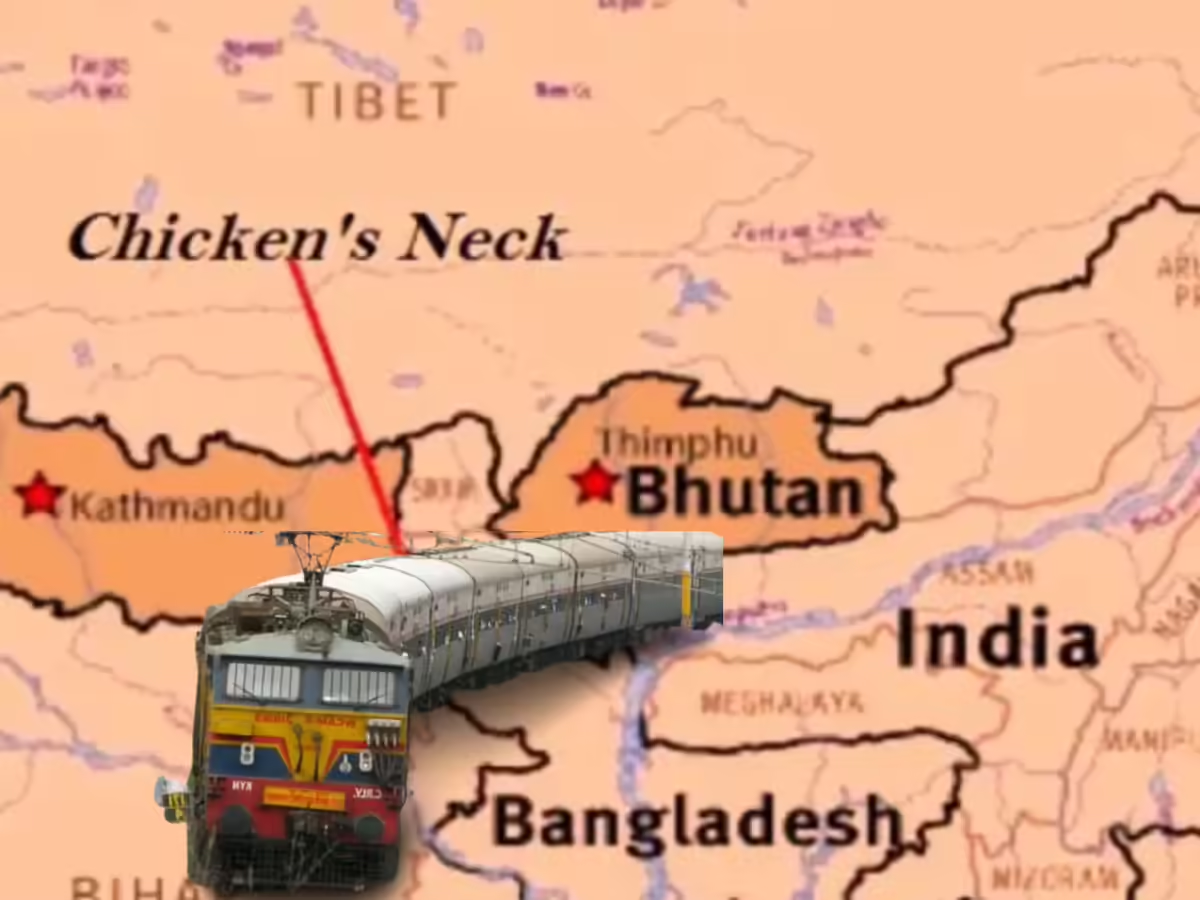
Railway upgrades across India are reshaping travel for millions living in Tier 2 and Tier 3 cities. Faster trains, modern stations, better connectivity, digital services, and improved passenger facilities are reducing travel time while supporting local economies, tourism, education, and business growth.
India’s railway upgrades in smaller cities are changing how people travel, work, and connect with the rest of the country. Over the past few years, Indian Railways has accelerated station redevelopment, track modernization, electrification, signaling improvements, and the introduction of faster trains. These developments are particularly significant for Tier 2 and Tier 3 cities, where rail transport remains the most affordable and widely used mode of long-distance travel. Better infrastructure is improving passenger experience while opening new opportunities for regional economic development.
Modern Railway Stations Are Changing the Passenger Experience
One of the most visible changes is the redevelopment of railway stations across smaller cities. Under various modernization initiatives, many stations are being upgraded with improved waiting areas, digital information displays, better lighting, escalators, lifts, clean restrooms, food courts, and enhanced accessibility for senior citizens and persons with disabilities.
Cities such as Nagpur, Bhopal, Vijayawada, Hubballi, Gwalior, Udaipur, Gorakhpur, and several others are witnessing large-scale improvements. These projects aim to transform railway stations into modern transport hubs rather than simply boarding points. Passengers now spend less time navigating stations and benefit from better safety, convenience, and comfort.
The redevelopment also encourages commercial activity around stations, creating opportunities for retail businesses, hotels, restaurants, and local transport operators.
Faster Trains and Better Connectivity Reduce Travel Time
Railway infrastructure improvements are making journeys quicker and more reliable. Continuous track renewal, automatic signaling systems, elimination of level crossings through overbridges and underpasses, and widespread route electrification have enabled trains to maintain higher average speeds.
Semi high-speed services such as Vande Bharat Express have demonstrated how modern rolling stock can significantly reduce travel time between important cities. Although these trains initially focused on major routes, their gradual expansion toward regional corridors is improving connectivity for passengers outside metropolitan areas.
Faster travel benefits students commuting to educational institutions, professionals attending business meetings, medical patients seeking specialized treatment, and tourists visiting regional destinations. Reduced travel time also increases productivity by allowing people to complete same-day business trips that previously required overnight travel.
Railway Electrification Supports Efficient and Sustainable Operations
Electrification has become one of the biggest transformations within Indian Railways. Thousands of route kilometers have shifted from diesel to electric traction, improving operational efficiency while reducing fuel costs and emissions.
For passengers, electrified routes often mean smoother acceleration, more reliable schedules, and reduced maintenance-related disruptions. Electric locomotives also support higher hauling capacity for both passenger and freight trains.
Smaller cities connected through fully electrified corridors benefit from improved punctuality and expanded train operations. Freight movement also becomes more efficient, helping industries transport raw materials and finished products at lower operating costs.
Digital Services Make Railway Travel Easier
Technology has simplified nearly every stage of railway travel. Online ticket booking, digital payment options, live train tracking, QR-based services, electronic reservation charts, and real-time platform updates have become increasingly common.
Passengers no longer need to rely solely on physical inquiry counters. Mobile applications allow travellers to check schedules, monitor train status, order food during journeys, and receive instant travel notifications.
Many stations have also expanded free Wi-Fi services, helping passengers stay connected while waiting for trains. These digital upgrades are particularly valuable in smaller cities where access to reliable transport information was previously limited.
Railway Growth Is Supporting Local Economies
Improved railway connectivity often produces economic benefits beyond transportation. Better access encourages tourism, attracts investment, supports manufacturing, and improves logistics for local businesses.
Small entrepreneurs gain access to larger markets, while farmers can transport agricultural produce more efficiently. Hotels, restaurants, taxi operators, and local shops also experience increased customer traffic as passenger movement grows.
Improved rail links encourage companies to consider smaller cities for new industrial projects because transportation costs become more predictable and supply chains operate more efficiently.
Educational institutions and healthcare facilities also benefit when students and patients can travel more comfortably from neighboring districts.
Safety Improvements Are Becoming a Major Priority
Passenger safety has become an important focus of railway modernization. Indian Railways has expanded the use of advanced signaling technologies, track monitoring systems, surveillance cameras, fire safety measures, and improved maintenance practices.
Several routes now use automatic signaling systems that help regulate train movement more efficiently while reducing the possibility of human error. Track inspections increasingly rely on modern technology capable of detecting defects before they become serious problems.
Station security has also improved through CCTV surveillance, better lighting, integrated control rooms, and enhanced passenger information systems. These measures contribute to safer travel experiences for millions of daily passengers.
What Lies Ahead for Smaller Indian Cities
Railway modernization is expected to continue over the coming years through station redevelopment, expansion of high-speed corridors, additional electrification, dedicated freight infrastructure, and wider adoption of digital technologies.
For Tier 2 and Tier 3 cities, these developments represent more than infrastructure improvements. Better railway connectivity strengthens regional integration, creates employment opportunities, supports tourism, and improves access to education, healthcare, and business opportunities.
As India’s economy expands beyond metropolitan centres, an efficient railway network will remain one of the country’s strongest drivers of inclusive regional growth.
Takeaways
- Modern railway stations are improving passenger comfort, accessibility, and convenience in smaller cities.
- Electrification, upgraded tracks, and better signaling are reducing travel time and improving reliability.
- Digital railway services have simplified ticket booking, journey planning, and passenger information.
- Stronger rail connectivity supports tourism, local businesses, education, healthcare, and regional economic development.
Frequently Asked Questions
1. Why are railway upgrades important for Tier 2 and Tier 3 cities?
They improve connectivity, reduce travel time, increase economic opportunities, strengthen tourism, and make transportation more accessible for residents.
2. How does railway electrification benefit passengers?
Electrified routes generally provide smoother operations, improved punctuality, lower emissions, reduced fuel dependence, and more efficient train services.
3. What facilities are being added to modern railway stations?
Many redeveloped stations include escalators, elevators, improved waiting halls, digital displays, clean washrooms, better accessibility features, food courts, and enhanced security systems.
4. How do railway upgrades support local businesses?
Improved connectivity increases passenger movement, simplifies freight transportation, attracts investment, promotes tourism, and expands market access for businesses and farmers.
(Internal keyword suggestions: railway upgrades in India, Indian Railways modernization, Tier 2 cities railway development, station redevelopment India, railway electrification, Vande Bharat connectivity, railway infrastructure India, railway travel in smaller cities, smart railway stations, regional connectivity India)






Leave a comment