

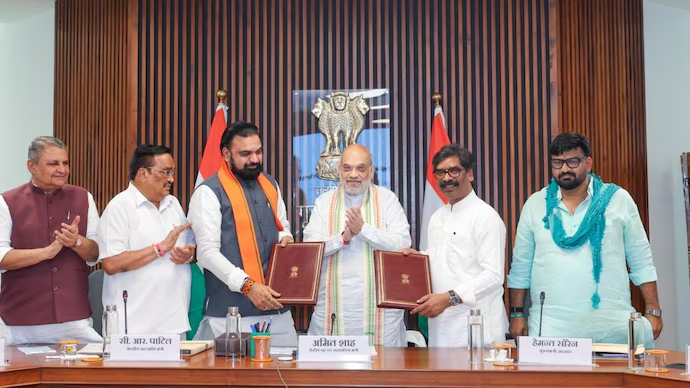
Bihar and Jharkhand have signed a Sone River water-sharing agreement, ending a 25-year dispute over the river’s allocation. The pact is expected to improve irrigation and drinking water access across several drought-prone and rural districts in both states.
Sone River water pact ends a 25-year dispute
The Bihar Jharkhand Sone water pact marks the settlement of a dispute that continued for 25 years after Jharkhand was carved out of Bihar in 2000. The Memorandum of Understanding was signed on August 31, 2026, by Bihar Chief Minister Samrat Choudhary and Jharkhand Chief Minister Hemant Soren in New Delhi.
Union Home Minister Amit Shah and Union Jal Shakti Minister C R Patil were present during the signing. The agreement formalises how the two states will share the Sone River water that had earlier been allocated to undivided Bihar under the 1973 Bansagar Agreement.
Under the settlement, Bihar will receive 5.75 million acre-feet (MAF) of Sone water, while Jharkhand will receive 2 MAF. The total corresponds to the 7.75 MAF allocation that had earlier been assigned to undivided Bihar.
The agreement is therefore not simply about creating a new water allocation. It formally divides the earlier allocation between the two states and attempts to settle a dispute that had remained unresolved for decades.
What the Bihar Jharkhand water agreement changes
The biggest immediate significance of the pact is greater clarity over water allocation.
Inter-state river disputes can affect planning for irrigation, drinking water projects and other water infrastructure because states need predictable access to river resources. The new arrangement gives Bihar and Jharkhand a formally agreed framework for the distribution of the Sone water covered by the pact.
According to the Union Home Ministry, the agreement is expected to provide irrigation water to lakhs of farmers across large rural areas of both states, while also supporting drinking-water requirements.
In Bihar, the areas specifically identified in the government’s statement include Bhojpur, Buxar, Rohtas, Kaimur, Aurangabad, Arwal, Gaya and Patna. In Jharkhand, Palamu, Garhwa and other regions are expected to benefit from the availability of Sone water for irrigation and drinking purposes.
That geographical spread makes the pact particularly important for rural communities where agriculture remains closely dependent on reliable water availability.
Why the pact matters for farmers
For farmers, the most important issue is not the agreement itself but whether it eventually translates into more dependable irrigation.
Agricultural production can become vulnerable when rainfall is irregular or when irrigation systems cannot provide sufficient water at the right time. A predictable allocation from a major river can help governments plan canals, reservoirs and distribution networks more effectively.
The Sone basin is particularly relevant to agriculture in parts of south-western Bihar and adjoining areas of Jharkhand. Several districts that have been identified as beneficiaries include areas where irrigation and water availability are important to rural livelihoods.
However, the agreement should not be interpreted as an immediate guarantee that every farmer will receive more water. Actual benefits will depend on how the agreed allocation is managed, how existing irrigation infrastructure performs and whether new or pending water projects receive the required approvals and funding.
This distinction is important because a water-sharing agreement establishes the allocation framework, while infrastructure determines how efficiently that water reaches farms.
Drinking water is another major concern
The Bihar Jharkhand water pact also has significance beyond agriculture.
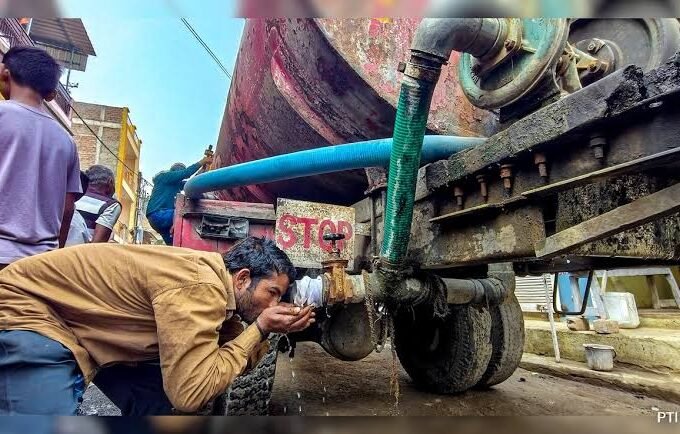
The Union government has said that the agreement will help provide drinking water to people across rural areas of both states. This is particularly relevant in regions where seasonal water shortages can affect households as well as farms.
In Bihar, the government has recently highlighted several water-related projects involving the Sone and other rivers. On August 31, Chief Minister Samrat Choudhary also sought faster approval and central assistance for pending irrigation and flood-management projects. The proposals discussed included the Indrapuri reservoir project and the Sone-Falgu river link project.
The Sone agreement could therefore become one part of a broader water-management strategy rather than a standalone solution.
For residents, the real test will be whether improved inter-state coordination is followed by better local distribution and reliable drinking-water infrastructure.
Gaya and the wider Sone water network
Gaya is another important part of the wider water-security discussion in Bihar.
Chief Minister Samrat Choudhary recently said the proposed linkage of the Falgu River with the Sone would help address Gaya’s longstanding water shortage. The government has said the proposed project is intended to improve water availability for the region.
This shows why the Sone River agreement needs to be viewed alongside other water projects.
A river-sharing pact can settle the question of how much water each state is entitled to receive, but regional water security depends on a much larger system involving reservoirs, canals, river links, groundwater, rainfall and distribution networks.
For drought-prone areas, the effectiveness of the new agreement will ultimately depend on how these systems work together.
Why the 1973 Bansagar Agreement matters
The background to the current pact goes back more than five decades.
The 1973 Bansagar Agreement established the allocation of Sone River water to the states that were part of the arrangement. When Jharkhand was created from Bihar in 2000, questions arose over how the water allocation of undivided Bihar should be divided between the successor states.
That issue remained unresolved for 25 years.
The current agreement settles the division of the 7.75 MAF allocation between Bihar and Jharkhand, with 5.75 MAF going to Bihar and 2 MAF to Jharkhand.
This historical context explains why the agreement has been described by the Centre as a significant inter-state water settlement.
It also illustrates a recurring challenge in Indian water governance. When states are reorganised or new demands emerge, older water-sharing arrangements can require fresh negotiations.
What the pact means for Jharkhand
Jharkhand’s allocation of 2 MAF gives the state a defined share of the Sone water covered by the agreement.
The benefits are expected to be particularly relevant in Palamu, Garhwa and other areas where irrigation and drinking-water availability are important concerns. The Union government has said the agreement will support both agricultural and domestic water needs in these regions.
For Jharkhand, the agreement could also provide greater certainty for future planning.
Water availability is becoming increasingly important as states balance agricultural requirements, drinking water, industrial needs and changing rainfall patterns. A formal inter-state arrangement can reduce uncertainty and create a clearer basis for future water infrastructure.
At the same time, Jharkhand’s actual gains will depend on how its share is utilised and distributed within the state.
A test of cooperative water management
The Sone agreement is also being presented as an example of cooperative federalism.
The Centre has said that the settlement demonstrates how long-running inter-state disputes can be addressed through negotiations rather than prolonged confrontation. The Ministry of Home Affairs noted that several water-related agreements involving states have been pursued through the Inter-State Council mechanism this year.
That broader significance matters because India has several inter-state river disputes involving competing agricultural, drinking-water and developmental requirements.
The Sone settlement does not automatically provide a model for every dispute. Each river system has different hydrology, existing agreements, infrastructure and political interests. But the agreement shows that prolonged disputes can eventually be resolved when states agree on a formal allocation framework.
For Bihar and Jharkhand, the next challenge is implementation.
What happens next for farmers and water security
The signing of the pact is an important first step, but the benefits will depend on what happens after the agreement.
Governments will need to translate the agreed allocations into effective water management and distribution. Irrigation networks, reservoirs, canals and other infrastructure will determine whether farmers can actually access the water allocated on paper.
Monitoring will also matter, particularly during years of weak rainfall or high demand.
For farmers, the most meaningful outcome would be more reliable irrigation during critical agricultural periods. For households, it would mean better access to drinking water. For both states, it could provide greater certainty when planning long-term water projects.
The Bihar Jharkhand Sone water pact therefore ends one chapter of a long dispute, but it begins another phase focused on implementation.
Key Takeaways
- Bihar and Jharkhand signed a Sone River water-sharing MoU on August 31, 2026, ending a 25-year dispute.
- Bihar will receive 5.75 MAF of the earlier 7.75 MAF allocation, while Jharkhand will receive 2 MAF.
- The agreement is expected to support irrigation and drinking-water requirements across several rural districts.
- The actual benefit for farmers will depend on irrigation infrastructure, water management and implementation of the agreed allocation.
FAQs
What is the Bihar Jharkhand Sone water pact?
It is a Memorandum of Understanding that formally divides the Sone River water allocation of undivided Bihar between Bihar and Jharkhand, resolving a dispute that continued after Jharkhand was created in 2000.
How much Sone River water will Bihar receive?
Under the agreement, Bihar will receive 5.75 million acre-feet of Sone River water.
How much Sone River water will Jharkhand receive?
Jharkhand will receive 2 million acre-feet under the new water-sharing arrangement. Together, the two allocations account for the earlier 7.75 MAF allocation to undivided Bihar.
Will farmers immediately get more irrigation water?
Not necessarily. The agreement establishes the water-sharing arrangement, but the actual availability of irrigation water will depend on infrastructure, distribution systems, project implementation, rainfall and local water management.










Leave a comment