

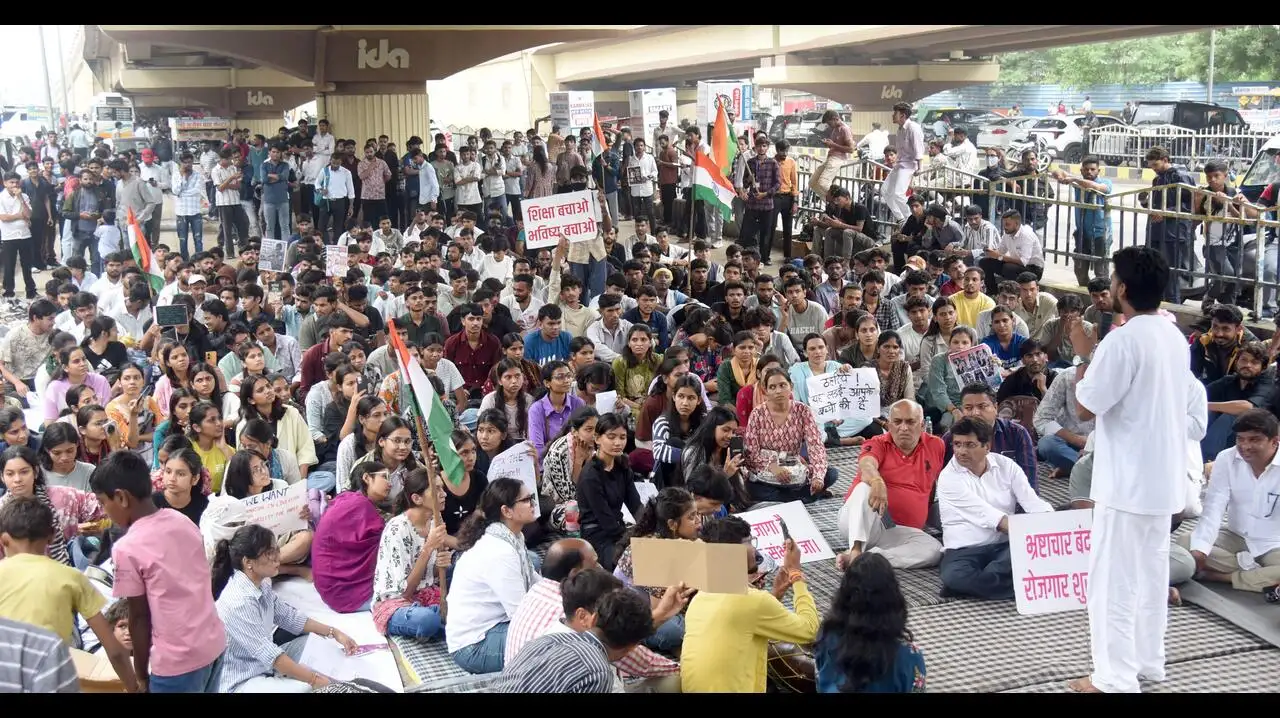
Indore is emerging as an important centre of student politics in Madhya Pradesh as student union elections return after years, campus protests intensify and political organisations increase their outreach. Education, representation, jobs and examination issues are becoming central to the renewed focus on young voters.
Why Indore is attracting political attention
Indore has become a significant focus of youth politics in Madhya Pradesh as student organisations and political parties step up engagement with young people. The timing is important because student union elections are set to return in the state in September 2026 after a long gap.
The Madhya Pradesh High Court has directed the Higher Education Department to conduct student union elections in the state’s 15 government universities in September, based on the academic calendar submitted by the government. Student elections had not been held in the state for several years, with the last widely cited elections taking place in 2017.
For Indore, the development carries particular significance. The city has a large student population and is home to major educational institutions, coaching centres and universities. Devi Ahilya Vishwavidyalaya, commonly known as DAVV, is one of the key institutions in the city’s higher education ecosystem.
The return of elections creates an opportunity for student organisations to rebuild their presence on campuses and compete for influence among a new generation of students.
Student union elections return after a long gap
The upcoming Madhya Pradesh student union elections are not simply another campus event. They mark the revival of an electoral process that has been absent for years.
According to The Indian Express, political organisations are already preparing for the elections through student meetings, motorcycle rallies and membership drives. The report also noted that the elections are the first in Madhya Pradesh since 2017.
The prolonged absence of elected student bodies has meant that students have often relied on university administrations, student organisations and individual representations to raise campus-related concerns.
The return of elections could change that dynamic by giving students a formal electoral mechanism to choose representatives.
It also gives student organisations such as the Akhil Bharatiya Vidyarthi Parishad and the National Students’ Union of India an opportunity to strengthen their campus networks.
Indore’s recent protests show student issues are already political
The renewed attention to student politics comes after a period of visible student mobilisation in Indore.
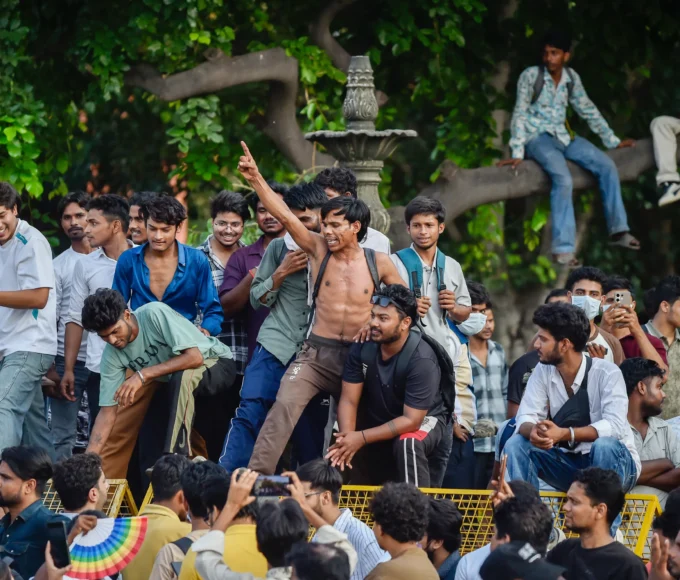
In July, a large protest linked to allegations surrounding the NEET examination drew thousands of students, teachers, parents and residents to the Tantya Bhil Square area. The Times of India reported that organisers estimated more than 5,000 people had gathered during one stage of the demonstration. The protest focused on demands for action over the alleged examination irregularities and broader concerns surrounding competitive examinations.
The episode showed that student concerns can quickly move beyond college campuses and become wider public issues.
There have also been smaller, more localised examples. In August, around 70 to 80 students from Devguradia staged a sit-in outside the Indore collector’s office seeking a bus service to Government Higher Secondary School in Kampel. Students said earlier assurances had not resolved the transport problem.
These examples point to a broader pattern. For many young people, politics is increasingly connected to practical issues such as examination systems, transport, college facilities, employment and access to education.
Political groups are looking at students differently
The renewed student election cycle is also significant for political organisations because campus politics has traditionally served as a training ground for future political workers.
The ABVP and NSUI have historically been among the most prominent student organisations in Indian campus politics. Their competition often reflects wider political differences between the BJP and Congress ecosystems, although student organisations have their own campus-level priorities and structures.
In Madhya Pradesh, the election schedule has created an immediate reason for these organisations to expand membership campaigns and connect with students.
The Indian Express reported that ABVP protests were held across Madhya Pradesh over basic facilities in educational institutions. In Indore, protesters broke through police barricades outside the District Collector’s office while demanding attention to issues affecting government colleges.
The timing of such activity matters. With student elections approaching, issues that directly affect campus life can become central to organisational campaigns.
Rahul Gandhi’s student outreach adds another layer
Indore’s importance is not limited to campus organisations.
Congress leader and Leader of Opposition in the Lok Sabha Rahul Gandhi’s student-focused Chhatron Ki Goonj campaign is also expected to reach Indore. Current reports say Gandhi is scheduled to hold an event in the city on September 12 as part of the campaign.
The campaign has focused on concerns affecting students and young people, including examination-related issues and employment.
Bringing such an initiative to Indore is politically notable because the city is both an education hub and an important urban centre in Madhya Pradesh. It provides a large pool of students and young professionals who are exposed to national political debates as well as local civic problems.
However, an outreach event by itself does not establish that political preferences among Indore’s students are changing. Its significance will ultimately depend on whether students engage with the issues being raised and whether organisations can translate that engagement into sustained campus support.
Why education issues matter to young voters
Student politics has traditionally focused on campus facilities, fees, examinations and representation. Those issues remain relevant, but the concerns of today’s students extend well beyond university gates.
Competitive examination uncertainty, employment opportunities, skill development, affordable education and access to public services are closely linked to the future prospects of young Indians.
That makes education a politically important subject even for students who may not participate directly in campus elections.
The recent student protests in Indore illustrate this connection. The NEET-related mobilisation was not only about one examination. It reflected anxiety among students and families about the reliability of competitive examinations and the consequences of disruptions in the admissions process.
At the same time, the demand for bus connectivity from Devguradia students demonstrates how ordinary infrastructure can become a political issue when it directly affects access to education.
What could decide the campus contest
The biggest question is whether student organisations can convert national political narratives into issues that matter locally.
Students are likely to evaluate organisations on a combination of factors, including campus facilities, examinations, university administration, employment prospects and representation.
The digital environment will also play an important role. Students increasingly discover political information through social media, short videos and online discussions. This can allow smaller campaigns to gain visibility quickly, but it can also make political debate more vulnerable to misinformation and polarisation.
For organisations competing in Indore, maintaining a visible campus presence may therefore be only one part of the strategy. Consistent engagement with student concerns could prove more important over time.
Indore could become a test for youth politics
The return of student elections gives Madhya Pradesh a chance to observe how a new generation responds to organised campus politics after years without formal elections.
Indore could be particularly important because of its large educational ecosystem and recent history of student mobilisation.
But it would be premature to describe the city as having already shifted politically. The current evidence shows increased activity, not a confirmed change in electoral preferences.
What is clear is that students are once again becoming a visible constituency in Madhya Pradesh’s political conversation. The coming weeks will show whether this renewed attention produces lasting student organisations, issue-based campaigns or simply a short-term election cycle.
For Indore’s young population, the more important test may be whether political outreach leads to concrete attention to the issues students have been raising for years.
Key Takeaways
- Madhya Pradesh is preparing to hold student union elections in September 2026 after a prolonged gap.
- Indore has seen significant student mobilisation around examination issues, education and local infrastructure.
- ABVP, NSUI and political leaders are increasing their engagement with students ahead of the campus election cycle.
- The renewed activity does not yet prove a political shift among Indore’s youth, but it shows that student issues are gaining greater political attention.
FAQs
Why are student union elections important in Madhya Pradesh?
Student union elections provide students with a formal mechanism to choose representatives who can raise campus-related concerns. In Madhya Pradesh, their return is particularly significant because elections have been absent for several years.
When will student union elections be held in Madhya Pradesh?
The Madhya Pradesh High Court directed the Higher Education Department to conduct student union elections in September 2026 across the state’s 15 government universities, in line with the academic calendar submitted by the state.
Why is Indore important for student politics?
Indore is a major education centre with universities, colleges and coaching hubs. The city has also witnessed recent student mobilisation over examination concerns and local education infrastructure, making it an important setting for renewed campus politics.
Is Indore witnessing a political shift among young people?
There is currently evidence of increased student mobilisation and political outreach, but not enough evidence to conclude that Indore’s young voters have shifted their political preferences. The upcoming student elections may provide a clearer indication of campus-level sentiment.
(Internal keywords: Indore youth politics, Indore student politics, Madhya Pradesh student union elections 2026, Indore student elections, ABVP Indore, NSUI Indore, student protests Indore, DAVV student politics, youth politics Madhya Pradesh, Indore students, MP student union elections)






Leave a comment