

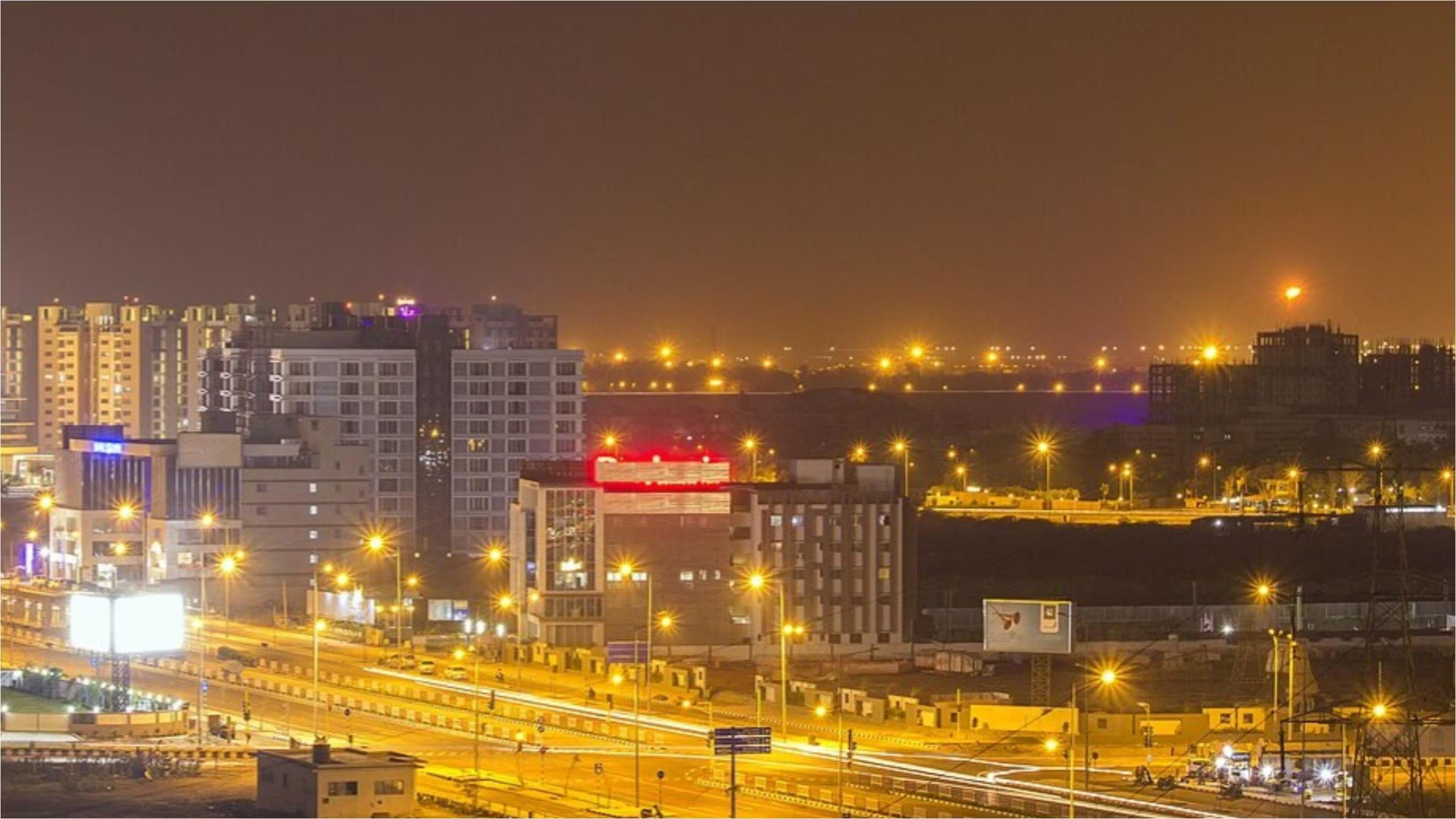
India’s economic growth is no longer driven only by metro cities. Urban centers such as Visakhapatnam, Surat, Indore, Coimbatore, Nagpur, and Bhubaneswar are attracting industries, startups, infrastructure projects, and skilled professionals, making them the country’s next generation of growth cities.
From Visakhapatnam to Surat: The Rise of India’s New Growth Cities
India’s new growth cities are reshaping the country’s economic landscape. While Delhi, Mumbai, Bengaluru, Chennai, and Hyderabad remain major business hubs, several Tier-2 cities are emerging as strong contributors to industrial development, technology, manufacturing, logistics, and services. Cities such as Visakhapatnam, Surat, Indore, Nagpur, Coimbatore, Lucknow, Jaipur, and Bhubaneswar are benefiting from better infrastructure, policy support, and rising private investment.
Improved connectivity, lower operating costs, expanding educational institutions, and government-backed industrial initiatives have made these cities attractive destinations for businesses and professionals alike.
Infrastructure Investment Is Fueling Regional Growth
One of the biggest reasons behind the rise of India’s new growth cities is large-scale infrastructure development.
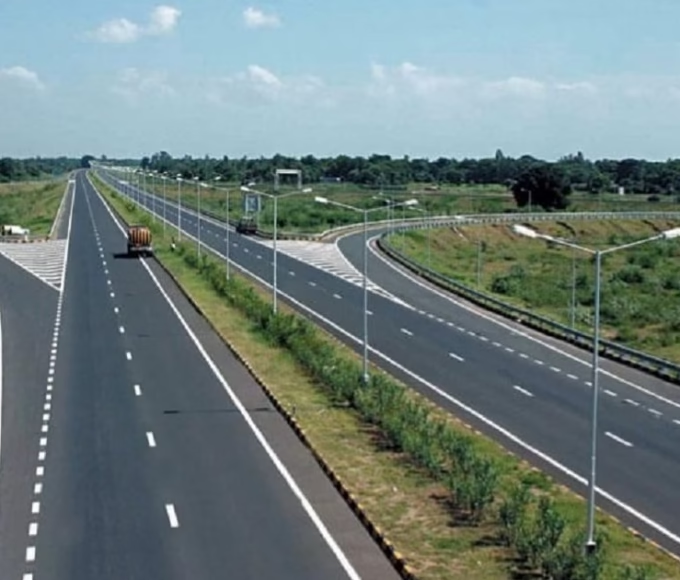
The central and state governments have invested heavily in highways, expressways, airports, ports, metro rail projects, industrial corridors, and logistics parks. These projects improve connectivity between manufacturing centers, ports, and consumer markets.
Visakhapatnam has strengthened its position as an important port city with growing investments in shipping, logistics, pharmaceuticals, and heavy industries. Surat continues to expand beyond its traditional diamond polishing and textile sectors, with investments in manufacturing, chemicals, renewable energy, and urban infrastructure.
Cities like Nagpur have become major logistics hubs because of their central location, while Indore continues to attract investments through industrial parks and modern transport infrastructure.
Manufacturing and Industrial Clusters Are Expanding
Manufacturing continues to be one of the strongest drivers of economic growth in Tier-2 cities.
The Production Linked Incentive (PLI) schemes and state-level industrial policies have encouraged companies to establish new facilities outside traditional metro locations. Lower land costs, better industrial parks, and access to skilled workers make these cities attractive for long-term investment.
Surat remains one of the world’s leading diamond processing centers while also strengthening its textile manufacturing ecosystem. Visakhapatnam supports industries ranging from steel and shipbuilding to petroleum refining and pharmaceuticals.
Coimbatore has built a reputation in engineering, pumps, textiles, and precision manufacturing, while cities like Aurangabad and Vadodara continue to attract automobile and engineering companies.
The expansion of these industrial clusters generates employment not only within city limits but also across nearby districts.
Technology and Startup Ecosystems Are Growing
India’s startup ecosystem is gradually expanding beyond Bengaluru and Hyderabad.
Cities such as Indore, Jaipur, Kochi, Bhubaneswar, Chandigarh, and Visakhapatnam are witnessing growth in technology startups, software development companies, fintech firms, and innovation centers.
Government-supported incubation programs, startup policies, and university-led innovation hubs are helping entrepreneurs launch businesses closer to their hometowns instead of relocating to metro cities.
The availability of affordable office space and lower operational expenses also gives startups greater flexibility during their early growth stages.
As remote and hybrid work models become more common, professionals are increasingly choosing Tier-2 cities that offer better quality of life without sacrificing career opportunities.
Education and Skilled Workforce Are Supporting Growth
The presence of universities, engineering colleges, management institutes, and technical training centers has created a steady supply of skilled professionals.
Cities including Visakhapatnam, Nagpur, Coimbatore, Pune, Mysuru, and Lucknow produce graduates in engineering, information technology, healthcare, management, and research every year.
Many companies now recruit directly from regional institutions, reducing hiring costs while creating employment opportunities closer to home.
Skill development programs launched under central and state government initiatives have also improved workforce readiness in manufacturing, logistics, healthcare, and digital services.
This growing talent pool is encouraging businesses to establish regional offices and operational centers outside traditional metro cities.
Better Quality of Life Is Attracting Professionals
Housing affordability remains one of the biggest advantages of India’s emerging cities.
Compared with metro cities, many Tier-2 urban centers offer lower property prices, shorter commuting times, cleaner environments, and reduced living expenses. These factors have become increasingly important for young professionals and families.
Healthcare infrastructure, shopping centers, entertainment facilities, educational institutions, and public transport have improved significantly across several regional cities over the past decade.
As companies continue adopting flexible work arrangements, professionals are increasingly willing to relocate to cities where living costs are lower and work-life balance is better.
This trend has supported demand for residential real estate and local businesses in many regional markets.
Challenges Still Need Attention
Despite rapid progress, India’s new growth cities face several challenges.
Urban planning must keep pace with population growth to avoid congestion, water shortages, pollution, and pressure on public services. Waste management, affordable housing, public transport, and environmental sustainability remain priorities for local administrations.
Some cities continue to experience uneven industrial development, while others require greater private investment in technology infrastructure and research facilities.
Balanced urban expansion will depend on coordinated planning between governments, industry, and local communities.
India’s Economic Future Will Be More Regionally Distributed
The rise of cities such as Visakhapatnam, Surat, Indore, Nagpur, Coimbatore, Bhubaneswar, and Jaipur reflects a broader shift in India’s development model. Economic opportunities are becoming more geographically distributed, reducing dependence on a handful of metropolitan centers.
Improved infrastructure, industrial investment, digital connectivity, startup growth, and skilled talent are creating strong foundations for sustained regional development. As businesses continue expanding into Tier-2 and Tier-3 cities, these urban centers are expected to play an increasingly important role in India’s long-term economic growth.
Takeaways
- Tier-2 cities are becoming major drivers of India’s industrial and economic expansion.
- Infrastructure, manufacturing, and startup ecosystems are attracting new investments.
- Affordable living and a skilled workforce are encouraging businesses and professionals to move beyond metros.
- Sustainable urban planning will be essential to support long-term growth.
FAQ
Q1. Which cities are considered India’s emerging growth cities?
Cities such as Visakhapatnam, Surat, Indore, Nagpur, Coimbatore, Bhubaneswar, Jaipur, Lucknow, Kochi, and Chandigarh are among the country’s fastest-growing regional economic hubs.
Q2. Why are businesses expanding into Tier-2 cities?
Lower operating costs, improved infrastructure, skilled talent, better connectivity, and supportive government policies make Tier-2 cities attractive for investment.
Q3. Which industries are driving growth in these cities?
Manufacturing, logistics, information technology, pharmaceuticals, textiles, engineering, renewable energy, healthcare, and startup ecosystems are among the leading sectors.
Q4. Will Tier-2 cities replace India’s metro cities?
No. Metro cities will remain major economic centers, but Tier-2 cities are expected to complement them by creating new opportunities for investment, employment, manufacturing, and innovation across different regions.








Leave a comment